
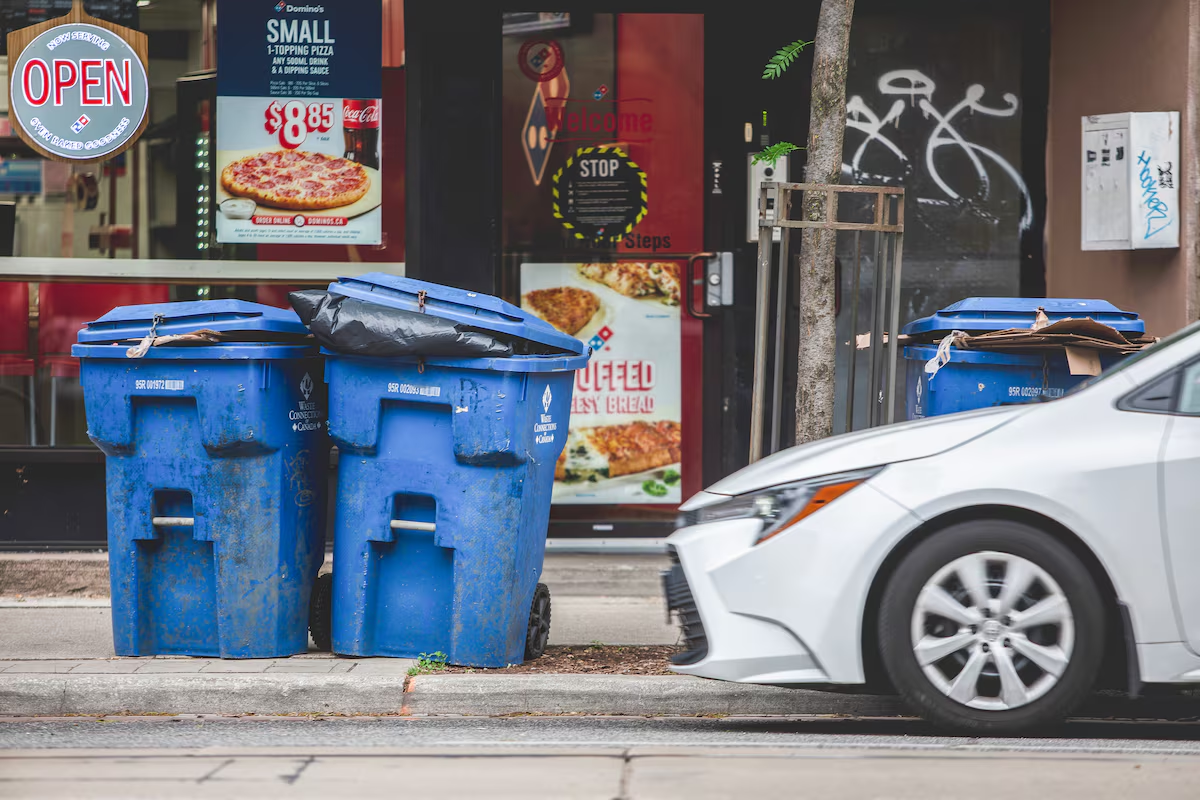
Recycling bins and refuse in Toronto in June, 2025. A group of private companies has now taken over pick-up duties from the city.Giordano Ciampini/The Canadian Press
Another month in Toronto, another fiasco.
Last month, it was the opening of a new, suburban transit service. The long-awaited $3.7-billion Finch West light-rail line turned out to be so slow that one guy put on his jogging shoes and managed to outrun it.
This month it is a new recycling pick-up service.
A group of private companies has just taken over pick-up duties from the city. In most neighbourhoods, the same garbage trucks still pick up recycling on the same days from the same bins, but oversight now lies with a not-for-profit organization called Circular Materials, which acts on behalf of companies like Loblaws and PepsiCo.
Many residents who left their blue bins out for a special postholiday collection found that the garbage trucks failed to arrive. Their bins sat outside in the snow. Those who called in to find out what was happening often could not get an answer. It seemed incredible that after months, even years, of preparation for the new service, the powers that be could foul up so badly.
Opinion: Addressing the health impacts of plastics is becoming more urgent
Some city councillors blamed privatization. They said the mess happened because the Ontario government took responsibility for recycling collection away from the city and handed it to private interests.
But that misinterprets the province’s intention. The Progressive Conservative government of Premier Doug Ford didn’t make the change as a gift to the private sector. Its main aim was to shift the cost of collecting recyclables away from taxpayers and load it onto the companies that make the products in the first place.
The principle is called extended producer responsibility. Proponents of EPR argue that if companies have to pay for picking up all those cardboard boxes, plastic bottles and so on, they will find ways to make fewer of them. In theory, this will lead to a so-called circular economy, in which materials are reused and recycled over and over.
Environmentalists love it. They say it makes producers pay for their wastefulness. Governments from Germany to South Korea to British Columbia have embraced it. They often boast about all the money they are saving people.
In practice, EPR is not the neat and elegant solution it seems. To begin with, the savings to the taxpayer are meagre. Toronto’s government will spend about $10-million less every year, a drop in the bucket in a budget of around $19-billion. It will use the money to limit the annual increases in the rate people pay to have their waste collected.
But residents will end up paying in other ways. Companies that take on the expense of recycling are bound to pass that cost on to consumers in the form of higher prices. What households save on their waste-collection bill they will lose at the store counter.
EPR is often tough to implement and administer. The provincial government introduced it for batteries and tires a few years ago. Battery manufacturers fell short of their recycling targets and, last year, the government gave them a break by pushing the target back. It gave tire producers a similar break after they had similar problems. As a result, ugly mountains of used tires waiting to be processed are piling up in various parts of the province.
On top of all that, a recent report from the provincial Auditor-General said that the organization that oversees the recycling of batteries, tires and electronics is falling down on the job, failing to make small producers obey the rules.
In the case of household recycling, Ontario spent years in talks with producers, industry groups and collection companies to come up with a way to make the handover to the private sector.
After complaints from the producers over the burden that was being placed on them, the government ended up softening some recycling goals and other requirements. With all the setting of targets, monitoring of compliance and accompanying paperwork, the result is a spider’s web of regulation and bureaucracy. Simple or efficient it is not.
The collection hiccups that happened this month will probably pass. But whether the changeover made sense to begin with is another question. In most cases, cities were doing a fine job of picking up the trash, using either private contractors or city workers.
An old adage comes to mind. If it ain’t broke …