
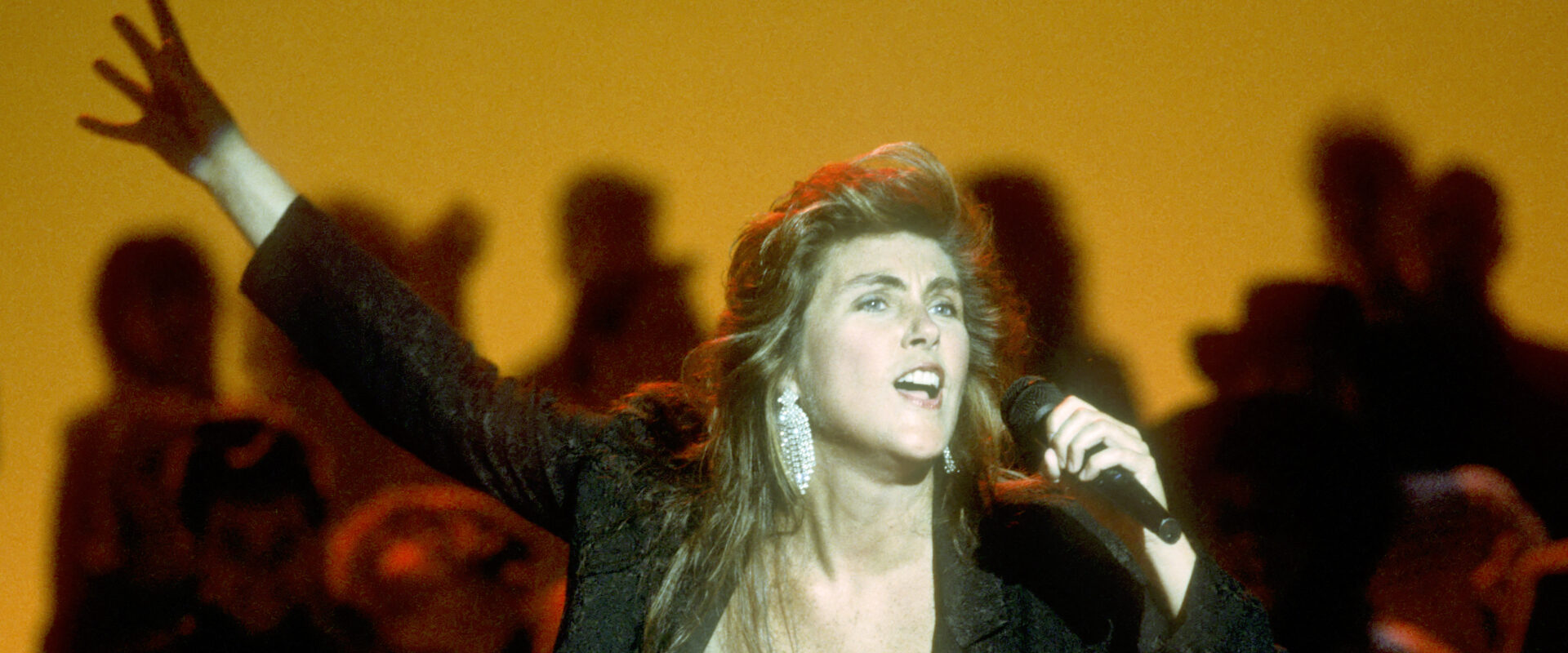
A hit is a hit in any language. Laura Branigan likely would have agreed with that sentiment. One of the most popular female singers of the 80s, Branigan did very well with English versions of songs that had first been successful in other countries.
That pattern began with “Gloria”, the 1982 single that took off upon its release and made Branigan a household name amongst pop music fans. Many of those fans were likely oblivious to the original Italian version of the song, released a few years earlier.
Hey, Laura
Laura Branigan, born in New York state, took her first crack at musical stardom in the early 70s. She acted as lead singer for a folky band called Meadow. After a single, relatively unheard album was released, the band went under. That left Branigan looking for another outlet for her talents.
She worked for a while as a backup singer to Leonard Cohen. Once she secured a record deal, her solo career started off inauspiciously when her debut single “All Night With Me” did little. But her second single, “Gloria”, already had some pedigree as a hit in Europe. How would it do in the US?
Found in Translation
The Italian artist Umberto Tozzi co-wrote “Gloria” with Giancarlo Bigazzi and released the song in 1979. Tozzi’s melody and the basic instrumental structure is similar to what Branigan would use a few years later. His Italian lyrics concern a girl whose absence haunts the narrator, to the point where it’s fair to wonder if she’s only a figment of his imagination.
Not only did Branigan’s producer, Jack White, suggest a remake of “Gloria”, but also Greg Mathieson, who played keyboards on Tozzi’s original, was in the same role on the Branigan album. At first, Branigan couldn’t see the potential of the song. But a lyrical rewrite aided by Trevor Veitch changed her mind.
“Gloria” proved an ideal vehicle for Branigan’s wailing vocals. The song exploded on the radio, reaching No. 2 on the US pop charts. And it set the artist up as the go-to singer for songs that had already enjoyed a test-run in European markets. “Solitaire”, “Self Control”, and “Ti Amo” were all hits for her that had first been done by foreign artists.
Behind the Lyrics
The refocused version of “Gloria” features a narrator warning a young girl to slow down her pace a bit. “I think you’re headed for a breakdown,” she warns. “If everybody wants you, why isn’t anybody calling?” Branigan queries. And then: “Are the voices in your head calling, Gloria?”
Later, the narrator questions Gloria about her romantic escapades. “How’s it gonna go down?” the narrator wonders. “Will you meet him on the main line or will you catch him on the rebound?” Gloria’s need to take a lover might supersede her wisdom. “Feel your innocence slipping away, don’t believe it’s comin’ back down.”
“Gloria” is a can’t-miss pop song, one where the upbeat music clashes effectively with the cautionary tale told by the lyrics. Laura Branigan sold it to the hilt, putting a definitive stamp on this multinational hit.
Photo of Laura Branigan Photo by Michael Ochs Archives/Getty Images