
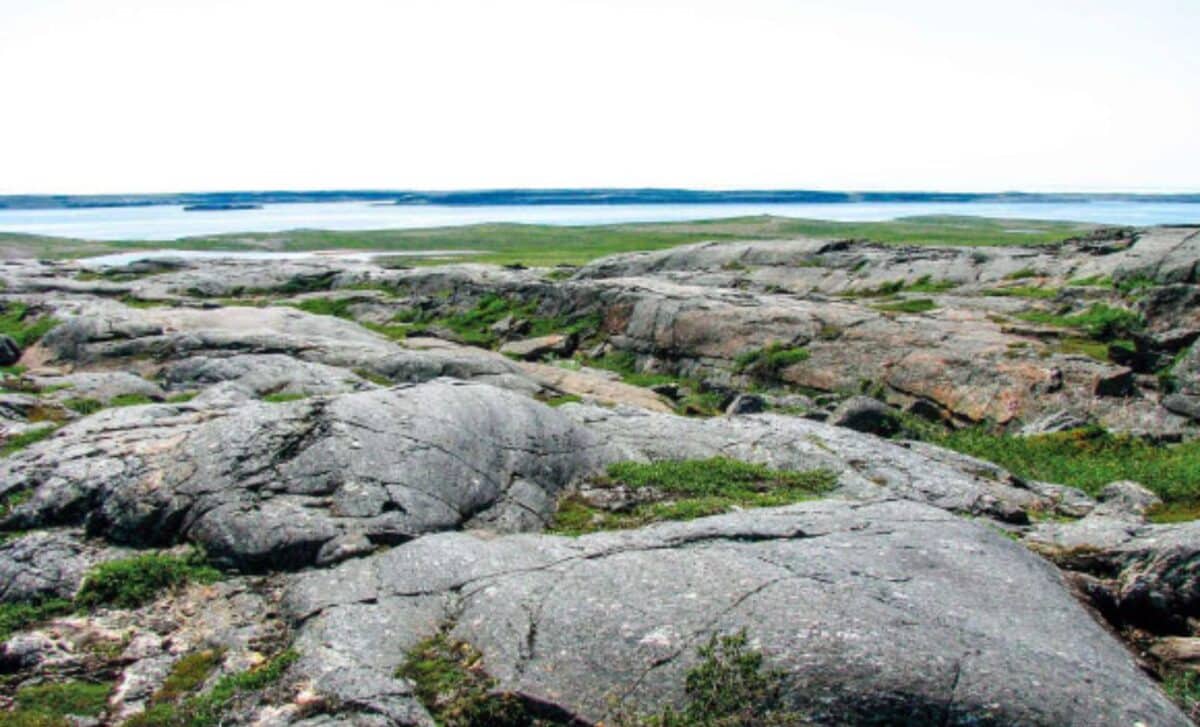
For years, scientists have wondered if a certain stretch of rock in Canada could be home to the world’s oldest rocks, and now, a new analysis seems to make the case stronger than ever. The Nuvvuagittuq Greenstone Belt, located on the shores of Hudson Bay, might just hold the last surviving remnants of Earth’s ancient, primordial crust, rocks that date back over 4 billion years. This new study, published in Science, provides compelling evidence supporting the idea that these rocks could be the oldest known to date.
If these stones are confirmed as the oldest, they could offer valuable insights into how the planet’s early conditions shaped its geological features, from plate tectonics to the formation of oceans.
A Clash of Clocks: Dating the Ancient Rocks
The controversy over the Nuvvuagittuq rocks dates back to 2008, when Jonathan O’Neil, a geologist at the University of Ottawa, first suggested that these rocks could be over 4.3 billion years old. The trouble, though, was that O’Neil’s team couldn’t use the usual dating method for such old rocks: zircon. Zircon is a hardy mineral that keeps its chemical makeup intact over billions of years, making it perfect for dating ancient formations. But the boulders in the Nuvvuagittuq Greenstone Belt didn’t contain zircon.
So, instead, O’Neil’s team turned to a different technique, one that involved measuring the isotopes of neodymium and samarium, two elements that decay at known rates. The idea was that by measuring how much of these isotopes were left in the rock, they could figure out when it formed. Unfortunately, this method didn’t give a straightforward answer.
Fast forward to the present day. They decided to give it another shot. This time, they focused on a younger intrusion of rock that cut through the older layers in the Greenstone Belt. As mentioned by Reuters, the intrusion provided a “minimum age” for the surrounding rock. When they dated this intrusion, they found it was about 4.16 billion years old, and this time, the two isotopic clocks lined up perfectly.
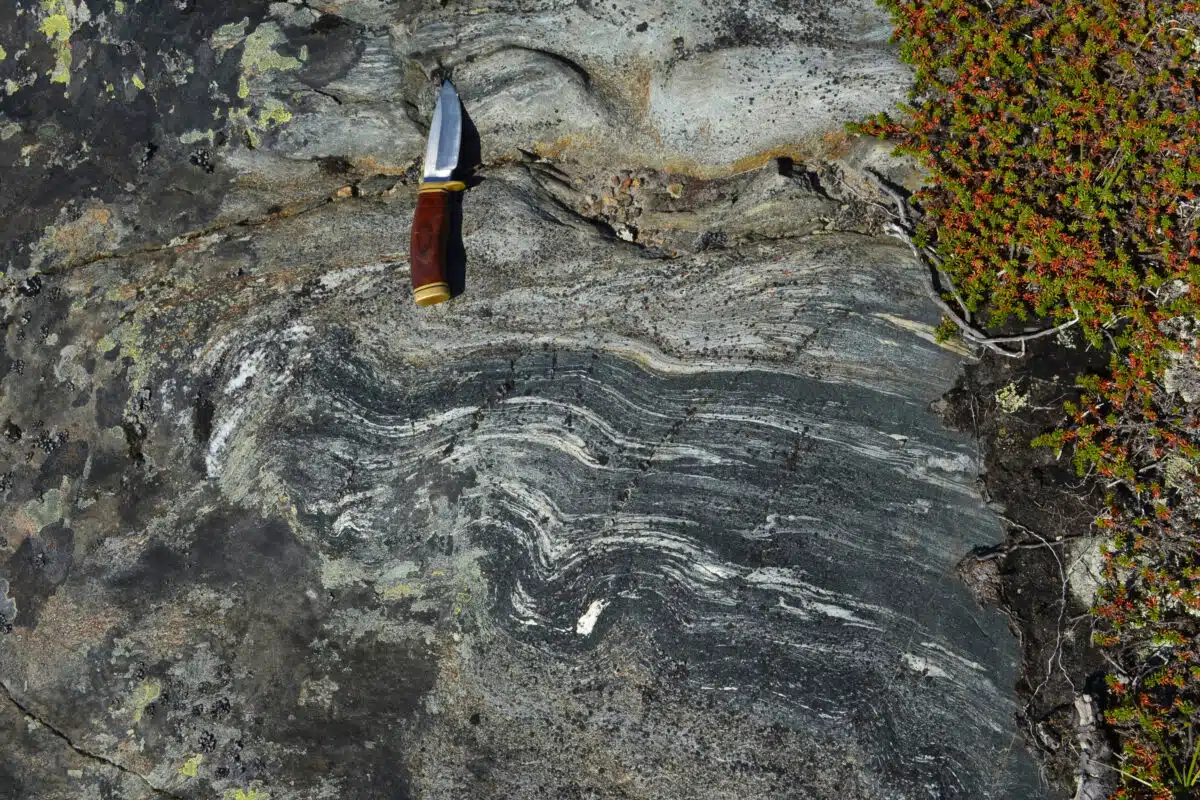 Rocks from Canada’s Nuvvuagittuq Greenstone Belt, around 4.16 billion years old, with a knife for scale. Credit: Jonathan O’Neil.
Time Travel to Earth’s First Days!
If these stones really are 4.3 billion years old, they would be one of the oldest samples of Earth’s crust we’ve ever found. As stated by Jonathan O’Neil:
“These rocks and the Nuvvuagittuq belt being the only rock record from the Hadean, they offer a unique window into our planet’s earliest time to better understand how the first crust formed on Earth and what were the geodynamic processes involved.”
According to the study’s analysis, researchers could learn more about the planet’s early atmosphere and the role that volcanism and meteorite bombardment played in shaping the Earth’s surface.
According to him, studying these rocks could also help scientists understand the origins of Earth’s first oceans. The formation of oceans, which came long before life appeared, is one of the great mysteries of Earth’s early history.
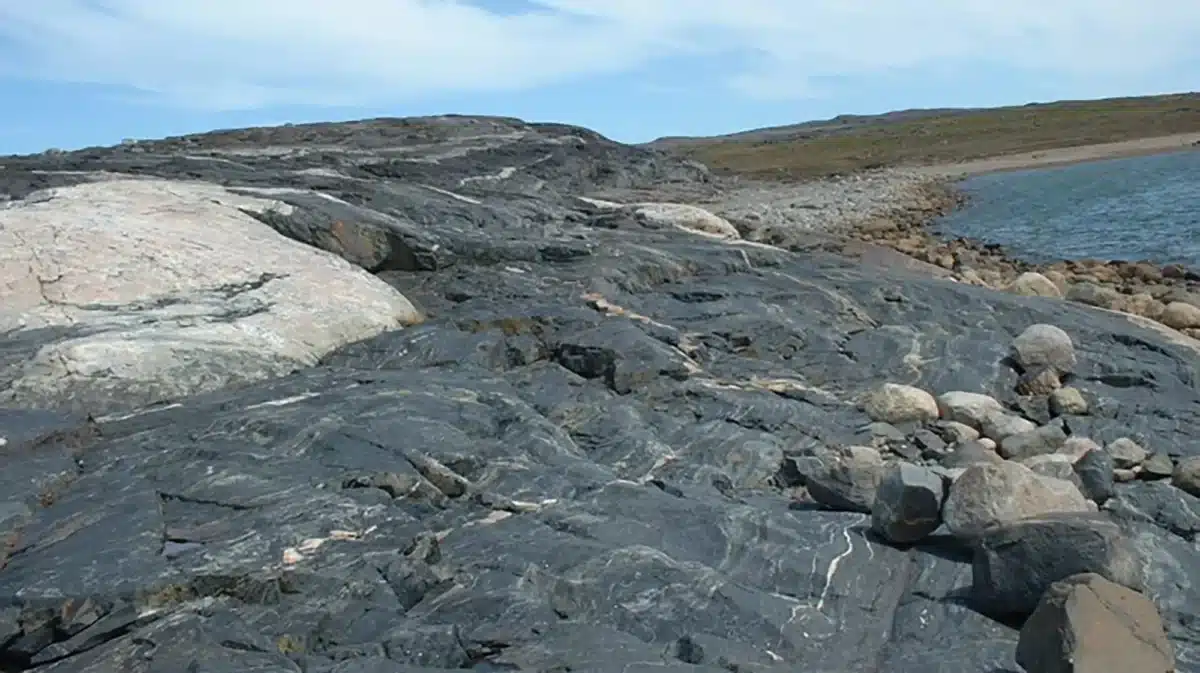 A wide view of the ancient rocks in the Nuvvuagittuq Greenstone Belt. Credit: Jonathan O’Neil.
The Uncertainty of Ancient Dating
But before we get too excited, it’s important to note that the final word on the age of these rocks hasn’t been written yet. As Jesse Reimink from Pennsylvania State University puts it:
“When dealing with the oldest rocks and minerals, there’s no such thing as settled.” Geologists are still debating the results, and many are not convinced that the Nuvvuagittuq Greenstone Belt is as old as O’Neil and his team suggest.
Some researchers, like Richard Walker at the University of Maryland, remain cautious. He notes that dating rocks from over 4 billion years ago is incredibly tricky, and even small errors in the dating process can lead to big differences in the results.