
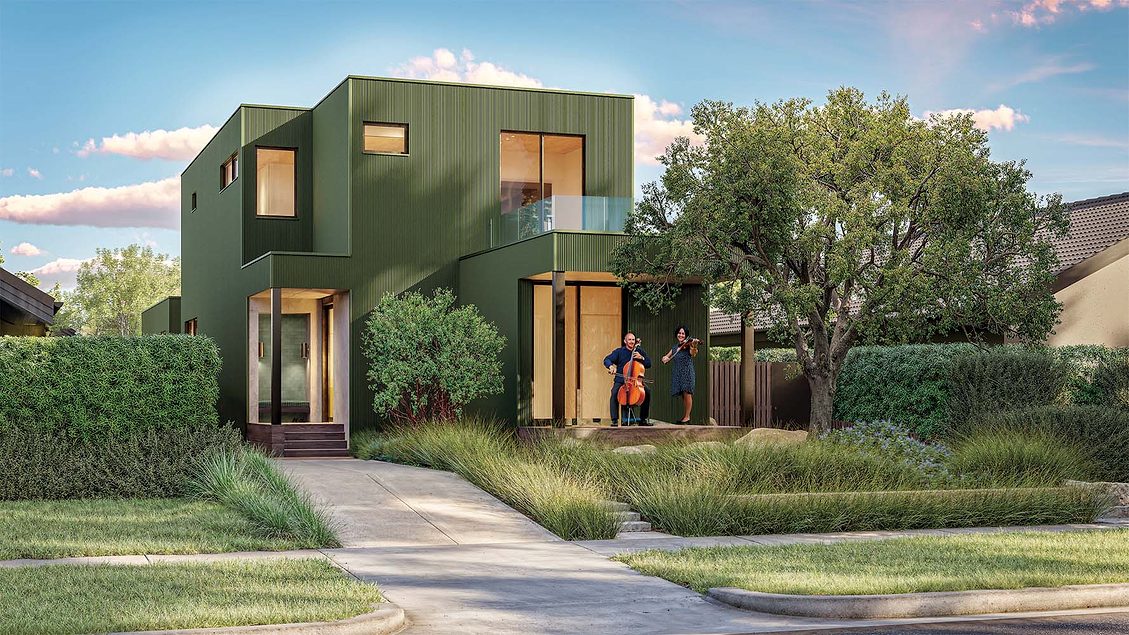
Like thousands of fellow residents of Los Angeles’ Pacific Palisades and Altadena neighborhoods, Dustin Bramell and his family hastily evacuated on January 7, 2025, as raging wildfire encroached. By the next day, their beloved midcentury-modern home was gone, reduced to ash and rubble, along with nearly their entire Pacific Palisades neighborhood.
Bramell had barely begun processing the loss when, that same day, an idea came to him: Could he revive the Case Study Houses program (1945–66) to help rebuild after the fires? Within three months, he and his friend Leo Seigal—a fellow tech entrepreneur and architecture enthusiast—had self-funded and launched Case Study: Adapt (CSA), a nonprofit that would, like the original program, pair clients with architects to create innovative houses to address personal and far-reaching challenges. From its inception, in L.A., the Case Study experiment aspired to tackle the post–World War II housing shortage, and now the most urgent issues were the many displaced Palisades and Altadena residents, along with the global threat of wildfire and other climate-change fallout.
Where the first Case Study program was inextricably linked to Arts & Architecture magazine, CSA joined with Architectural Digest to reach a wide audience. “We realized that what began as just a cool idea was actually a chance to make fire-resilient design inspirational for the public at large,” says Bramell (who comes from a family of firefighters and fire chiefs). His venture also partnered with the Eames Foundation, whose 1949 Case Study House #8 and Studio—which barely escaped the Palisades Fire—has hosted CSA’s idea-generating meetings.
Around the same time, another (somewhat different) initiative emerged, independently, from the Case Study legacy. Called Case Study 2.0 (CS 2.0), it’s the brainchild of brothers Steven and Jason Somers, cofounders of Crest Real Estate, an L.A. land-use and architectural-expediting company experienced in the now fire-torn neighborhoods. “The overwhelming devastation left so many people in shock and unsure what to do next,” recalls Steven. “We realized that our expertise with regulations, permitting, and construction—with bringing architectural ideas to fruition—put us in a unique position to help.”
They also recognized the concern, within the affected communities, that developers might buy up lots, resulting, as Steven puts it, “in many practical homes without any distinctive architectural qualities.” So CS 2.0 set out to create an online catalogue of designs that could simplify and streamline the process for homeowners while, ideally, yielding architectural richness and diversity at costs competitive with standardized construction.
The Somerses reached out to architects they admired and had worked with—established and lesser-known local talent, plus practices worldwide that had built in L.A. Unlike the pure modernism of Case Study Houses, their program offers eclectic styles, recalling, says Steven, “the unique character and variety of these neighborhoods.” By December, CS 2.0 had 50 participating firms, 12 projects in contract, and many under discussion.
CSA, by contrast, is structured more like the midcentury program, with plans to build only 16 modernist homes by a total of 10 L.A. firms: Woods + Dangaran, Marmol Radziner, Bestor Architecture, Assembledge+, Montalba Architects, Geoffrey von Oeyen Design, EYRC Architects, Johnston Marklee, Walker Workshop, and Standard Architecture | Design. (Marmol Radziner and Standard are also participating in CS 2.0.) “We chose some architects we already considered great,” Bramell recalls, “while others were introduced to us by their peers.” Word of the program, on social media and elsewhere, drew about 300 homeowner applicants, and CSA matched clients up with architects. (Bramell is himself the client for CSA #1, by Woods + Dangaran.) The intention was to divide the projects between the Palisades and Altadena, but with generally lower property values in Altadena, costs there “often didn’t pencil out,” says Bramell. Now all but one CSA site are in Pacific Palisades.
Dustin Bramell, who started Case Study: Adapt with a friend, is Woods + Dangaran’s client for CSA #1. Image © Woods + Dangaran, click to enlarge.
Beyond matters of scope, the two programs carry forward the original venture’s character and goals to varying degrees. Case Study Houses, through the emerging idiom of modernism, explored new materials and technologies, notably World War II–era military inventions. It also celebrated young talent, and promoted economical (though high-quality) construction and modest size, with spatial flexibility for changing needs. The resulting houses featured open plans, indoor–outdoor flow, and transparency. But their “modest size” typically meant 1,500 to 1,600 square feet, whereas CSA set its cap at 3,000 and CS 2.0 simply discouraged its architects from maxing out the lots, yielding a range of house sizes. “We recognize that times and expectations have changed,” says Steven Somers, pointing out that 3,000 square feet aligns with today’s median size for new single-family homes in L.A.
Like their namesake, neither CS 2.0 nor CSA actually builds; instead, the architects, clients, and contractors arrange that among themselves, with both programs playing some facilitating roles. CS 2.0 has targeted construction costs at $600 to $800 per square foot, which is low for the area. Toward that end, the architects are contributing their catalogue schemes, with renderings and layout plans, pro bono, just as Crest is donating its time and expertise. Once a project is under contract, architectural fees of $25 per square foot and engineering fees of $3 per square foot apply (modifications and customization are additional). After a scheme goes through permitting once, its standard plans become pre-approved for subsequent clients, bypassing the months that design and permitting normally take.
Though equally budget-conscious, CSA has not set specific price-per-square-foot targets, but both programs, like Case Study Houses, have negotiated steep discounts from participating manufacturers and suppliers of building materials, components, and fixtures. Nonetheless, as custom residential construction costs soar nationwide, L.A. tends to be particularly expensive. In November, CSA’s 16 schemes were publicly unveiled at USC School of Architecture (a CSA partner, whose students built the models). In his presentation, Montalba Architects principal David Montalba described his team’s struggle to keep costs under $1,000 per square foot, and others face similar challenges.
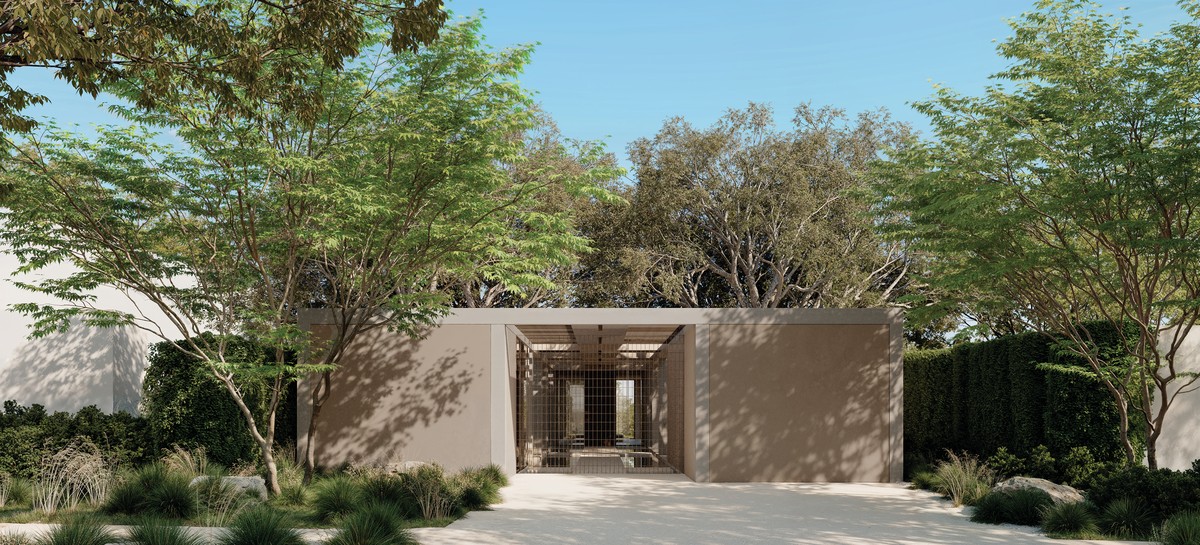
While both programs advocate for “humble materials,” many designs appear luxuriously ambitious in other ways. Still, some relatively modest schemes stand out, including Lovers Unite’s 1,855-square-foot CS 2.0 house, which deftly uses structural masonry block, exposed inside and out, eliminating needs for surface finishes, while speeding construction and fortifying fire resistance.
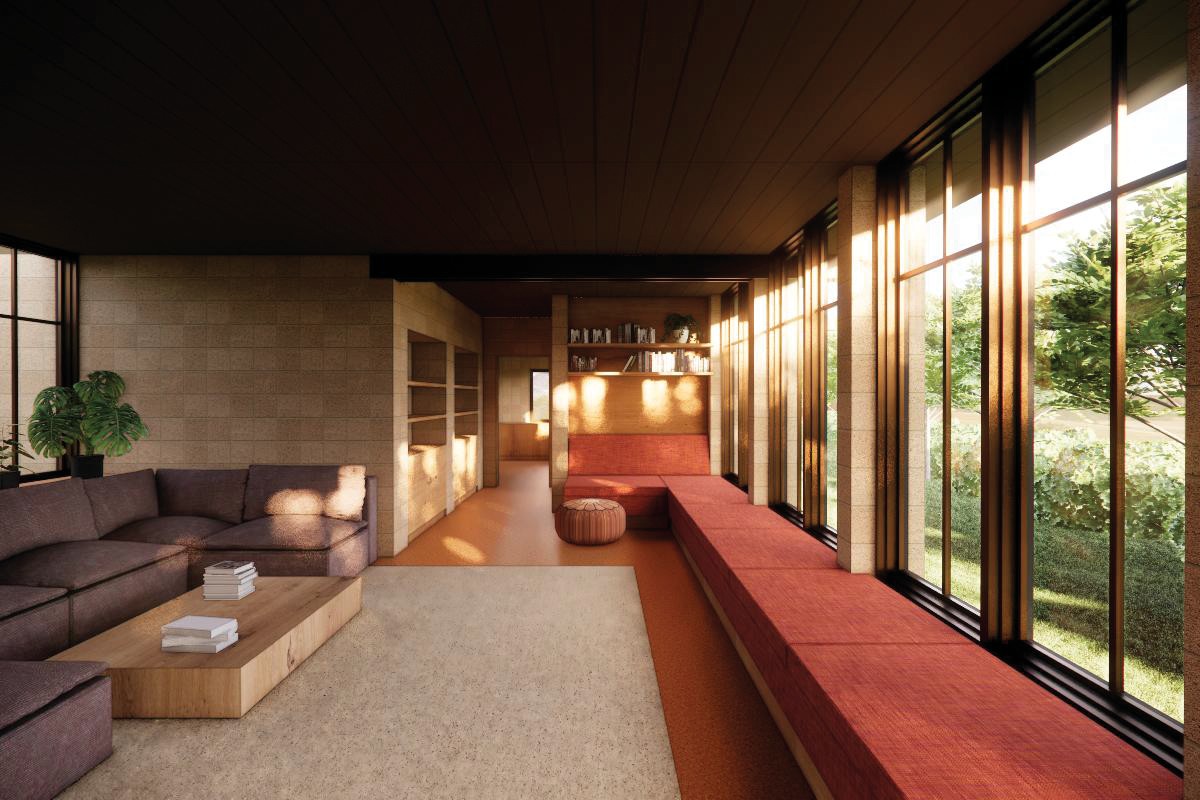
Lovers Unite’s scheme for CS 2.0 uses masonry block exposed inside and out. Image © Lovers Unite
Innovation is encouraged across both platforms, but it’s unclear how much the projects will compare with the original Case Study’s experimental leaps. Not surprisingly, CS 2.0 and CSA tend to be most cutting-edge in their approaches to fire resiliency. Exceeding current fire code as well as anticipated updates to it, both initiatives have supported adherence to rigorous IBHS (Insurance Institute for Business & Home Safety) fire-protection guidelines. Some architects have also borrowed from other building types in, for example, specifying a two-hour fire rating—more typical of high-rises—thereby doubling the current requirement for low-rise single-family structures. Some have designed building shells with a fiberglass-coated fire-protective layer or with panelized disaster-resistant systems, more common in commercial applications.
“Of course, this is not just about designing a house for a particular client or even a replicable house for a catalogue,” says Standard partner Silvia Kuhle. “It’s about developing and modeling approaches to resiliency that can be widely adoptable. A big challenge is how to make the indoor-out California Dream—the essence of Case Study Houses—fire resistant.
Strategies for such resiliency—often coupled with efficient building methods, such as prefab modules—have, across both programs, favored noncombustible materials, including metal cladding (as in Marmol Radziner’s CSA #2 or Specht Novak’s weathering-steel CS 2.0 house), exposed concrete and rammed earth (as in Soto’s CS 2.0 design), fiber-cement siding, and tile. Other features include tempered-glass windows, ember-resistant eaves and vents, integral cisterns, protected courtyards, and defensible space free of combustible landscaping.
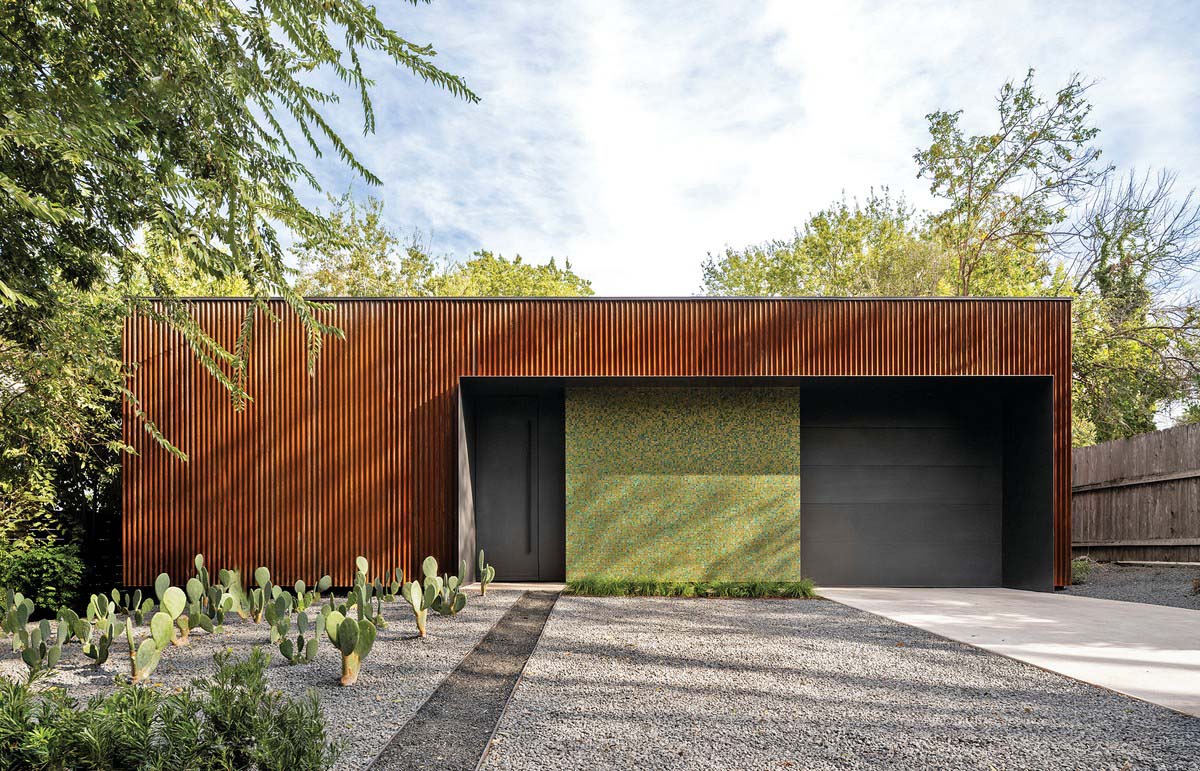
Specht Novak’s CS 2.0 house is clad in weathering steel. Image © Specht Novak
Flexibly and economically, some of the designs in the CS 2.0 catalogue—which is open to individuals and developers—offer different cladding choices, or even styles, for the same massing and layout, promoting savings through replication. And architects in both programs have explored the creative potential of ordinary off-the-shelf components.
Still, realizing the work is often tied to homeowners’ ongoing struggles with insurance claims and post-traumatic uncertainties about whether, or how best, to proceed. (Two CSA clients have suggested they might ultimately be unable to build, due to cost.)
Yet others are steaming ahead, like Marlo Gottfurcht Longstreet—the client for Johnston Marklee’s CSA #9—who lost the cherished Palisades home that three generations of her family had inhabited. “I’m so proud to be part of this program,” she says. “I hope the site has a big sign proclaiming, ‘This is a Case Study: Adapt House.’” CSA and CS 2.0 both expect their first projects to break ground early this year.
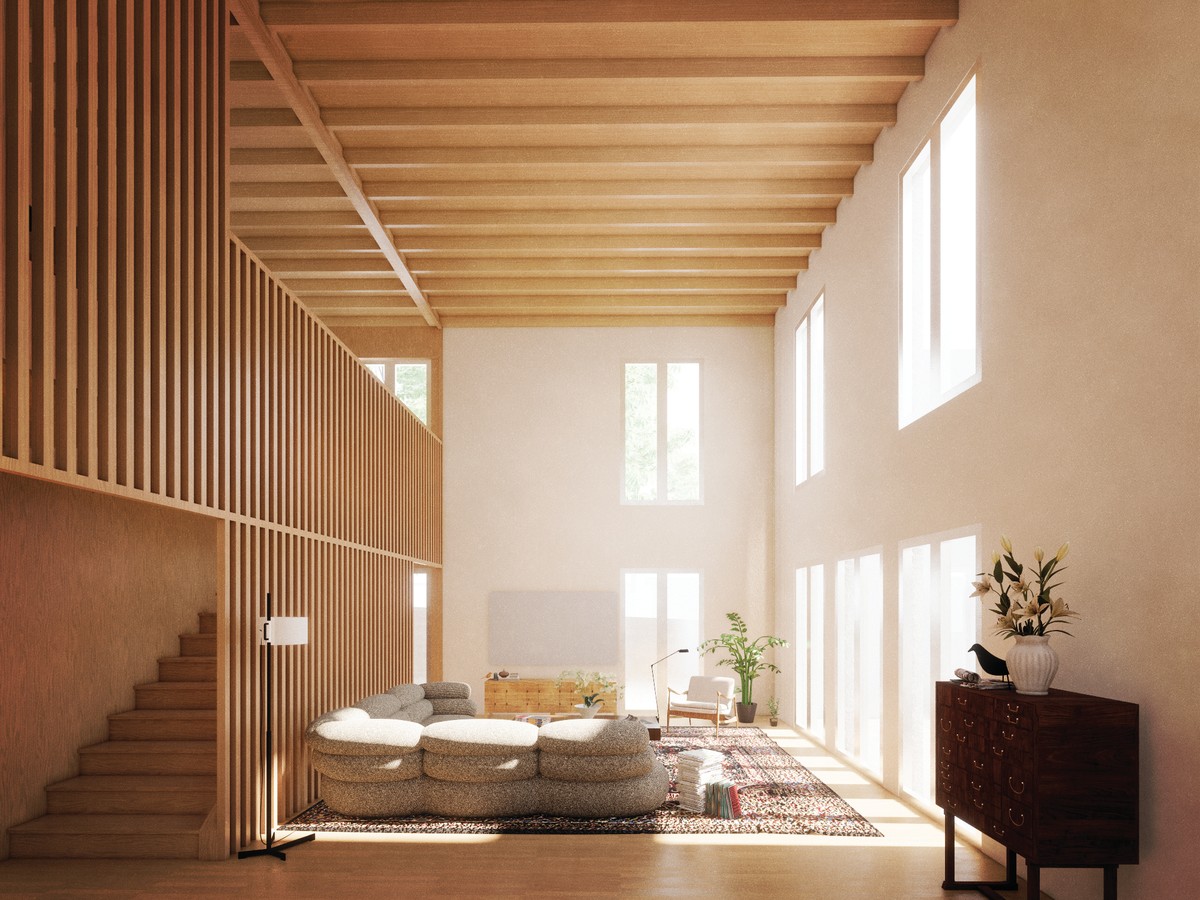
Johnston Marklee designed CSA #9 as interconnecting volumes. Image © Johnston Marklee
Meanwhile, numerous other post-fire rebuilding initiatives—without “Case Study” in their names—are also under way. In some respects, it’s a shared and collegial effort. “We’re all in this together as a community,” says Steven Somers. “Recovery is an enormous and complicated task—and we really want to see one another succeed.”