
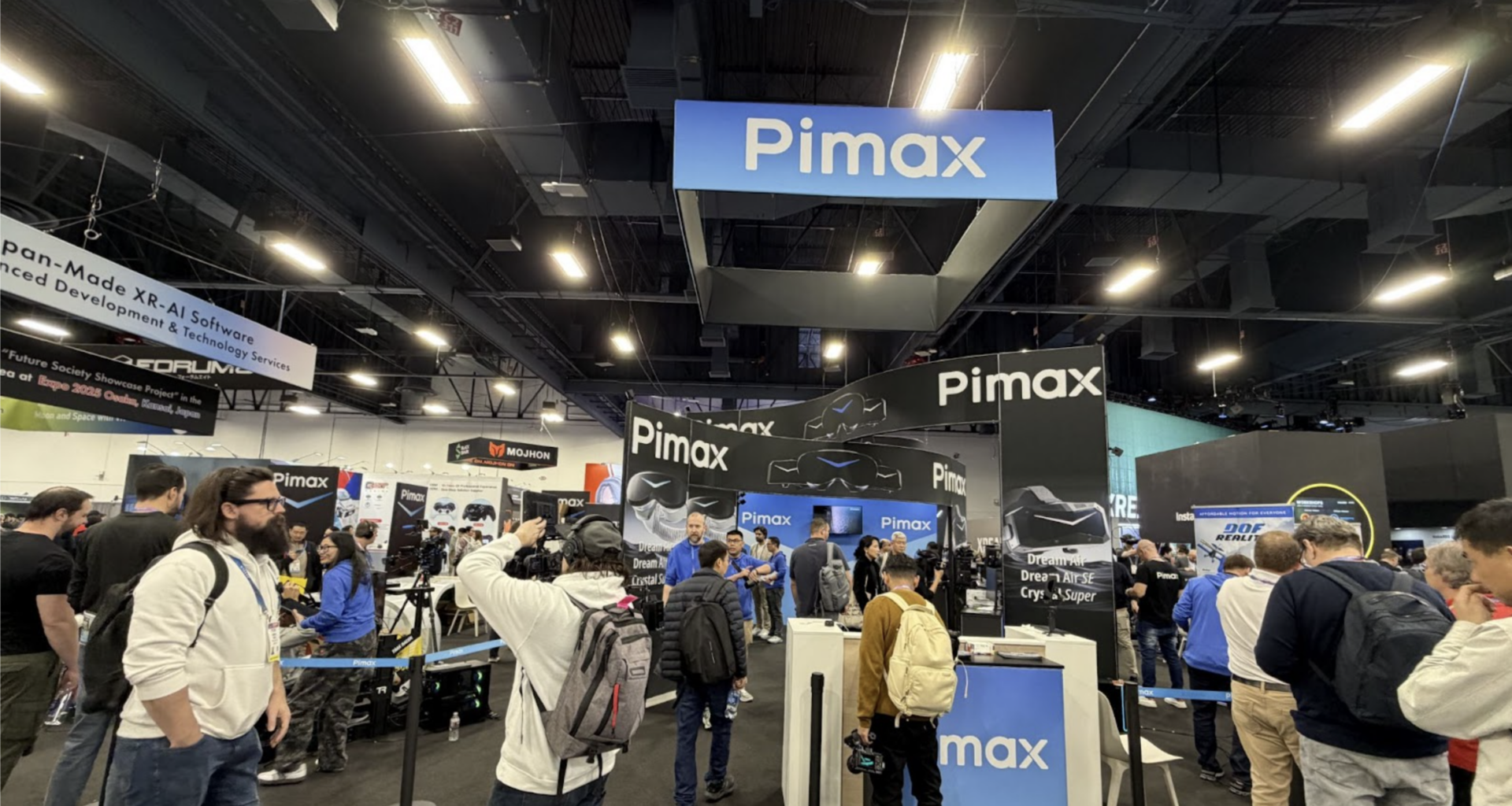
At CES 2026, Pimax revealed its latest PCVR hardware lineup, introducing the Crystal Super Micro OLED, Dream Air, and Dream Air SE headsets. The announcement continues the company’s focus on ultra-high resolution displays and optical technologies aimed at high-end PCVR use, with a particular emphasis on simulation.
The Crystal Super Micro OLED sits at the top of the range, featuring 4K Sony micro OLED panels per eye, delivering high contrast, true black levels, and improved colour reproduction. The headset offers a 116 degree horizontal field of view, refresh rates of up to 90Hz, and automatic IPD adjustment between 58 and 72mm. Eye tracking and dynamic foveated rendering are included to support performance optimisation, while Pimax’s ConcaveView lens design is intended to maintain clarity across the display. The headset was demonstrated at CES on motion platforms and flight simulation rigs.
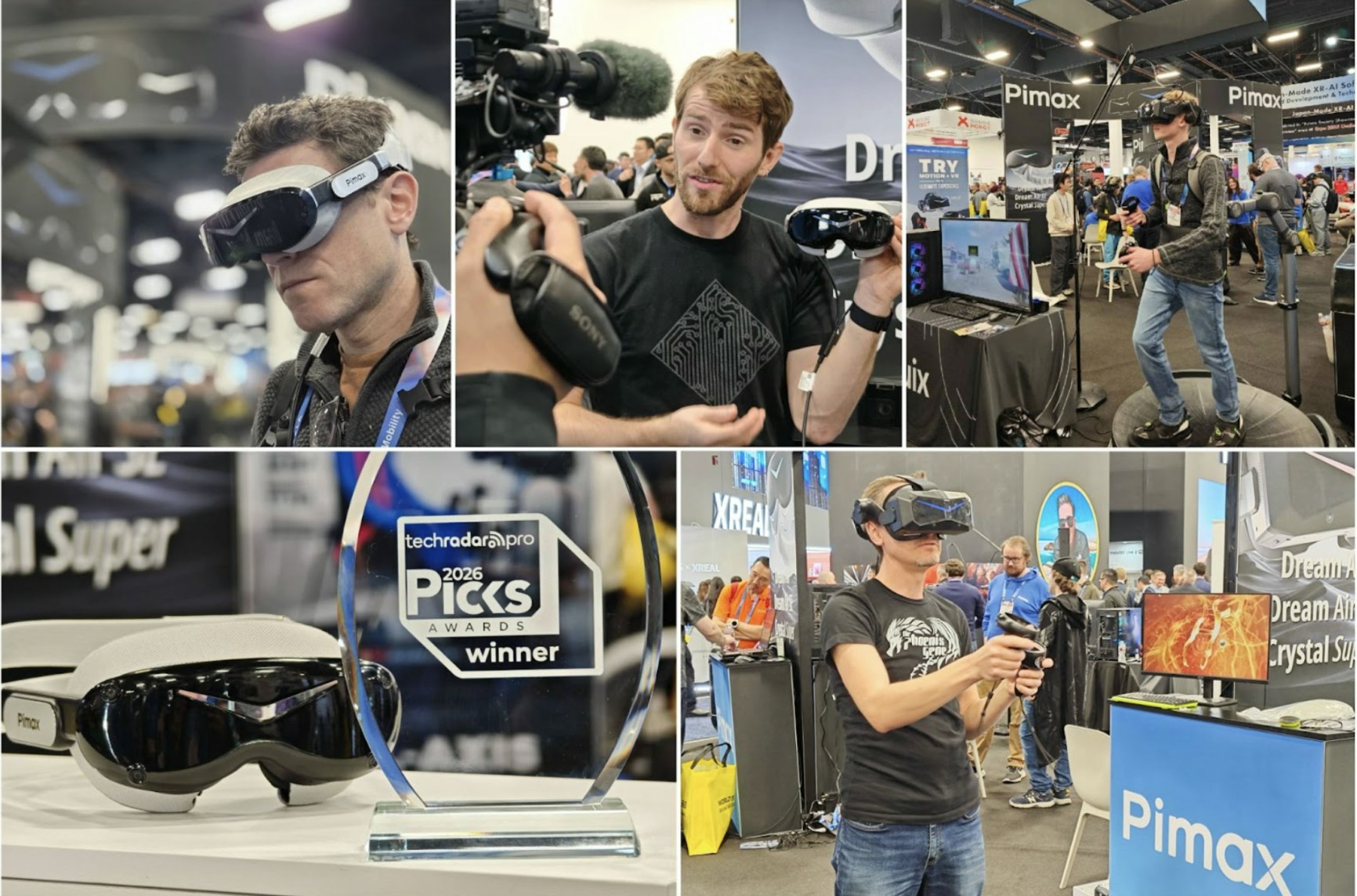
Alongside the flagship model, Pimax also announced the Dream Air and Dream Air SE. Both headsets use the same optical system as the Crystal Super, including ConcaveView lenses and Pancake optics. Eye tracking, automatic IPD adjustment, and dynamic foveated rendering are supported, with tracking available via inside-out SLAM or Lighthouse systems. A DisplayPort connection provides uncompressed PCVR output. The Dream Air SE is positioned as a lower-cost alternative within the lineup.
During CES 2026, attendees were able to test the headsets across a range of setups, including racing rigs, motion platforms, and flight simulators. We will keep you up to date with the availability of the new OLED models.
In the meantime, you can learn more about the Pimax Crystal Super and the Pimax Crystal Light. You can also use code FSE at the checkout to save 2% on the price of a headset.