
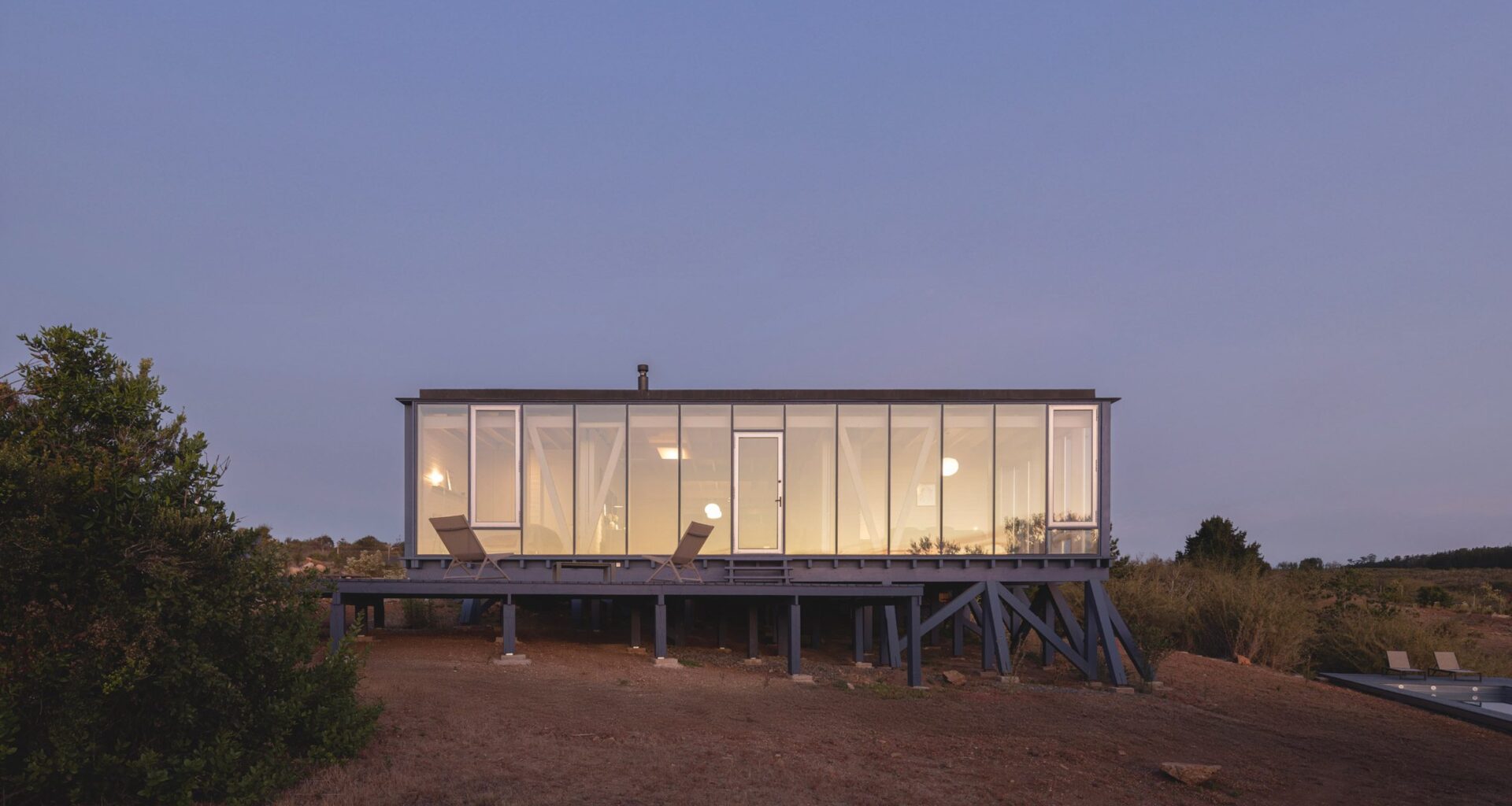
Prefabricated wooden elements were used to create the “orderly” square-shaped Casa SI by Chilean studio Iragüen Viñuela Arquitecto, which is perched on a hilly site near the Pacific Ocean.
Serving as a primary residence for a couple relocating from northern Chile, Casa SI sits within the hilly outskirts of Algarrobo, a coastal resort town. It was built on a gently sloping site within a rural subdivision, where there is limited planning and regulations.
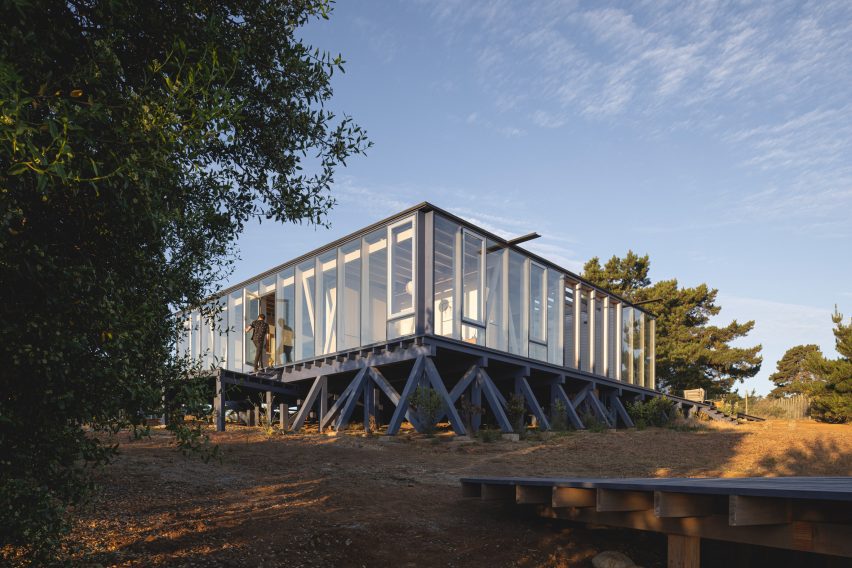 Iragüen Viñuela Arquitecto has created Casa SI in Chile
Santiago-based Iragüen Viñuela Arquitecto sought to create a home with its “own atmosphere”, and one that would capitalise on views of the natural terrain.
“Positioned at the edge of the subdivision and oriented outward, the house benefits from expansive views – toward a lush ravine to the south and the ocean on the western horizon,” the studio said.
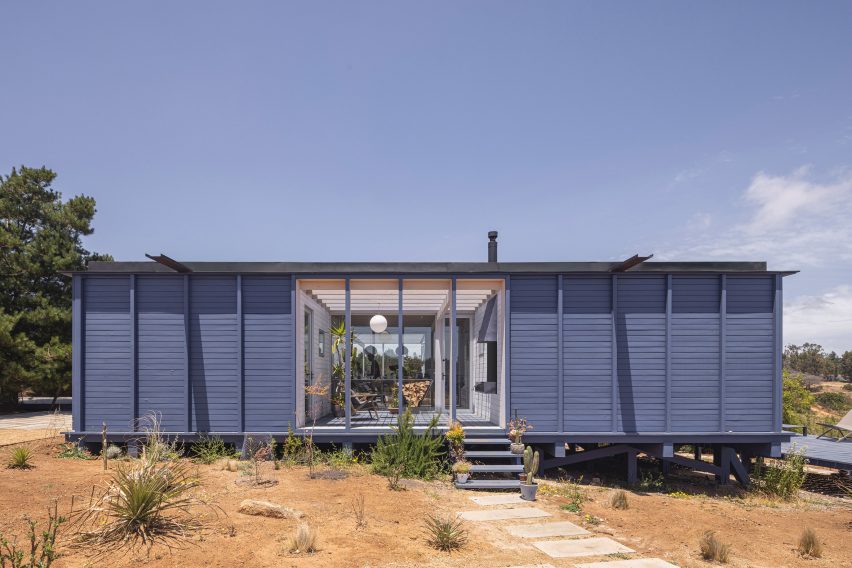 It was placed on a sloped, coastal site
The project also enabled the architects to explore the potential of prefabricated timber construction and create a design that was “rational yet warm”.
“Beyond its structural grid and efficiency, we were particularly interested in the expressive potential of timber,” the team said.
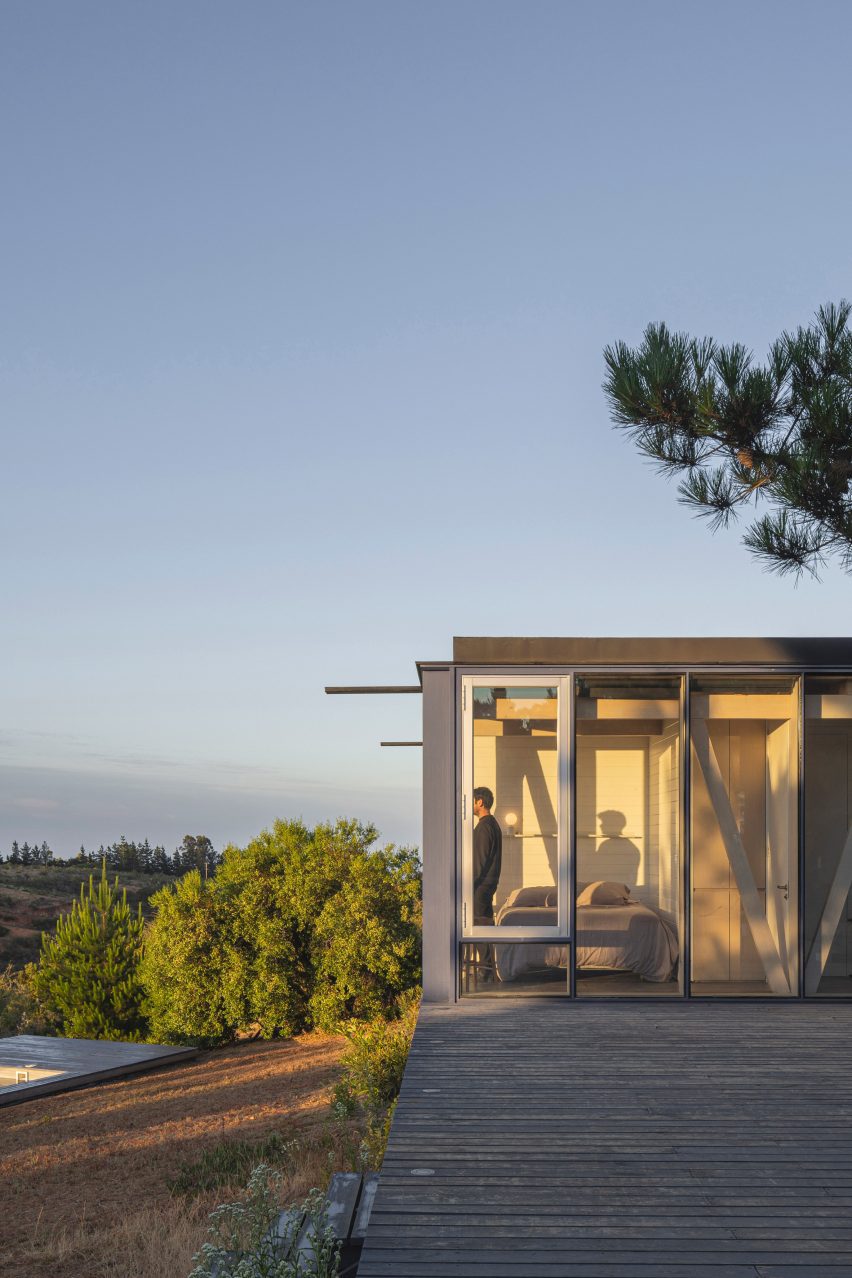 Prefabricated elements were used in the design
The resulting design consists of two volumes – a single-storey main dwelling that has been completed, and a two-storey guest house that is planned for the future.
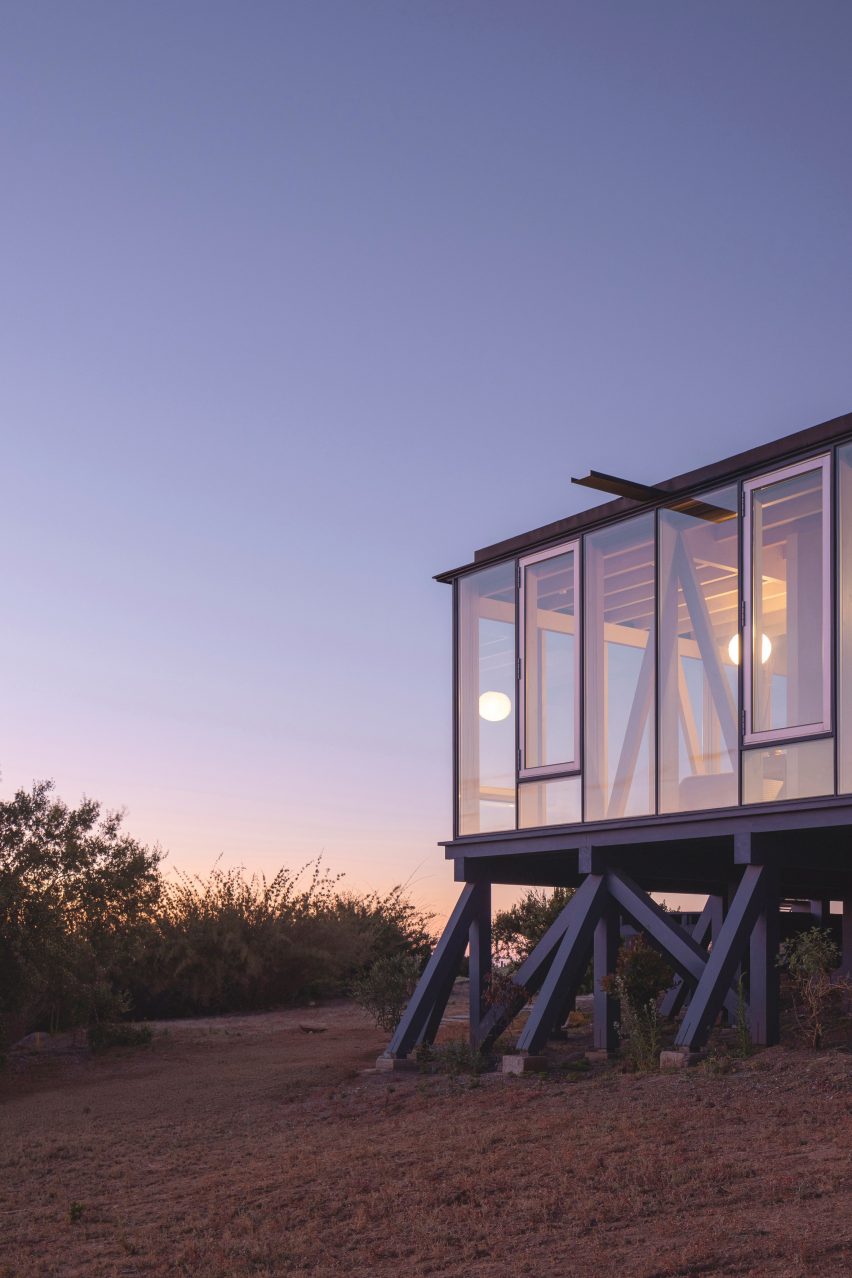
Lifted above the ground, the square-shaped main dwelling measures 13 by 13 metres. It was constructed using timber elements – made of radiata pine – that were prefabricated and assembled on-site.
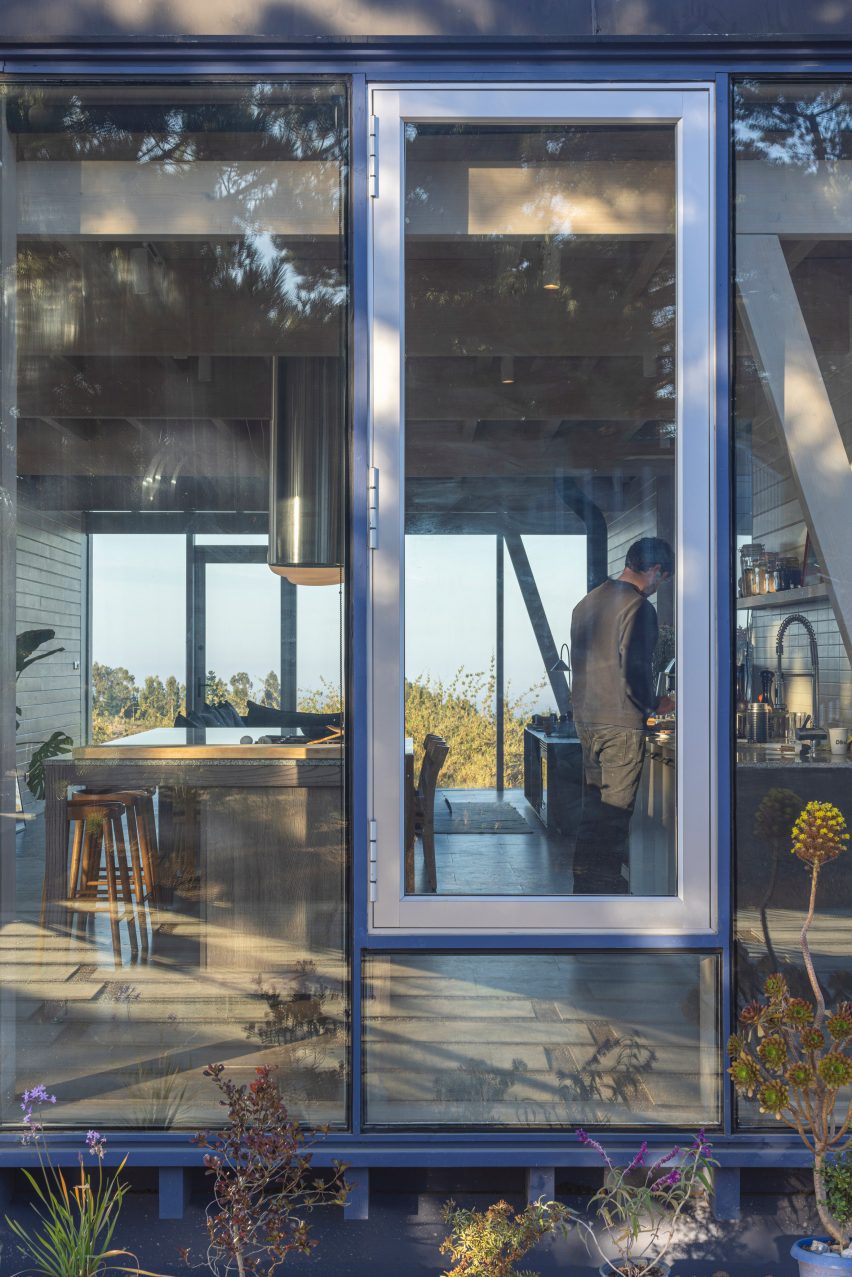 The studio wanted to show the expressive potential of wood, while having a rational design
The frame is composed of glued-laminated elements, while partitions were made using pressure-treated timber. The cladding is painted pine siding.
“This approach, which required meticulous coordination with the supplier, significantly reduced construction time and minimised interpretation errors, as the structural components arrived on-site like a giant puzzle,” the team said.
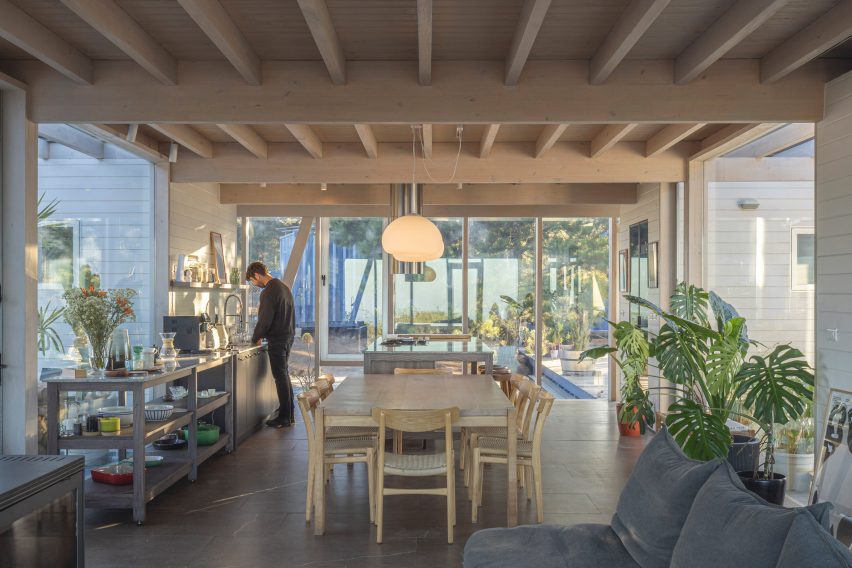 The interior is set up as a grid
A one-by-one-metre grid governed the placement of structural components and other elements. For instance, perimeter doors and windows adhere to a strict one-metre module, and secondary beams are spaced exactly 50 centimetres apart.
The system corresponded to the prefab construction method the team selected, and “resulted in an orderly, easy-to-build structure that also offers spatial richness and variety”.
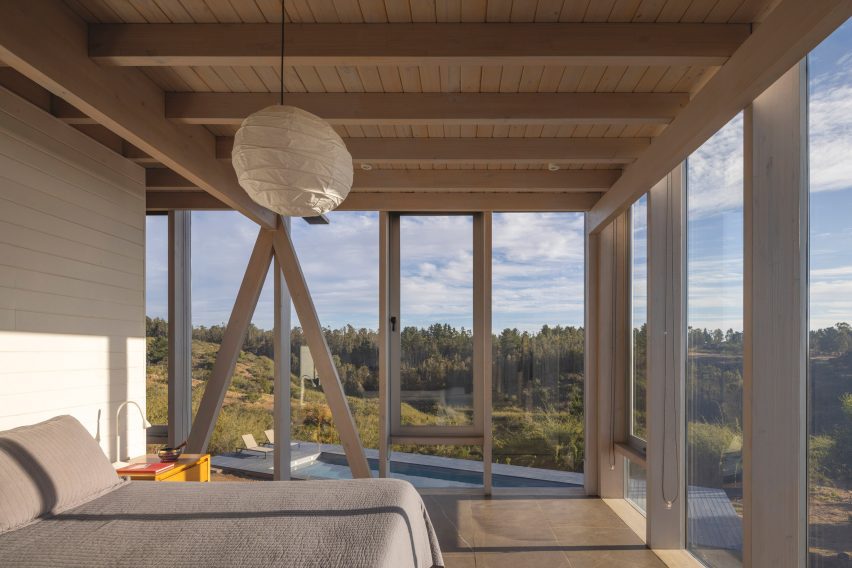 The ocean views were deemphasised to account for future development in the area
Within the structure, the grid gives way to more freely dimensioned spaces.
Small rooms – containing bedrooms and service functions – were placed in the corners of the square plan. The central portion is a large, open space that holds the kitchen, dining area and living room.
Two visual axes – north/south and east/west – intersect in the central space. Large stretches of glass offer views in all directions.
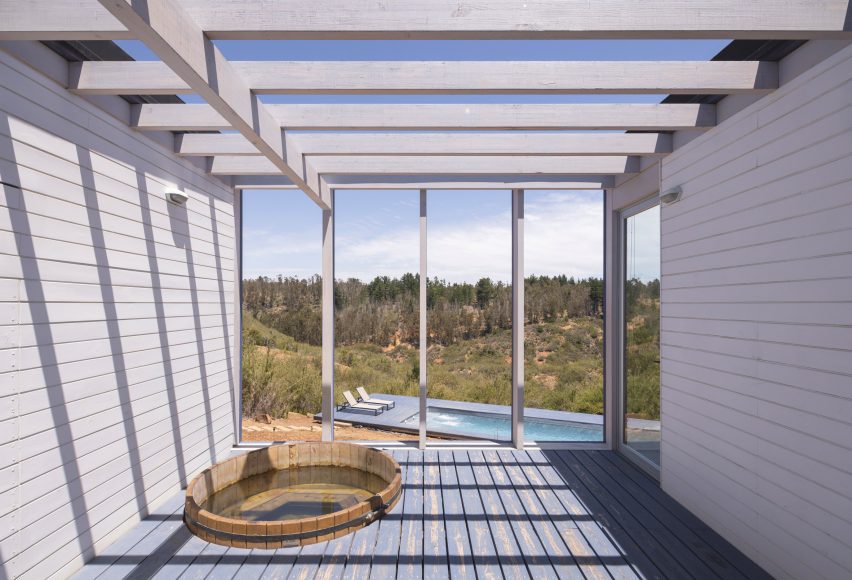 The house has two partially covered decks
“From this central point, one can visually grasp the cardinal points, the full depth of the house, the site and the surrounding landscape,” the team said.
The ocean sits to the south and is visible from the home. While the architects could have used a linear layout oriented toward the coast, they opted “for a centralised organisation that gives prominence to all landscape views”.
 The property was planted with drought-resistant plants
“We recognised that, since the site is not in a first-row coastal position, ocean views might become obstructed over time by new developments,” the studio said.
“Moreover, the other landscape views had inherent and more permanent value.”
To the east of the dwelling is a wooden deck, which acts as both an entrance and a scenic overlook. There is a xerophytic garden with drought-resistant plants and a large pine tree – one of three mature trees that contributed to the project’s composition.
Guillermo Acuña raises seaside annexe on forest of red-painted pine stilts
Another deck is found on the western side of the house, while the southern elevation overlooks a swimming pool tucked into the sloped site. The team took care in designing the connective elements and pathways.
“A network of paths and outdoor staircases interconnects these elements, creating a circuit that encourages full engagement with the site and its natural surroundings,” the team said.
The architects added that the design makes the most of coastal breezes and cross-ventilation. It also enables natural light to flow in from multiple directions at different times in the day.
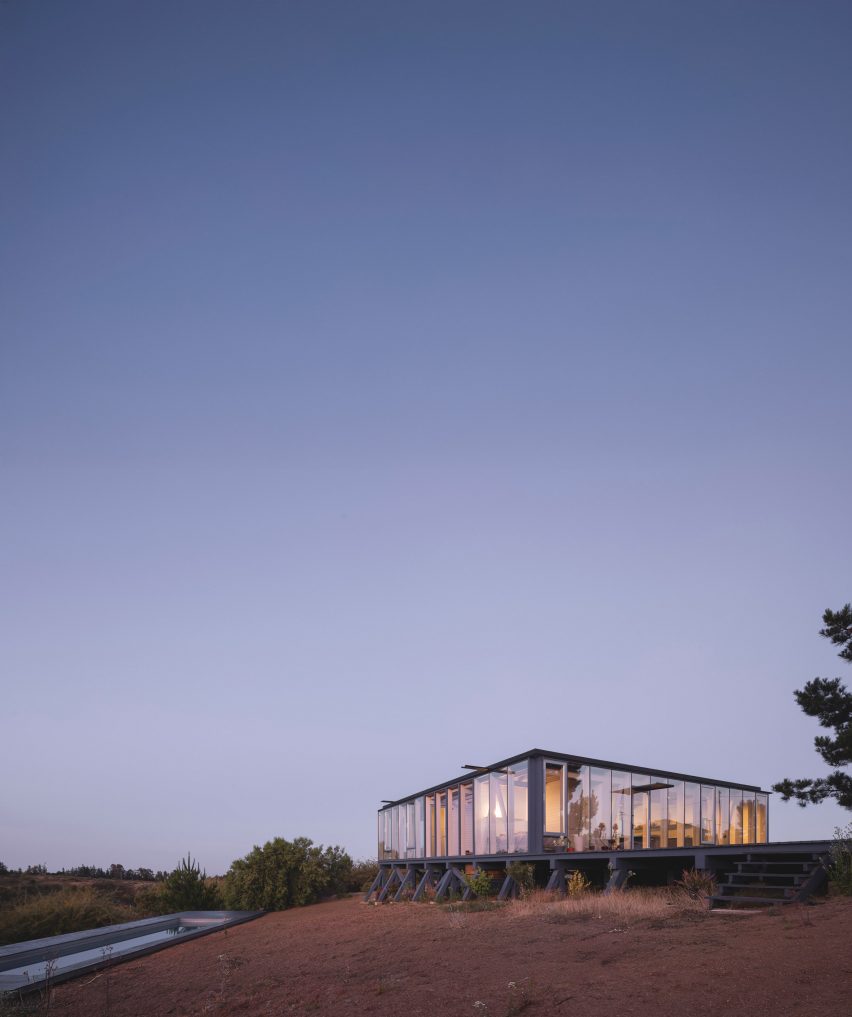 It was designed to make the most of coastal breezes
The use of a timber-based prefabrication method allowed the architects to create a home that is efficient and orderly, yet not sterile.
“The rhythm of exposed beams and columns, the presence of diagonal bracing, the slenderness of structural elements, and the material’s natural texture all contribute to a distinctive architectural language,” the team said.
Other projects by Iragüen Viñuela Arquitecto include a two-storey ski cabin in Chile with a gabled roof and wooden cladding. Tucked into a cluster of trees, it was constructed atop the foundation of a former building project that had not been completed.
The photography is by Pablo Casals Aguirre.
Project credits:
Architecture: Iragüen Viñuela Arquitecto
Team: Daniel Iragüen, Claudio Viñuela, Gustavo Schweitzer, Vicente de la Maza, María José Çaldumbide, Alexa Napp,Victor Cárcamo
Structural engineering: Roberto Stocker Lagos
Structure provider: Timber Ingenieria
Sanitary: Marcelo Santibañez
Gas: Manuel Gonzalez Ponce
Topography: Enrique Osorio
Contractor: Mario Cuevas