
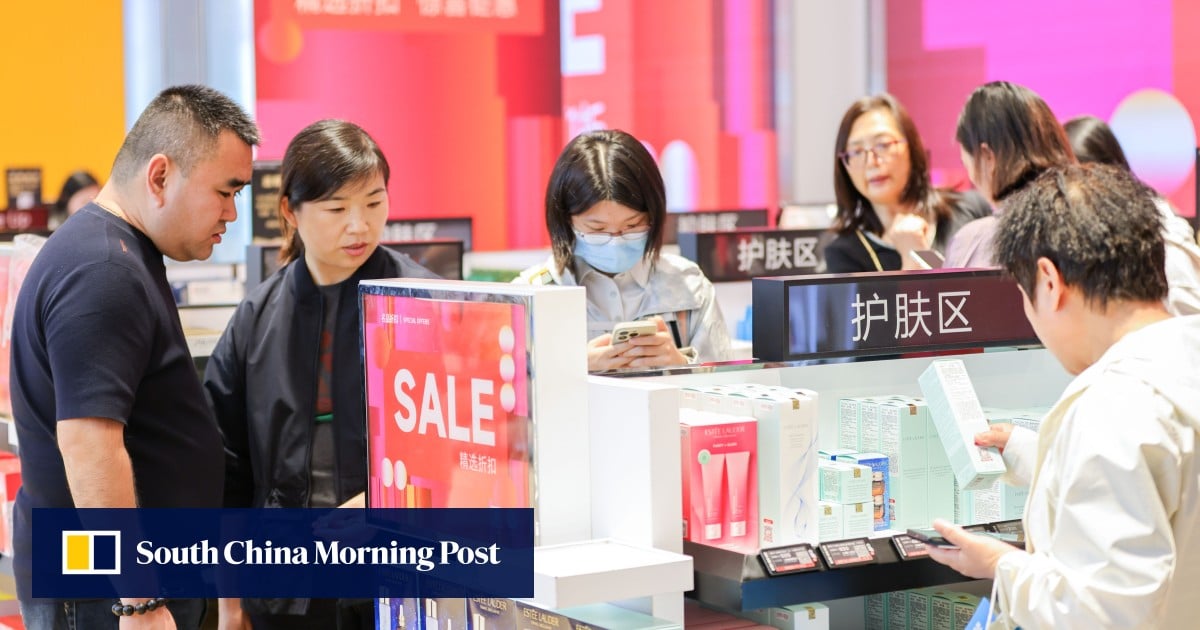
Chinese tourist numbers are recovering across Asia after a pandemic-era contraction, buoyed by the expansion of visa-free policies and a stronger yuan. But one thing has not returned: the spending sprees that used to boost duty-free retailers around the world.
The trend can be clearly seen in South Korea, which relied on Chinese travellers for 70 per cent of its duty-free sales before Covid-19. Around 5 million visitors from China arrived in the country during the first 11 months of 2025, a recovery to 92.3 per cent of 2019 levels.
But duty-free sales not only failed to rebound; they actually fell to levels last seen in 2015. Sales at South Korea’s duty-free shops declined 12 per cent year on year to US$80.6 billion between January and November last year, according to the Korea Duty-Free Shops Association.
In a sign of the times, two of the country’s duty-free retail giants – Shilla Duty Free and Shinsegae Duty Free – gave up parts of their concessions at Incheon International Airport in September and October, citing sluggish sales and soaring rental fees. The licences were once among the most coveted assets in the country’s travel retail sector.
“South Korea is one of the clearest examples of a duty-free market that has been structurally hurt,” said Subramania Bhatt, CEO of the travel marketing and technology firm China Trading Desk. “The old model of suitcase shopping and tour bus spending [by Chinese travellers] is structurally weaker.”
Visits to duty-free stores are often included in the itineraries of Chinese group tours, making shopping almost mandatory. But all-inclusive tours are losing appeal as China’s travellers – especially the younger generation – increasingly venture abroad independently, allowing them to focus more on the local culture and niche brands.