
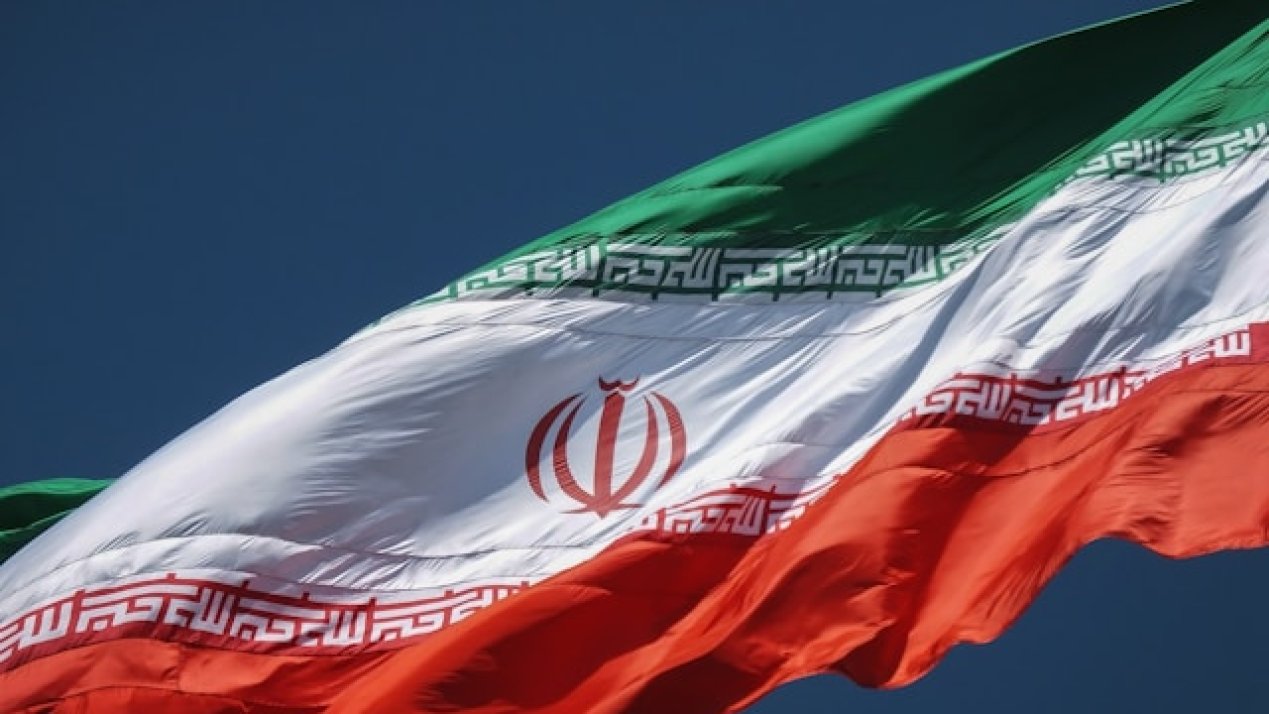
The United States will impose a 25% tariff on goods from countries that maintain commercial ties with Iran, President Donald Trump announced, as unrest escalates inside the country and Washington weighs its next steps.
According to two US Department of Defense officials cited by BBC News, President Trump has been briefed on a range of military and non-military options related to Iran. These include long-range missile strikes, cyber operations, and psychological campaigns, although no decision has been announced. The sources said that any potential military response would likely rely primarily on air power, while also considering ways to disrupt Iranian command structures and communications.
The tariff announcement was made on Jan. 12 through Trump’s Truth Social platform. “Effective immediately, any Country doing business with the Islamic Republic of Iran will pay a Tariff of 25% on any and all business being done with the United States of America. This Order is final and conclusive. Thank you for your attention to this matter!”
The measure adds pressure to Iran’s economy, which has been weakened by existing US sanctions, a sharply depreciating currency, and rising inflation. Food prices have reportedly increased by as much as 70%, and food accounts for roughly one-third of Iran’s imports. Analysts note that additional trade restrictions could further strain supply chains and household purchasing power.
Iran’s foreign minister said Tehran remains open to dialogue with Washington but is also “prepared for war.” White House Press Secretary Karoline Leavitt said an Iranian official had contacted Trump’s special envoy, Steve Witkoff, adding that Iran’s public statements differ from private communications. She warned, however, that the president is “unafraid to use military options if and when he deems necessary.”
Trump previously said the US military was evaluating “very strong options” if further protesters were killed. He also stated that Iranian leaders had reached out “to negotiate,” but added that the United States “may have to act before a meeting.”
Trump’s national security team is expected to meet at the White House to review next steps, though it remains unclear whether the president will attend. The US has also urged its citizens in Iran to leave the country or prepare an exit plan that does not rely on US government assistance.
Domestically, unrest inside Iran has intensified following weeks of anti-government protests driven by economic hardship and dissatisfaction with political leadership. Iran Human Rights (IHRNGO) reports that at least 648 protesters have been killed, including nine minors, though sources inside the country have suggested the actual number may be significantly higher. HRNGO said unverified reports could place the death toll above 6,000.
China and Other Asian Countries React to US Tariff Threats
China, Iran’s largest trading partner, has warned that it will respond if the United States implements the newly announced tariffs. A spokesperson for the Chinese embassy in Washington stated that Beijing would take “all necessary measures” to safeguard its interests, signaling potential retaliation. In 2024, China purchased 77% of Iran’s oil exports, according to Kpler.
Liu Pengyu, the embassy spokesperson, wrote on X: “Tariff wars and trade wars have no winners, and coercion and pressure cannot solve problems. Protectionism harms the interests of all parties.”
Other major Asian trading partners of Iran include India, the United Arab Emirates, Japan, and South Korea. Japan and South Korea recently finalized free trade agreements with the United States following earlier tariff disputes. While both countries now maintain a baseline 15% tariff under these agreements, the new US measure could create additional complications for trade flows.
Experts note that it remains unclear how the 25% tariff on “any and all business being done with the United States of America” will be applied, and whether it would be layered on top of existing US “reciprocal” import taxes.
Currently, China faces a 45% tariff on most goods, while India’s tariffs on certain imports, including Russian oil, stand at 40%. The measure could therefore have broad implications for countries with significant commercial ties to Iran, potentially disrupting regional trade networks and creating further economic uncertainty.
Past Interventions of the United States, Warnings
On Jan. 3, 2026, US forces carried out a large-scale military operation in Venezuela, known as Operation Absolute Resolve, that involved air strikes and special forces to capture President Nicolás Maduro and his wife, Cilia Flores. More than 150 US aircraft struck targets in and around Caracas overnight, overwhelming air defenses and enabling troops to seize Maduro and Flores and transport them to the United States to face longstanding criminal charges. The mission marked a significant escalation in US involvement in Venezuela’s political crisis and has drawn widespread international criticism.
Besides Iran, other countries have also been threatened. President Trump criticized Mexico for failing to curb drug trafficking, suggesting Washington might intervene militarily if the situation did not improve, and offered assistance to President Claudia Sheinbaum, which she firmly rejected. Trump also singled out Colombia, Cuba, and Greenland, framing his remarks as part of a broader effort to protect US security and influence.
In response, leaders of the targeted countries emphasized sovereignty and non-intervention. Sheinbaum reaffirmed Mexico’s commitment to cooperation without military interference, highlighting constitutional and international principles of self-determination. Colombian, Cuban, and Greenlandic authorities similarly rejected US threats, stressing national autonomy, regional stability, and the right to determine their own policies without external coercion.