
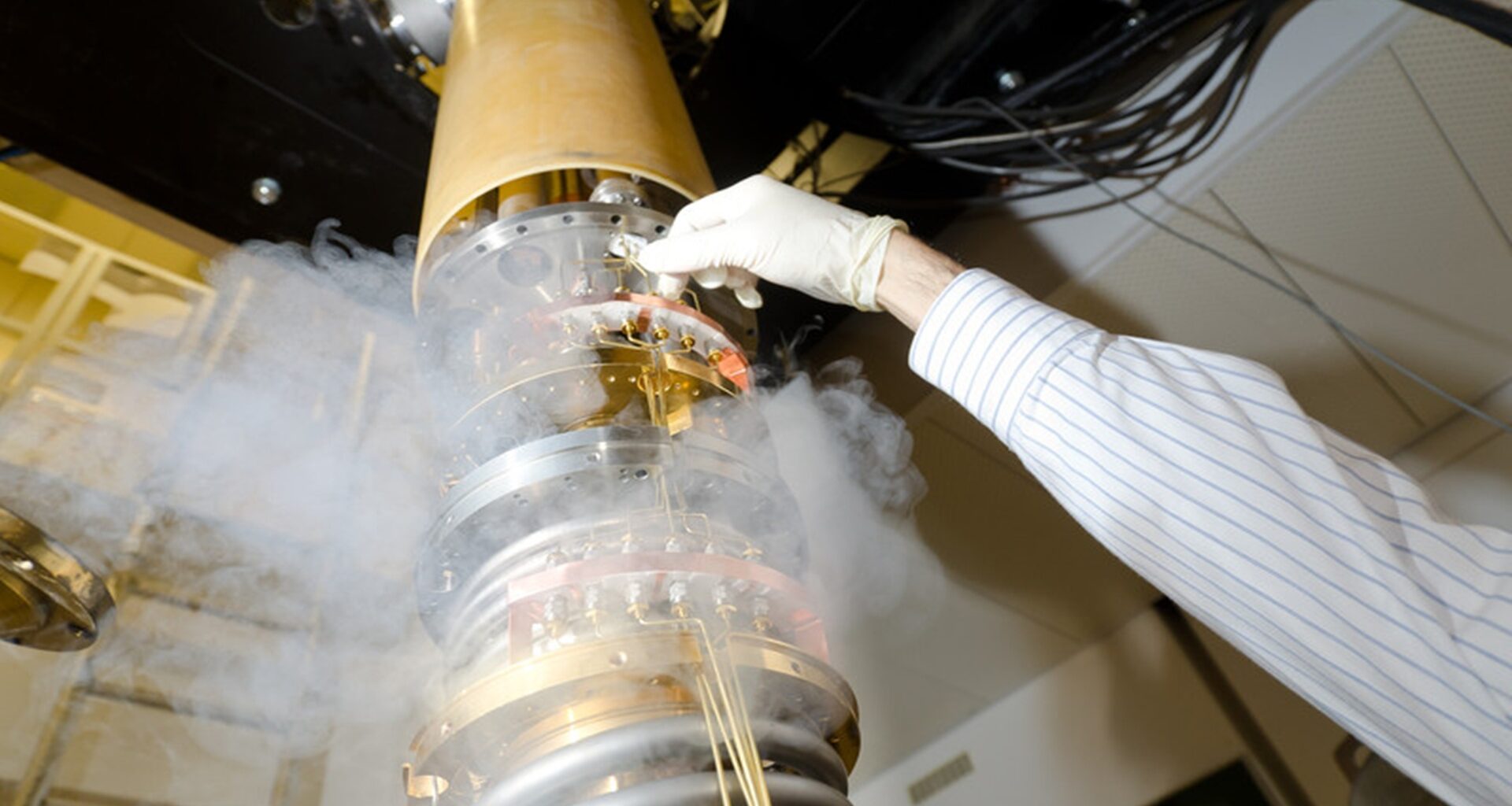
Scientists have uncovered a previously unthinkable state of matter that challenges decades of assumptions about how electrons behave, opening novel possibilities for quantum computing, sensing and advanced materials.
The discovery was achieved by researchers at Vienna University of Technology (TU Wien) in Austria, who worked together with theorists at Rice University in Texas. It showed that topological states can form even when electrons no longer behave like well-defined particles, contrary to long-held scientific beliefs.
Topology, which is a concept borrowed from mathematics, describes properties that remain unchanged despite distortions. In physics, topological materials are prized because their electronic behavior is unusually robust. This makes them attractive for low-power electronics and quantum technologies.
Until recently, such states were believed to depend on electrons behaving like identifiable particles with clear velocities and energies. However, that view has now been overturned by experimental evidence.
Breaking electron rules
For the study, the researchers used a material composed of cerium, ruthenium and tin (CeRu₄Sn₆). They then evaluated its behavior at temperatures less than one degree above absolute zero (0 Kelvin or -273.15 degrees Celsius).
According to Diana Kirschbaum, a researcher at TU Wien and first author of the study, the material exhibited a specific type of quantum-critical behavior when exposed at temperatures near absolute zero.
“The material fluctuates between two different states, as if it cannot decide which one it wants to adopt,” she explained. “In this fluctuating regime, the quasiparticle picture is thought to lose its meaning.”
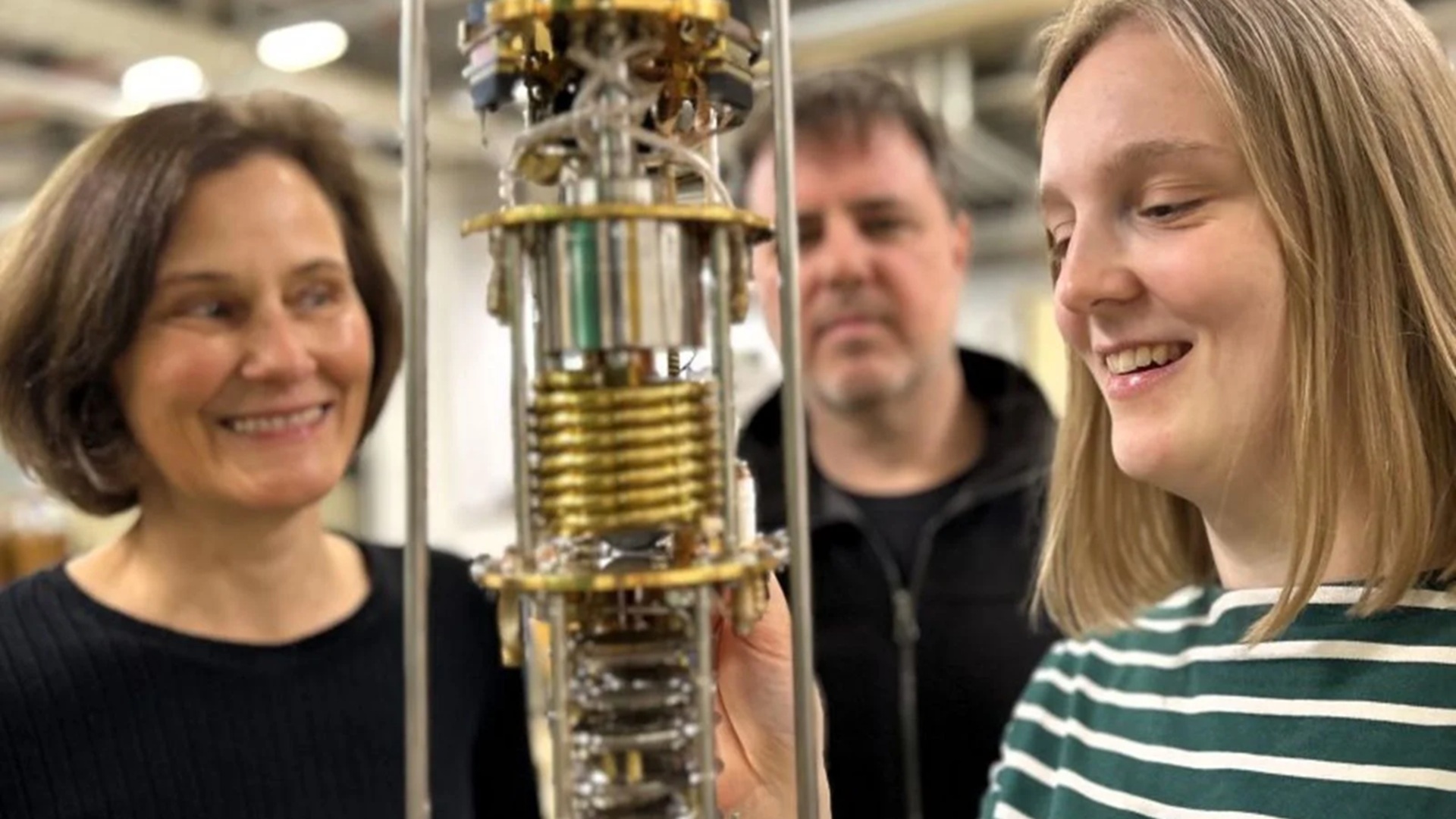 In the Microkelvin Lab at the Vienna University of Technology (TU Wien).
Credit: TU Wien
At extremely low temperatures, the team detected a distinct topological signal in the form of a spontaneous, or anomalous, Hall effect. In the Hall effect, charge carriers are normally deflected by a magnetic field.
In the current case, the deflection appeared without any external field, which was an unmistakable sign of topological behavior. The charge carriers behaved like particles, even though the usual particle model no longer applied in this material.
Surprisingly, the effect was strongest exactly where quantum fluctuations were most intense. “When these fluctuations are suppressed by pressure or magnetic fields, the topological properties disappear,” Kirschbaum continued.
A new quantum state
According to Silke Bühler-Paschen, PhD, a physics professor at TU Wien, the result came as a major surprise and shows that topological states need to be defined in broader terms.
“In fact, it turns out that a particle picture is not required to generate topological properties,” Bühler-Paschen pointed out in a statement. “The concept can indeed be generalized – the topological distinctions then emerge in a more abstract, mathematical way.”
The experiments further suggested that topological properties can emerge even in the absence of particle-like states. The newly discovered state, which the team calls emergent topological semimetal, was also supported by theoretical work carried out in collaboration with Rice University in Texas.
Lei Chen, a researcher and co–first author of the study working in the group of Qimiao Si, PhD, the Harry C. and Olga K. Wiess Professor of Physics and Astronomy at Rice University, developed a new model that links quantum criticality with topology.
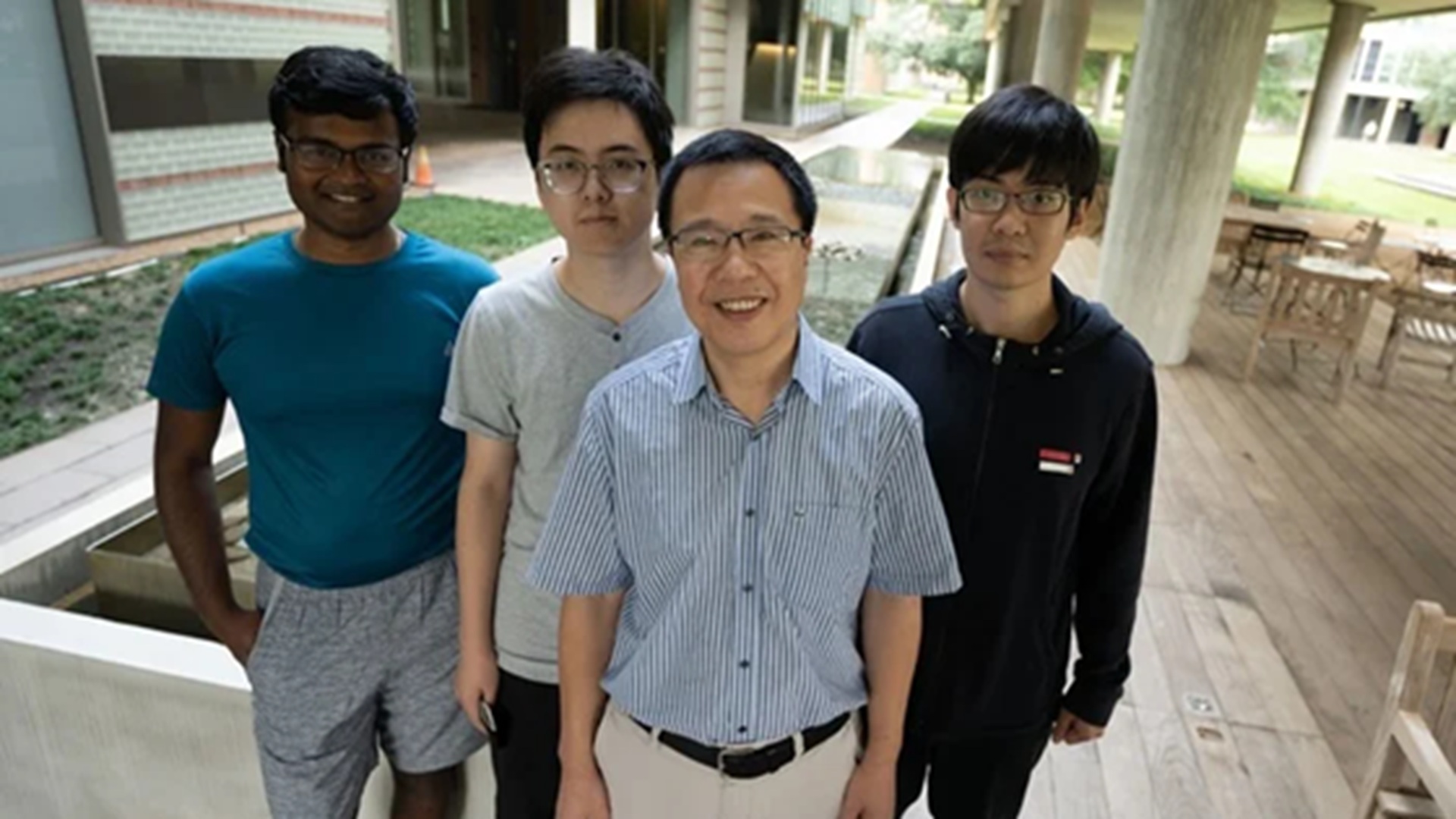 Qimiao Si, PhD, (middle) a Harry C. and Olga K. Wiess Professor at Rice University.
Credit: Jeff Fitlow / Rice University
“By merging these fields, we ventured into uncharted territory,” Chen noted in a press release. “We were surprised to find that the quantum criticality itself could generate topological behavior, especially in a setting with strong interactions.”
According to the scientists, the discovery offers a practical roadmap for finding new topological materials. Quantum-critical behavior is already known in many classes of compounds and is relatively easy to identify experimentally.
“Knowing what to search for allows us to explore this phenomenon more systematically,” Si concluded. “It’s not just a theoretical insight, it’s a step toward developing real technologies that harness the deepest principles of quantum physics.”
The study has been published in the journal Nature Physics.
Based in Skopje, North Macedonia. Her work has appeared in Daily Mail, Mirror, Daily Star, Yahoo, NationalWorld, Newsweek, Press Gazette and others. She covers stories on batteries, wind energy, sustainable shipping and new discoveries. When she’s not chasing the next big science story, she’s traveling, exploring new cultures, or enjoying good food with even better wine.