
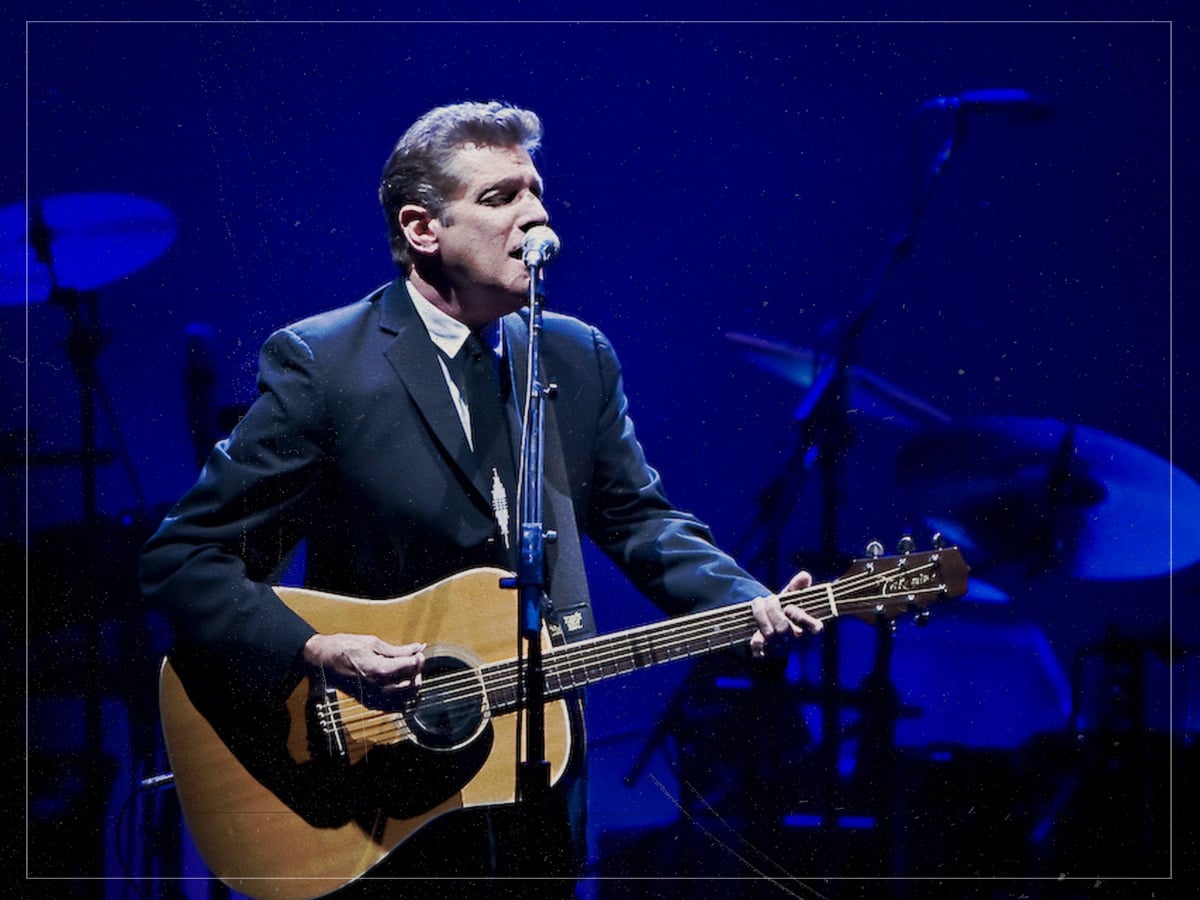
(Credits: Far Out / Steve Alexander)
Thu 15 January 2026 20:11, UK
The Eagles have always been open about the influence that a wide range of artists has had on their sound. When they first emerged in the early 1970s, they played a crucial role in preserving and modernising the rock sound of the 1960s, ensuring that its spirit lived on beyond the hippie era. However, the band credits much of their success to one performer in particular, whom they refer to as their “muse”.
The thing about a “muse” in rock is that it can sound like mythology, as if a band is describing some hazy lightning bolt rather than the reality of how careers actually get built. In practice, the greatest influence is often proximity. It is the person whose orbit you move in, whose standards you absorb, and whose instincts quietly recalibrate what you think is possible.
For the Eagles, that influence was never simply musical in the narrow sense. It was about professionalism, taste, and the discipline of making songs feel effortless even when they are carefully engineered. Ronstadt was already operating with the poise of someone who understood the whole machine, and that kind of example leaves fingerprints on everyone who passes through.
More so than a muse, this name can really be credited for the band’s origins. The formation of the Eagles was unlike any other 1960s and ‘70s troupe. It’s not the dream story of a group of ragtag friends growing up together, learning instruments and one day making it. Instead, it was more like a puzzle where the pieces were placed together until, one day, they clicked. As for the puzzle master making the earliest moves for the band’s creation, that would be Linda Ronstadt.
In 1971, Ronstadt was on the hunt for new musicians to join her band. Having already established herself as one of the most influential names in the 1960s scene, she was already a hot ticket and an artist that players scrambled to work with. During the audition process, she and her manager, John Boylan, recruited two guys called Glenn Frey and Don Henley. Both coming from opposite sides of the US, them both being invited to join the band was a moment of true kismet that set the ball rolling for one of the most beloved rock groups in history.
 The Eagles’ muse, Linda Ronstadt. (Credits: Far Out / Linda Ronstadt)
It was on tour with Ronstadt that the two decided to start a troupe, prompting the mastermind to play her hand again and recommend Bernie Leadon for the group. They also wanted Randy Meisner in the troupe, so they got Ronstadt to invite both into her own band to test out the musical chemistry. For a while, it seemed as if the folk star’s backing band was merely a musical lab, figuring out the formula for what would come to be the Eagles.
When they finally got it right and recorded their self-titled debut album in 1972, they never forgot the contributions Ronstadt gave to the band, not only as an essential logistical force bringing them together, but as a vivid musical and artistic inspiration too. “Linda was our muse and a brave artist who followed her instincts,” Frey told Express.
In particular, he looked towards her 1983 album What’s New time and time again as a kind of gold standard to meet. “This album, the first of three with Nelson Riddle, is my benchmark,” he said. More so than any of her 1970s albums, which feature Frey as part of her band, it’s this 1980s record that stood out as one of his all-time favourite albums from a musician who played a vital hand in his career.
He describes the record as being “well-written, infectious, beautifully sung0.” But even that isn’t high enough praise for Ronstadt, who Frey honoured again and again throughout his long career.
“She has always felt a responsibility to educate as well as entertain. She’s always putting in a Chuck Berry song for people that might not have heard of that, or ‘Blue Bayou’ by Roy Orbison, […] I really admire her bravery and credibility,” he said of the singer, deeming her “the first lady of country rock” and the band’s ultimate “muse”.
Related Topics