

Updated hospital ratings will roll out throughout 2026, offering Long Island patients new data on safety, outcomes and patient experience across the region’s 20 hospitals.
Produced by a mix of government agencies, hospital safety groups, nonprofit organizations and news outlets, the rankings can help patients spot trends and potential red flags.
Health experts caution, however, that the scores are best used as a starting point — alongside guidance from physicians and other trusted sources — rather than as a final verdict.
“Hospital reports and rankings are some of the many resources patients can reference when considering various hospitals for a specific procedure or specialty,” said Janae Quackenbush, a spokesperson for the Healthcare Association of New York State.
Here’s when major hospital rankings are expected to be released in 2026 — and what experts say patients should know before using them.
When will the 2026 hospital rankings be released?
Healthgrades: January and November
Healthgrades typically releases its rankings of America’s top 250 hospitals in late January.
The organization ranks hospitals by analyzing three years of Medicare survey and outcome data from more than 45 million patients at over 4,500 hospitals, combining procedure performance and patient risk to produce statistically predicted outcomes.
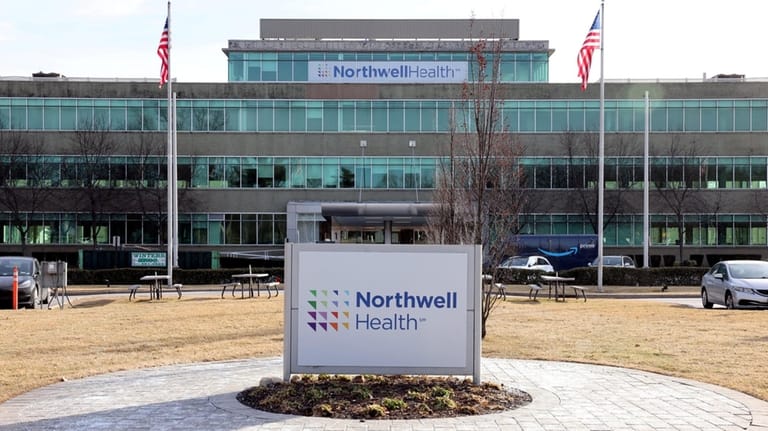
Thirteen Long Island hospitals, including facilities run by Northwell Health, and Stony Brook Hospital, were recognized for their specialty care treatments from Healthgrades in November. Credit: Debbie Egan-Chin

Stony Brook University Hospital Monday, Nov. 22, 2021. Credit: Barry Sloan
The group also awards hospitals in specialty treatment and outpatient care. The 2026 rankings for both of those categories were released in November. Stony Brook Hospital and Northwell Health facilities topped the list of award winners in specialty treatment.
Newsweek’s World’s Best Hospitals: End of February
The news outlet — in partnership with global data platform Statista — ranks hospitals based on four metrics: peer recommendation, patient experience, hospital quality metrics and Statista’s Patient-Reported Outcome Measures survey, which measures how well hospitals implement patient feedback.
Premier’s 100 Top Hospitals: April or May
Premier Inc. will release its 100 top hospitals rankings in the spring, according to a Premier spokesperson. The Charlotte, North Carolina-based health care company bases its rankings off nine measures distributed across five domains, including inpatient outcomes, financial health and patient experience.
Leapfrog Hospital Safety Grade: Spring and fall
Leapfrog typically releases biannual safety grades in the spring and fall, measuring nearly 3,000 general acute-care hospitals using 32 evidence-based patient-safety measures.
The most recent fall 2025 grades were released Nov. 13, and the latest spring 2025 grades were published May 1. You can see how local hospitals fared in both those rankings in the database below.
In 2026, Leapfrog will temporarily remove staff responsiveness from its criteria in line with the Centers for Medicare & Medicaid Services’ plan to pause reporting on the statistic. Instead, the group will increase the weight of nurse communication.
Emergency Nursing Association’s Lantern Awards: July
The Emergency Nursing Association gives Lantern Awards to emergency departments based on applications submitted by teams of emergency department nurses, evaluating performance and outcome metrics, as well as healthy work environments. A spokesperson confirmed the 2026 awards will be published in late July.

In 2025, Emergency Nursing Association gave Lantern Awards to Huntington Hospital, above, and St. Joseph Hospital. Credit: Newsday/J. Conrad Williams Jr.

St. Joseph Hospital in Plainedge on Tuesday, Aug. 19, 2025. Credit: Morgan Campbell
ENA President Dustin Bass says the awards motivate emergency departments to improve care for patients and work conditions for emergency nurses.
“Teams with Lantern Awards, because of all the things they’ve put in place, have lower turnover rates than the national average,” Bass said.
In 2025, ENA granted Lantern Awards to Huntington Hospital and St. Joseph Hospital.
CMS Five-Star Quality Rating System: July
The Centers for Medicare & Medicaid Services assigns hospitals a score between one and five stars based on five criteria: mortality, safety of care, readmissions, patient experience and timely and effective care. The data is typically updated in late July. CMS didn’t respond to Newsday inquiries seeking to confirm 2026 dates.
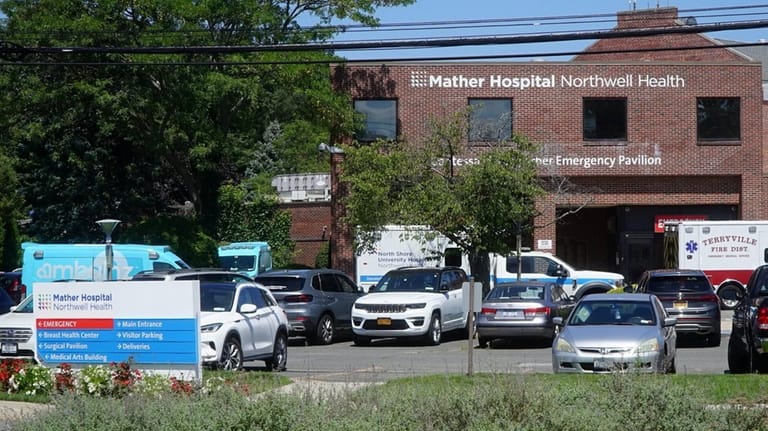
In 2025, CMS awarded five-star ratings to hospitals, including Mather. Credit: Newsday/AJ Singh
In 2025, CMS awarded five-star ratings to Catholic Health’s St. Francis Hospital & Heart Center, NYU Langone Hospital — Long Island and Northwell’s Huntington, Mather and Glen Cove hospitals, Newsday reported.
The CMS Five-Star Quality Rating System is the only hospital ranking service that is run by a federal organization. Gregory Alexander, a professor at Columbia University School of Nursing, recommends patients use the CMS Care Compare portal to cross-reference data, including readmission rates by condition and health care-associated infections.
U.S. News & World Report’s Best Adult Hospitals: August
U.S. News & World Report will release its Best Adult Hospitals rankings in early August, according to a spokesperson for the publication. Other releases include Best Children’s Hospitals in early October and Best Nursing Homes in mid-November. The publication will roll out its inaugural Best Home Health rankings, an assessment of in-home health care, in late February.
U.S. News bases its rankings on patient outcomes, hospital structure and clinical processes, producing lists tailored to specific conditions and specialties.
“The needs [patients] have are different, the type of care they need is different and the optimal hospital for them may be quite different,” said Ben Harder, managing editor and chief of health analysis at U.S. News & World Report.
In 2026, the organization will assign greater weight to risk-adjusted outcomes for specialty rankings and will no longer source data from the American Hospital Association, including data on nurse staffing, intensive care unit specialists and patient services, according to a post from U.S. News. Rankings will instead rely upon a patient-experience survey to measure nursing quality, which the outlet calls “a more direct measure of nursing quality.”
A Healthcare Association of NYS spokesperson told Newsday that U.S. News discontinued its use of AHA’s survey data because the organization decided last year to discontinue sale of its Annual Survey Database for use in hospital rankings.
Tips for interpreting rankings
While hospital rankings are a good launch point for understanding one’s care options, experts advise patients not to choose a facility solely based on rankings, and to consult trusted physicians for care decisions.
Elisabeth Benjamin, vice president of health initiatives at Community Service Society of New York, says that it is important for patients to take rankings “with a grain of salt.” However, she said some rankings provide critical information on a hospital’s safety metrics, like health care-associated infection rates.
“One of the most important things that I would want to know is hospital-acquired infections,” Benjamin said. “ ‘Did the hospital make you sicker? Were they tolerating malpracticing doctors?’ ”
Several rating systems report those metrics, including the Leapfrog Hospital Safety Grade and CMS’ Five-Star Quality Rating System.
Health care professionals acknowledge that many rankings rely on data that is six to 12 months old, meaning scores may not reflect a hospital’s current performance.
“Patient safety has to be a day-to-day priority to get the best care,” said Patricia Kelmar, senior director of health care campaigns for the advocacy group PIRG.
Kelmar said one of the best ways to interpret rankings is to look at long-term trends.
“If the data is going to be old, an important thing to consider is the trend,” she said. “If you see that they’re trending in the right direction, they’re changing processes to get better next year.”
Rankings have pushed hospitals to improve care and safety, Benjamin said.
“The industry does look at them,” she said. “They do try to improve their statistics. There’s a real merit to the exercise overall.”