
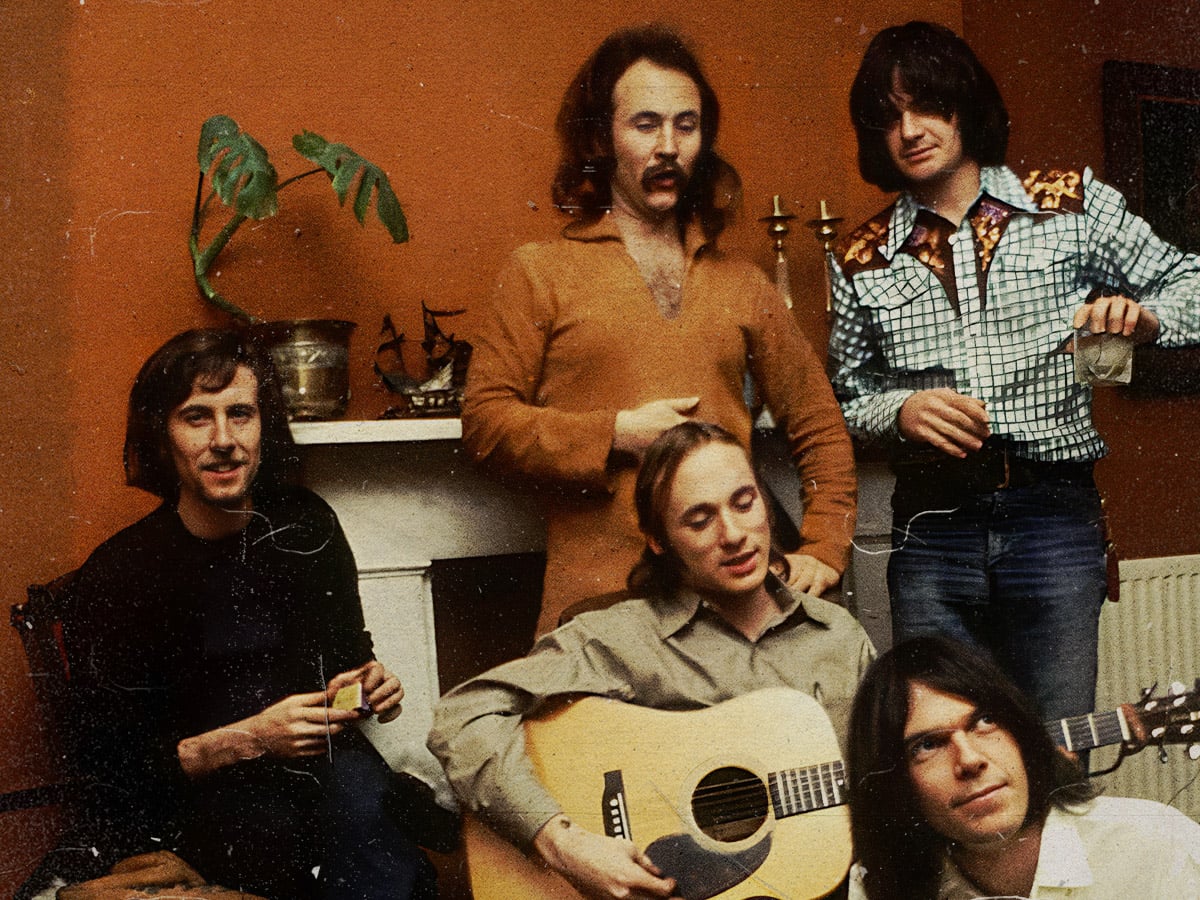
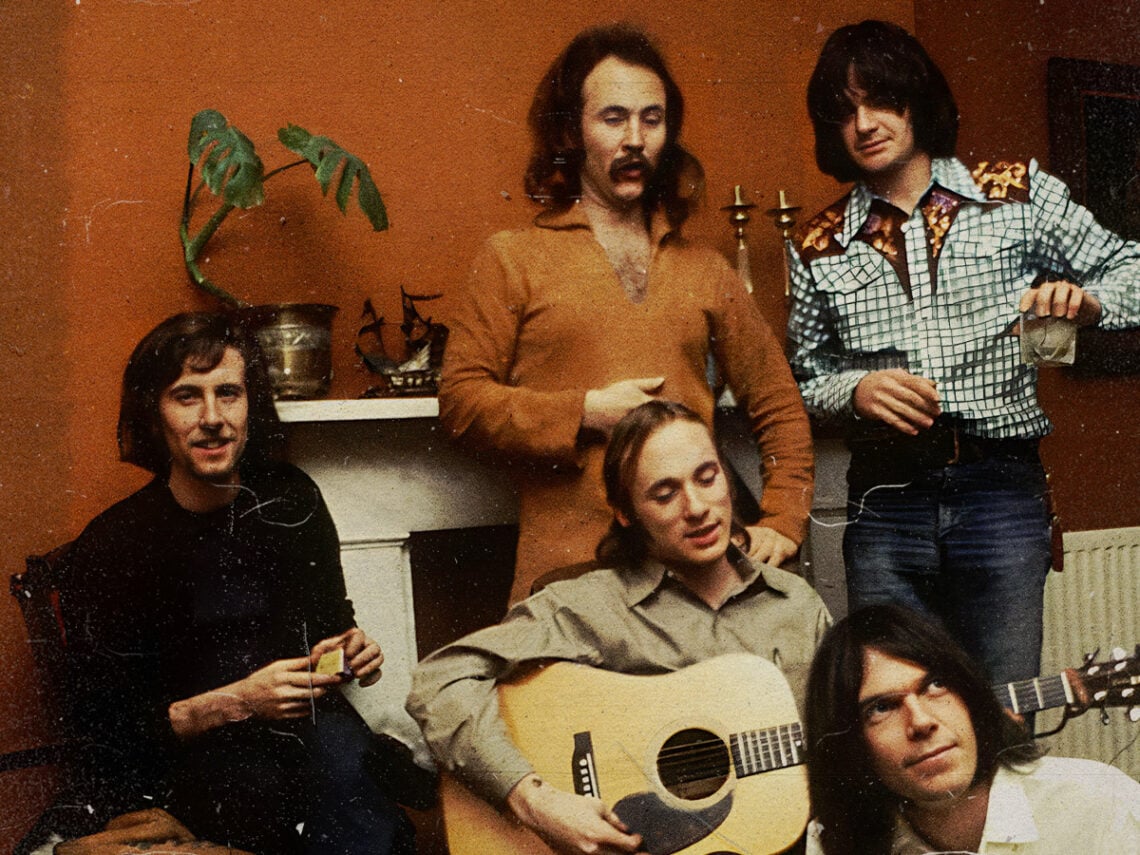
(Credits: Far Out / Alamy)
Fri 16 January 2026 19:00, UK
The formation of a supergroup needs to be approached with extreme caution, not least in the case of Crosby, Stills, Nash and Young.
The original three-piece of Crosby, Stills, and Nash was built on a delicate chemistry that seemingly existed between that trio of musicians. By some divine twist of fate, these three songwriters from different corners of the Atlantic were bound together in the leafy suburb of Laurel Canyon to create harmonies that only their voices could achieve.
Yet after just one album, their 1969 self-titled debut, Stephen Stills decided to test the balance of this collaboration by introducing an old friend into the fold. And not just any old friend, no, it was the admittedly wildly talented but crucially, famously uncompromising Neil Young into the mix.
Seeing how his songwriting ability could marry with a collaborative approach in Buffalo Springfield, Stills believed that Young could add another dimension to the band. His songwriting had a grittier edge, and his ability as a guitarist meant their melodies could take on even higher realms. But what about the harmonies? How could his voice merge with an already air-tight trio?
Graham Nash was acutely aware of these dangers and posed serious questions before approving Young’s admission to the band. But, upon an initial meet-up and jam session with Canadian Nash saw the sonic doorway through which they could pass.
“It was a different band when Neil joined,” Nash explained. “Not a lot of people understand that. They think it’s just an added voice. But it’s not. It’s an added attitude. Neil brings a sharper edge. I was gonna say a darker feeling, but I don‘t mean that in a negative way. He brings this edge to us that we don’t have. And, of course, you have to take into account his ability to play lead guitar against and with Stephen…Crosby, Stills, Nash and Young are a completely different band than CS&N.”
As the musician relatively responsible for thrusting the band into this darker sound, it was only right then that Young took the bulk of vocal responsibility. With a voice ready-made to narrate the darker worlds of his melodies, he took on the position of lead vocalist 14 times across the work of the four-piece’s three studio albums, Déjà Vu (1970), American Dream (1988) and Looking Forward (1999), as well as their single ‘Ohio’.
Stills was close behind, providing lead vocals on 11 tracks, while Nash delivered nine and Crosby six.
How did they choose who sang lead?
Naturally, the lead vocals were mostly assigned to the musician who wrote the song, which is exactly why Young took up most of the lead duties when the band became a four-piece.
While all of them were prolific songwriters, Young was relentless in the pursuit of his own ideas and as Nash explained, he changed the make-up of the band upon arrival and so obviously took the lead more often.
But Young’s influence also bled into the harmonies. The founding three members had an unspoken synergy that meant they could share lead more seamlessly, whereas Young generally contributed to the harmonies when singing lead on his own material, and then delivered killer guitar work for the remaining band members’ songs.
Related Topics