
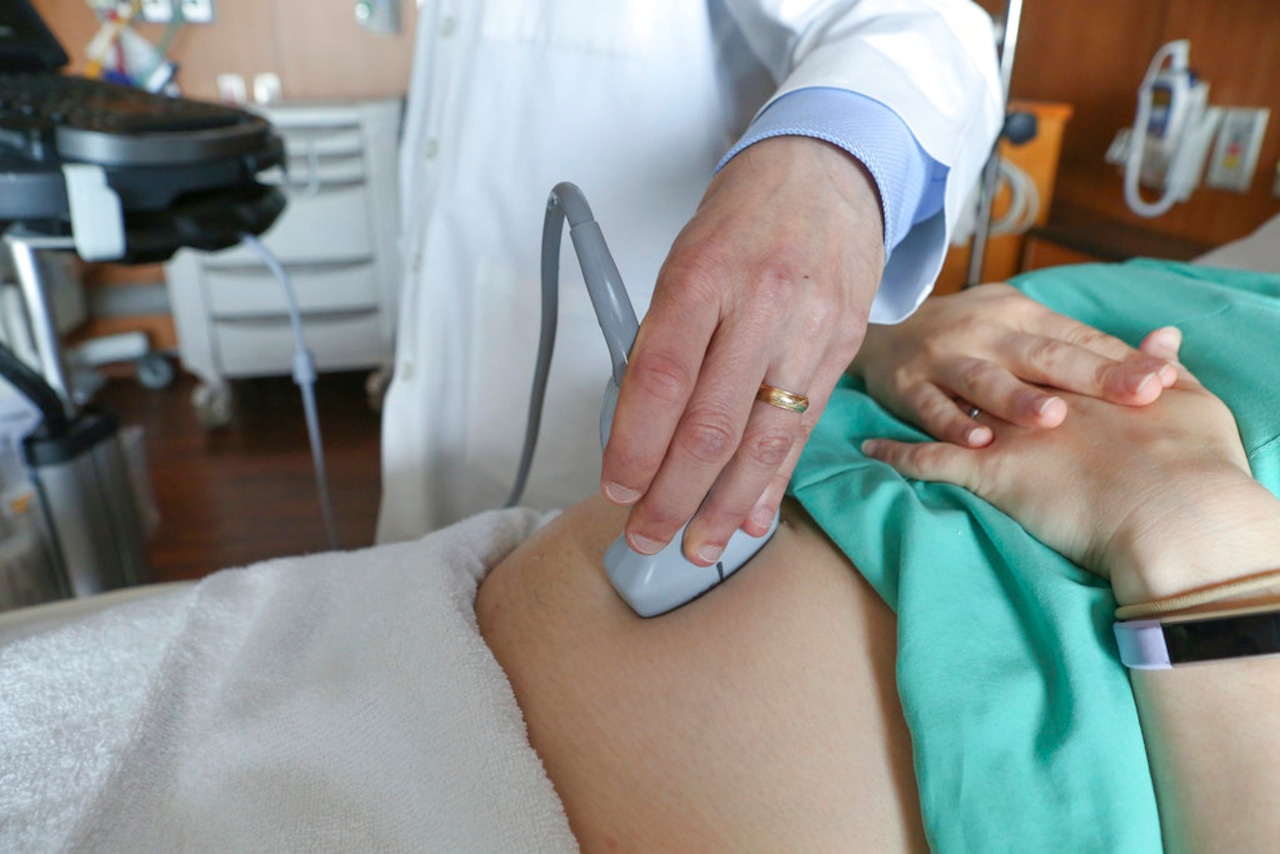
Are robots really going to do ultrasounds in Alabama?
During a health care roundtable at the White House on Friday, Dr. Mehmet Oz, administrator for the Centers for Medicare & Medicaid Services, praised the state’s “pretty cool” plan.
“Alabama has no OBGYNs in many of their counties, so they’re doing something pretty cool. They’re actually having robots do ultrasounds on these pregnant moms,” he said, while seated next to Health Secretary Robert Kennedy Jr. and President Donald Trump.
Oz is referring to Alabama’s plan to use some of the $203 million it was awarded under the federal government’s Rural Health Transformation Program, a grant that was created in last year’s Big Beautiful Bill.
In its proposal for the grant, Alabama said it hoped to provide “telerobotic ultrasound systems” as part of its maternal and fetal health initiative.
Essentially what the system does is allow a sonographer, or operator, to perform an ultrasound from a remote location, from where they can control the robotic machine.
“Telerobotic ultrasound has the potential to revolutionize telemedicine by connecting the remote underserved areas of the world with a real-time imaging capability for diagnosis of acute diseases such as acute appendicitis and ectopic pregnancy,” Dr. Vikram Dogra, director of ultrasound and professor of radiology and biomedical engineering at the University of Rochester, said in a 2015 Radiological Society of North America article.
But many on social media criticized the plan.
U.S. Senator Bernie Sanders said the plan was “not cool.”
“No, Dr. Oz. It is not “cool” that we don’t have OBGYN’s in many rural counties in America.It is an international embarrassment,” Sanders posted on X. “In the richest country on earth, we need more doctors, nurses, dentists and mental health counselors, not more robots.”
Others called it “a dystopian horror story” or symptomatic of the state’s abortion ban causing OBGYNs to leave.
Since the Supreme Court overturned Roe v. Wade in 2021, applicants for OB-GYN residency programs in the state dropped 21.2%, according to the Association of American Medical Colleges.
Alabama’s plan for the grant acknowledged it needed to address maternal care deserts in rural communities.
More than a third of the state’s counties are considered maternity care deserts by the organization March of Dimes, meaning there is limited or no access to hospitals with labor or delivery units, birth centers, or obstetric providers.
About 28% of women in the state had no birthing hospital within a 30-minute drive of their home, compared to the national average of 9.7% of women, the organization found.
Alabama has the third highest maternal mortality rate in the country at 38.6 deaths per 100,000 births, according to the Centers for Disease Control and Prevention. The infant mortality rate is 7.1 deaths for every 1,000 births, which is higher than the national average of 5.5 deaths, according to the Alabama Department of Public Health.
The telerobotic solution gets at another issue that plagues rural communities across Alabama — a shortage of physicians and healthcare professionals who can do things like perform ultrasounds.
The rural health grant could also help address that problem, according to the Medical Association of the State of Alabama.
Alabama ranks near the bottom nationally in the number of doctors per patient. For every 100,000 residents, the state has just 241 primary care physicians, placing Alabama 45th among the states, the organization said in a press release earlier this month.
The state’s grant plan includes a Rural Workforce Initiative to fund healthcare training, support residency slots in high-need specialties like primary care, and to provide incentives to attract professionals to rural practices.
“The causes of Alabama’s doctor shortage are many, including physician retirements, physician burnout, a challenging medical liability environment, and reimbursement rates that rank among the lowest in the country,” said Dr. Mark LeQuire, president of the Medical Association. “But regardless of the cause, the solution is clear: Alabama must train, recruit and retain more physicians.”
“Doctors are far more likely to practice where they complete their residency training,” LeQuire added. “By investing in residency programs, Alabama can grow its physician workforce, improve access to care and strengthen the quality of life in rural communities.”
Alabama lawmakers are expected to consider legislation during their current session on the implementation of the Rural Health Transformation Program.