
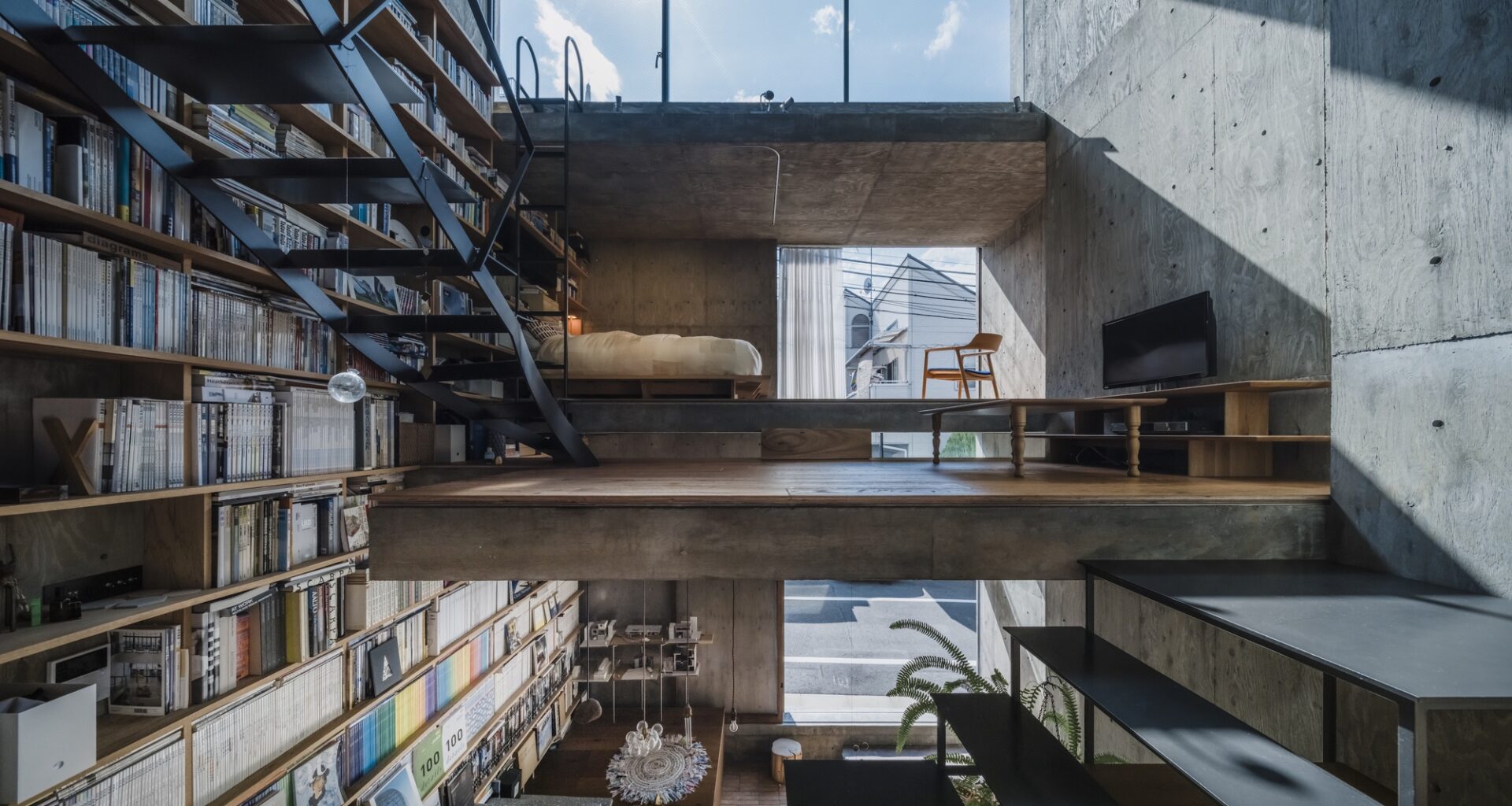
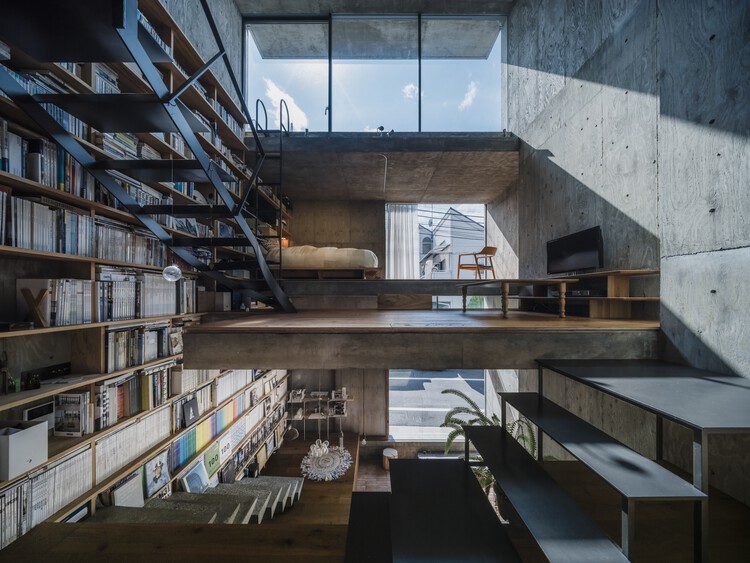
 Building Frame of the House. Image Courtesy of IGArchitects
Share
Or
https://www.archdaily.com/1037835/architecture-as-a-living-medium-get-to-know-the-works-of-igarchitects
Founded in 2020 by Masato Igarashi, IGArchitects is an architectural practice based in Tokyo and Saitama, Japan. The studio, one of the winners of the ArchDaily 2025 Next Practices Awards, explores enduring architecture through a careful yet assertive treatment of structure, scale, and materiality. Prior to establishing his own practice, Igarashi worked at the large-scale firm Shimizu Sekkei as well as the Suppose Design Office, gaining experience across projects ranging from major developments to smaller, concept-driven works. This breadth of experience continues to inform IGArchitects’ current focus on residential and commercial architecture across Japan.
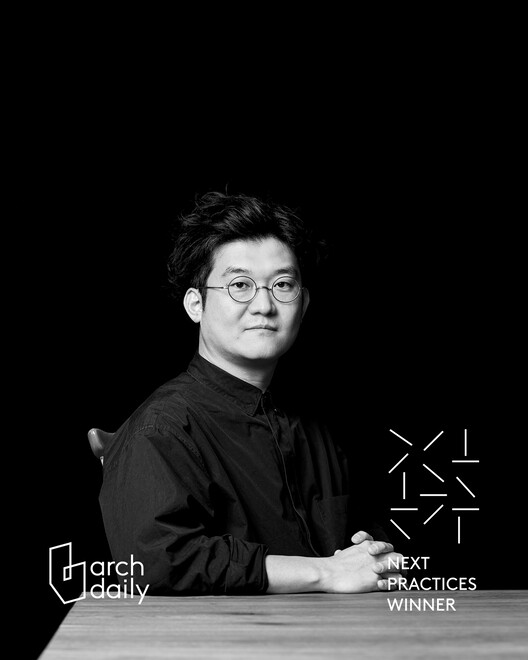 Masato Igarashi. Background image courtesy of IGArchitects
The studio’s work is grounded in close engagement with its surrounding environment, addressing geographical, climatic, and cultural conditions with a minimalist design approach. Rather than pursuing complexity through form or ornament, IGArchitects seeks intensity, rhythm, and sequences through simplicity. The resulting architecture is strong but quiet—minimal in appearance, yet spatially generous and flexible through use and time.
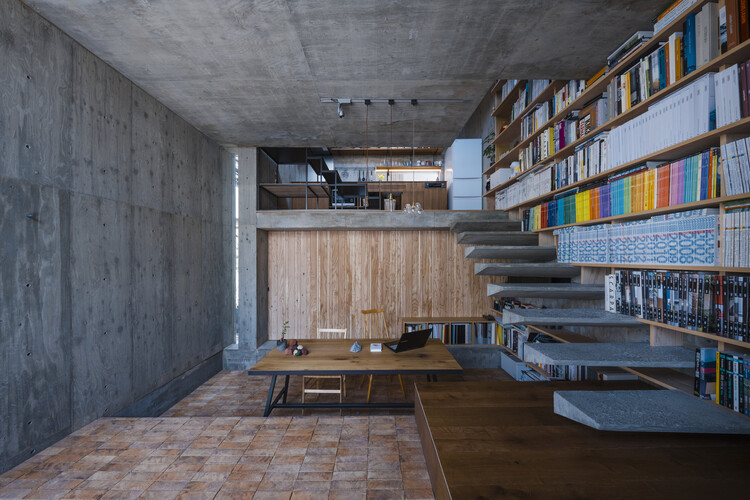 Building Frame of the House. Image © Ooki Jingu
Exposed concrete often becomes the medium through which this philosophy is articulated. In IGArchitects’ work, materiality is not only treated as an aesthetic layer, but also as a structural and atmospheric framework. Texture, color, weight, and tangible presence are carefully calibrated in response to climate and site, allowing architecture to register environmental forces. The studio frames this ambition as the pursuit of “universal and generous architecture through structure, materiality, and scale,” capable of adapting to environmental change and different temporal conditions.
Related Article 20 Practices Shaping the Future of Architecture: Winners of the ArchDaily 2025 Next Practices Awards
Flexibility of the space, however, is not reduced to mere openness. IGArchitects questions how far architectural elements can remain indeterminate and to what extent users can reinterpret space beyond its assigned program. Functions and spatial hierarchies are carefully re-examined, producing environments that feel expansive without becoming abstract. As the architect describes an attempt to “release space from services and structure,” the work proposes instead a balance between structural clarity and spatial freedom. The buildings are conceived to remain resilient even as their uses evolve. This attitude is expressed through subtle displacements of walls and slabs, shifted vertically and horizontally to create structures that are legible but spatially complex.
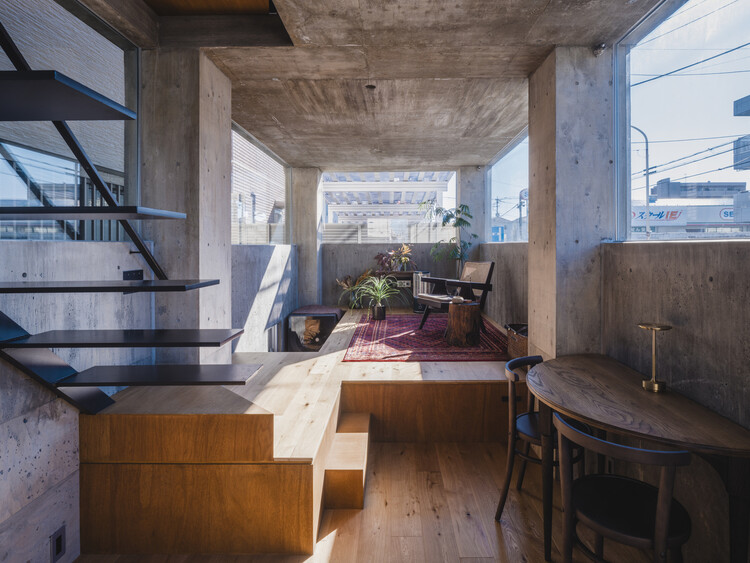 2700 House. Image © Ooki Jingu
In the studio’s early work, the Café in Ujina (2022), located along the coast in Hiroshima, a glass-walled open space is formed by columns and four slabs set at varying heights. Stacked, table-like structural elements generate a framework in which interior and exterior interweave, with the slab heights gradually increasing toward the center. The architect likens this condition to a jungle gym—an analogy that encapsulates the studio’s thinking. A jungle gym, he suggests, is robust yet open-ended; it is a playground but can be an observatory: its strength lies precisely in its capacity to be reinterpreted over time, rather than in the completion of a fixed architectural scenario.
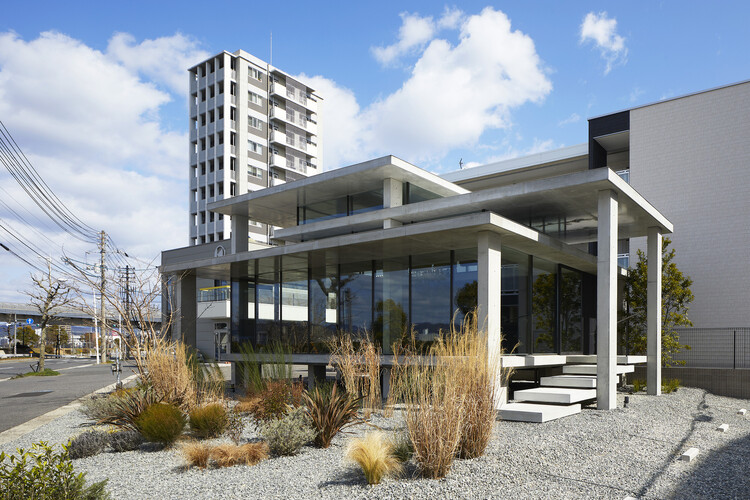 Café in Ujina. Image © Toshiyuki Yano
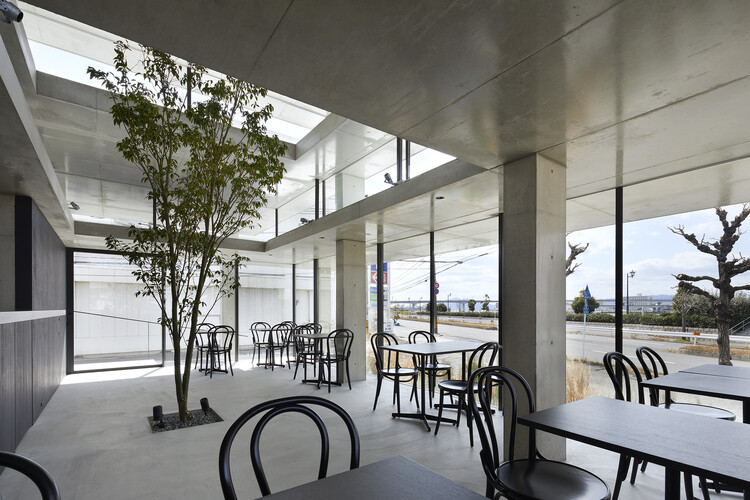 Café in Ujina. Image © Toshiyuki Yano
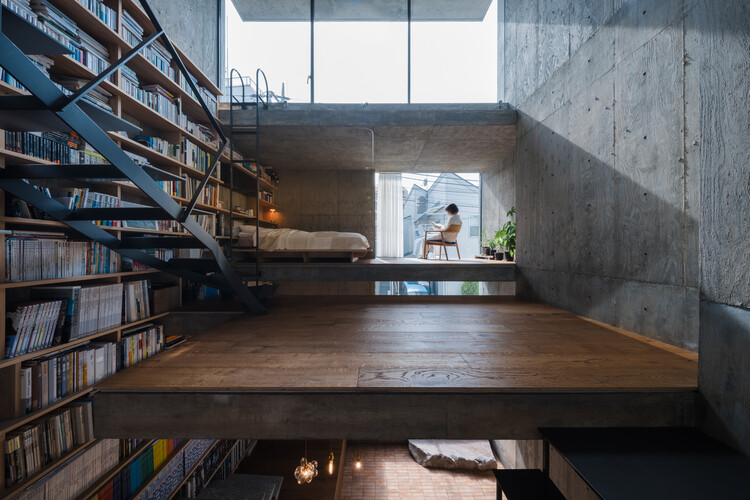
The studio’s position became particularly visible with Building Frame of the House (2023), the architect’s own residence, designed with Tomoko Minamino. Built on a compact site of approximately 40 square meters, typical of dense urban conditions in Tokyo, the house is conceived as a large single room, composed of seven staggered floors arranged in a skip-floor configuration. Walls and slabs overlap at varying heights and depths, producing a layered spatial sequence that allows light, air, and movement to circulate freely. As the title suggests, the project foregrounds architectural structure itself, stripped of finishes and partitions. It responds to metropolitan conditions while proposing a spatial model for a live–work environment in which the boundary between professional life and domesticity blurs. Here, “one can work anywhere, and one can sense the other no matter where they are.” Furthermore, within this compact volume, surfaces function ambiguously. A floor may serve alternately as a seat or a desk, revealing its potential uses. The skip-floor arrangement enables adaptability, with only a limited number of spaces assigned to certain programs.
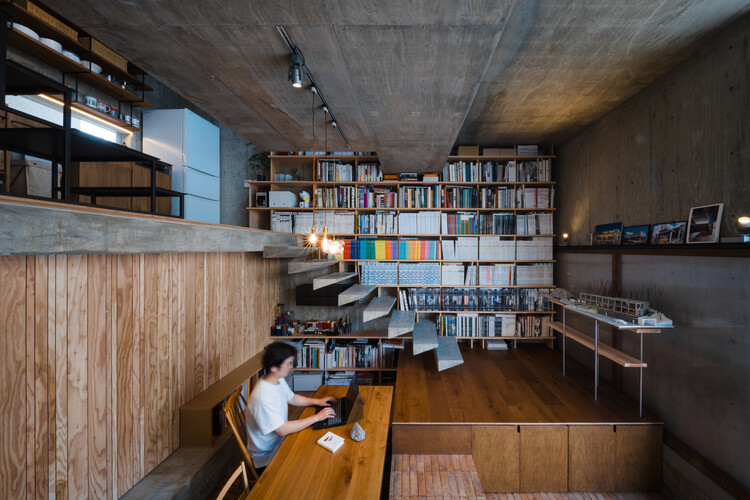 Building Frame of the House. Image © Ooki Jingu
 Building Frame of the House. Image © Ooki Jingu
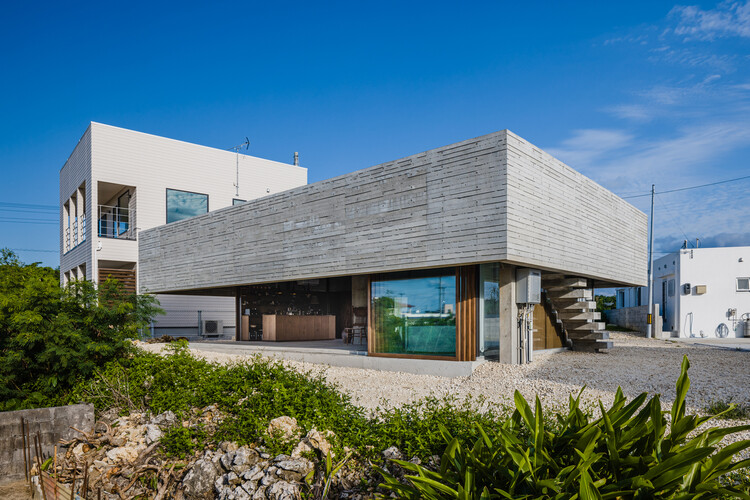
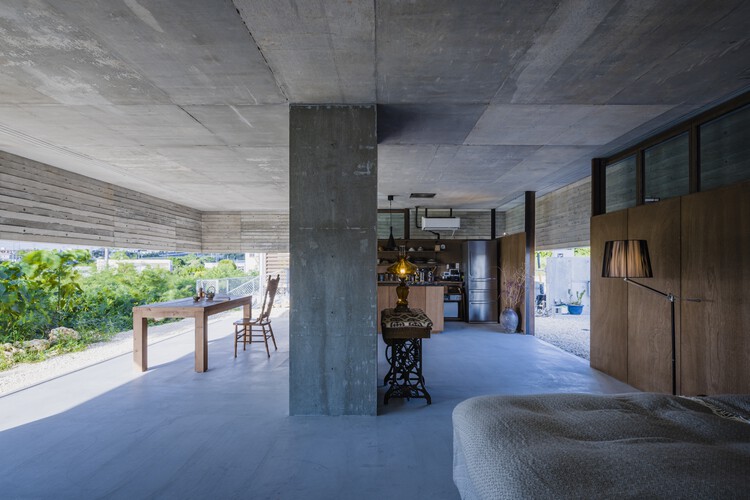
A similar logic is expressed in the 2700 House and the Check Patterned House in Saitama (both 2023), as well as in the One Legged House (2022) in Okinawa. The latter is also conceived as a large single room. The roof and walls extend from a single central column, and the concrete walls hover overhead, beneath which sliding glass doors encircle the space. The structure is calibrated to block intense sunlight and neighboring views while allowing air to circulate beneath a floating concrete exterior—an essential response to the subtropical climate. While the Building Frame of the House expands spatially through spiral layering, this project achieves openness horizontally, organizing the one-room condition around the solitary structural element, allowing the space to register as both open-ended and expansive in use.
 One Legged House . Image Courtesy of IGArchitects
 One Legged House . Image Courtesy of IGArchitects
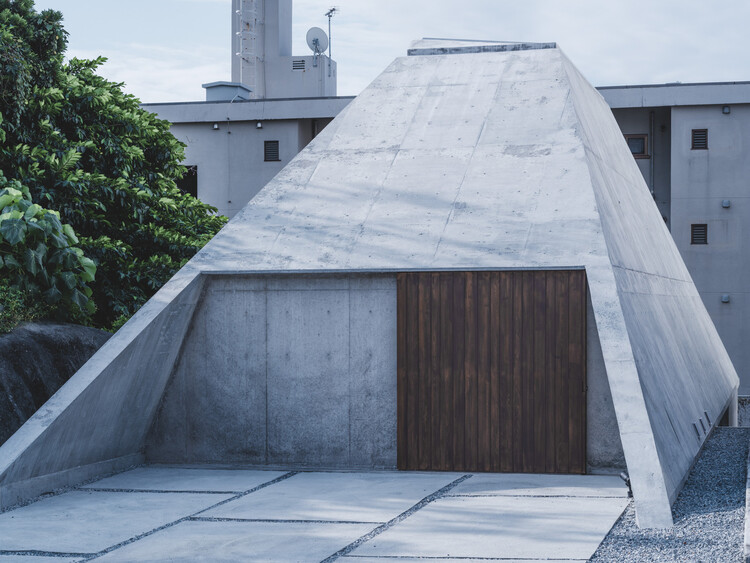
More recent work in Okinawa, Pyramid Hut (2024), appears more monumental than the earlier works at first glance. Yet, the project remains firmly rooted in the studio’s underlying philosophy. Located on a long, narrow site gently sloping toward the rear and surrounded by apartment buildings and a forest-like cemetery, the concrete house is organized into three terraced levels beneath a symbolic pyramid-like roof. From the entrance through the kitchen to the living room, a continuous spatial sequence steps downward under a single roof, generating rhythm and depth through sectional variation. Despite the dignity of its exposed concrete construction, daylight introduced through skylights produces a bright and calm interior atmosphere. As in the studio’s other residential works, a nuanced relationship between intimacy and commonality, enclosure and openness, gradually unfolds. Although the pyramid form emerges from pragmatic considerations—climate, wind, rainfall, surrounding conditions, and budget—it also carries cultural resonance. The architect notes that the facade evokes a sense of permanence found in Okinawa’s ancestral tombs. Beyond immediate function, the project aspires to architectural longevity, aiming to remain spatially compelling even as ownership or use changes, such as to a cafe or gallery.
 Pyramid Hut. Image © Ooki Jingu
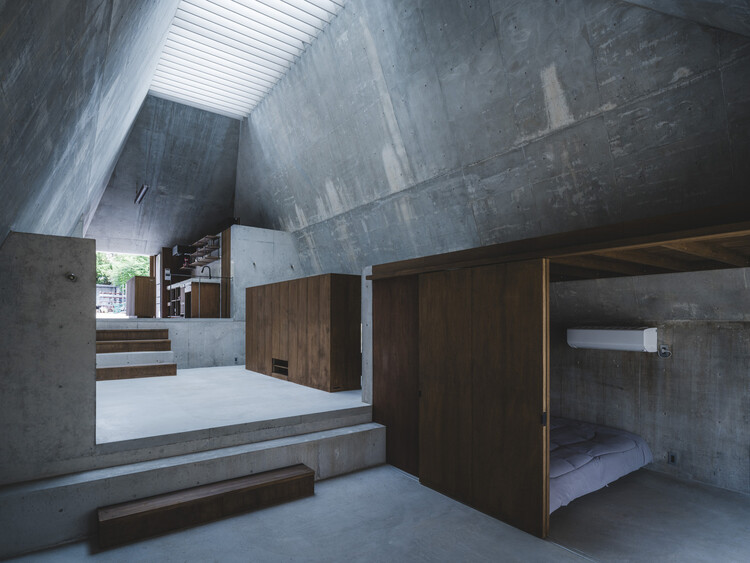 Pyramid Hut. Image © Ooki Jingu
Across its body of work, IGArchitects advances an understanding of architecture as “a living medium”—one shaped not only by form and material but by light, air, and time. As he puts it, “space is treated not as a passive container, but as an active participant in human perception.” Through sophisticated formal language, material honesty, and exposed structural frameworks, the studio creates architecture capable of evolving with its users while maintaining clarity, durability, and presence that endures over time.
Built on a compact 40-square-meter site in Tokyo’s dense urban fabric, the house is conceived as a single-room volume with seven staggered skip-floor levels. This arrangement enables adaptability, fostering a continuous sense of presence among its inhabitants.
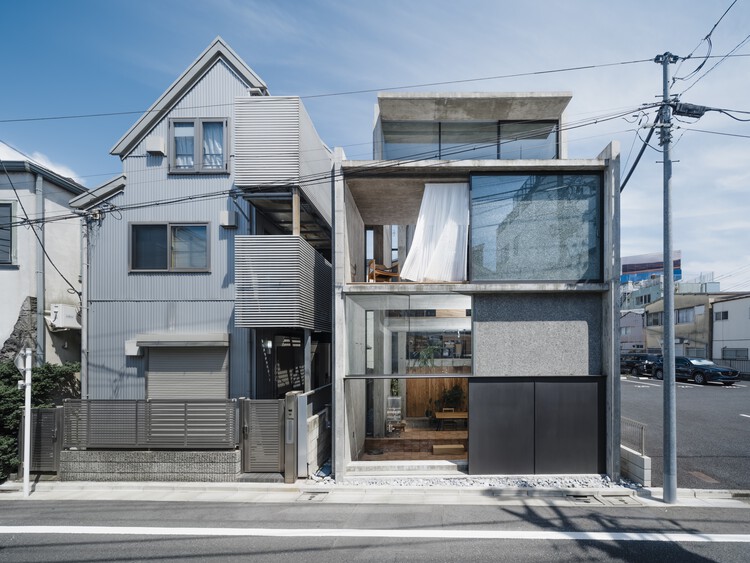 Building Frame of the House. Image Courtesy of IGArchitectsCafé in Ujina
Located along the coast in Hiroshima, the glass-walled café is structured by columns and four slabs at varying heights. Stacked, table-like elements create a framework that interweaves interior and exterior, with slab heights rising toward the center.
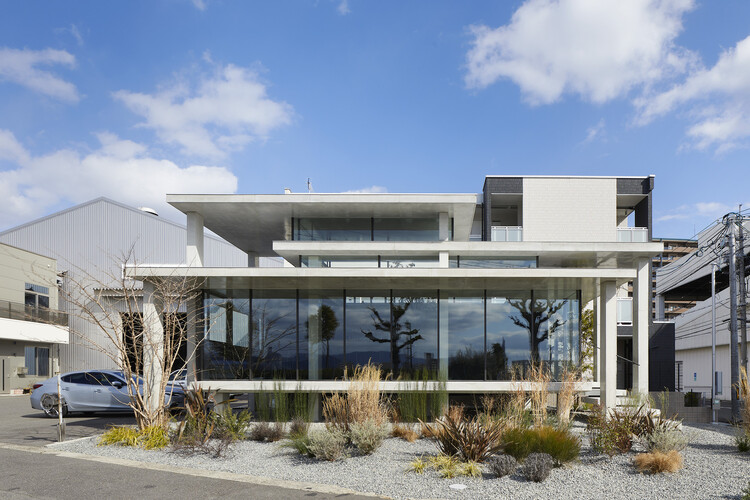 Café in Ujina. Image © Toshiyuki YanoOne Legged House
Organized around a single central column, the concrete roof and walls hover above sliding glass doors that encircle the space. Responding to Okinawa’s subtropical climate, the house achieves openness by structuring a one-room condition around this solitary structural element, allowing the space to read as open-ended.
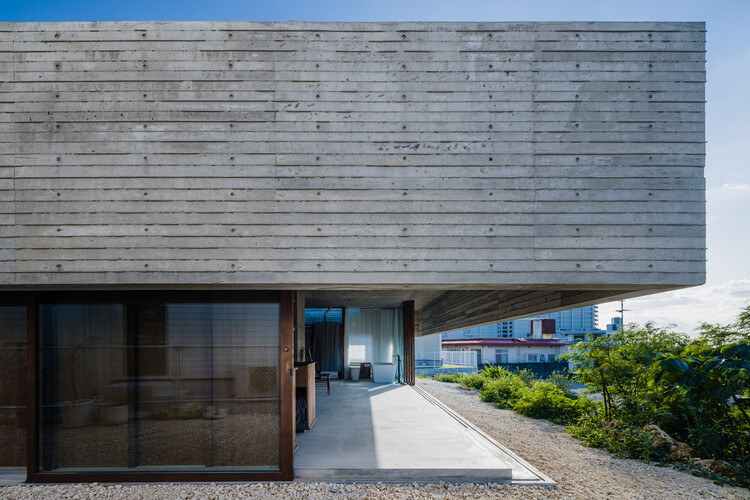 Courtesy of IGArchitectsPyramid Hut
On a long, narrow site sloping gently to the rear in Okinawa, the concrete house is organized into three terraced levels beneath a symbolic pyramid-like roof. Skylights soften the exposed concrete with a calm, luminous interior.
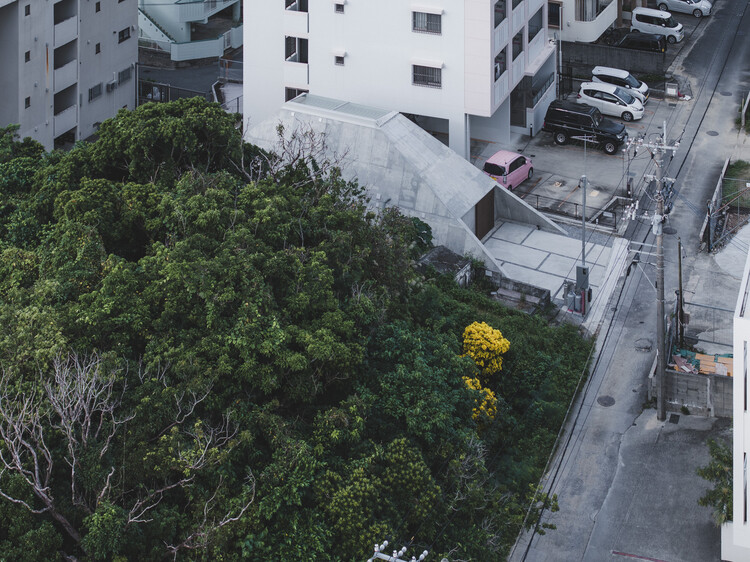 Pyramid Hut. Image © Ooki Jingu2700 House
Built on a narrow 3 × 16 m corner plot as a house for a couple, the concrete box is lifted on columns, with high-set windows on all four sides and floors at varying heights. Despite its closed appearance, the interior is spatially layered, unfolding through shifting scenes and a rhythmic connection to the outside.
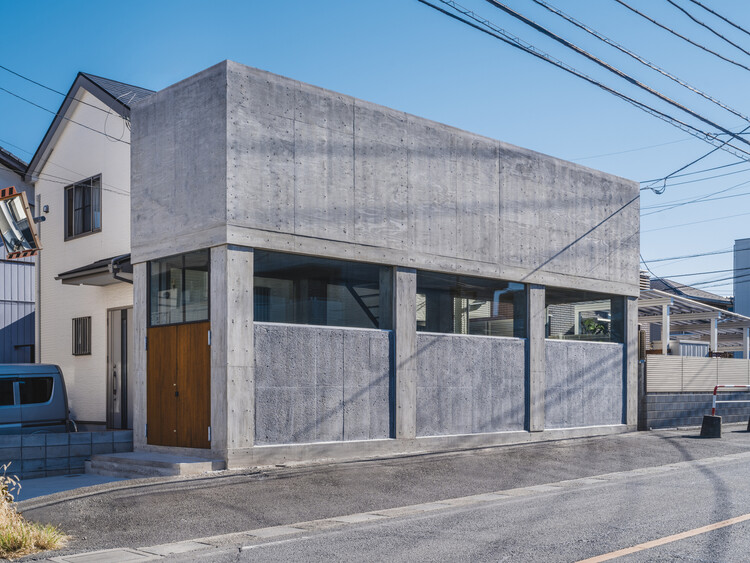 2700 House. Image © Ooki JinguCheck Patterned House
The residence features a distinctive spatial composition, achieved through a chequered pattern of concrete and glass, as well as staggered flooring. Each room relates to the others while conveying a sense of depth and expansiveness. It simultaneously embodies both spatial continuity and disconnection.
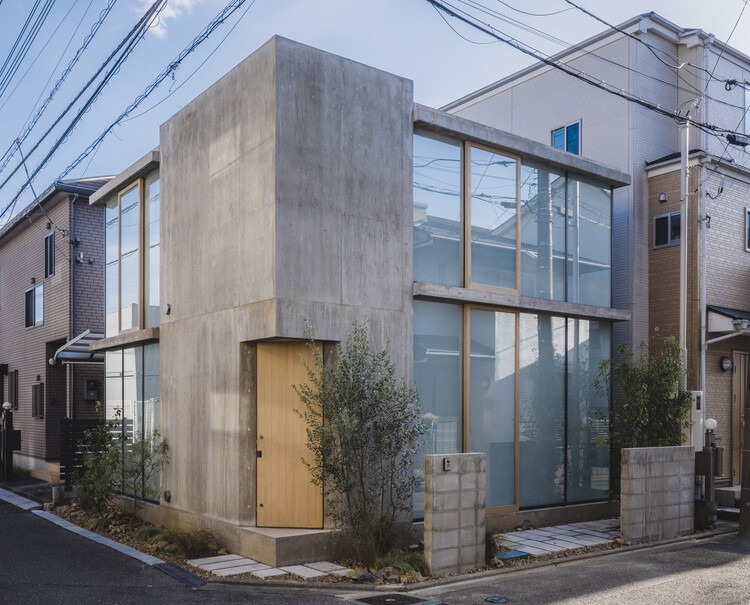 Check Patterned House. Image © Ooki JinguForest of Pillars House
The two-generation family house in Fukushima features a boomerang shape along the back hill with high-set windows, which screen the surrounding views. Using a simple timber structure with columns spaced at 1.8-meter intervals, it creates a large room with a sense of forest-like casual open space.
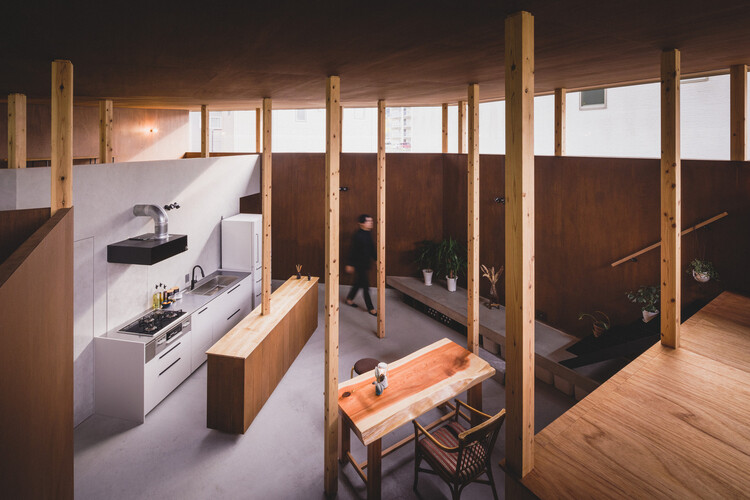 Forest of Pillars House . Image © Ooki JinguGrand Room House
The residence features a two-story atrium organized around a large, flexible space articulated by zigzagging wooden beams. This “grand room,” occupying roughly half of the building’s footprint, functions as a living room, dining area, circulation space, and children’s play area.
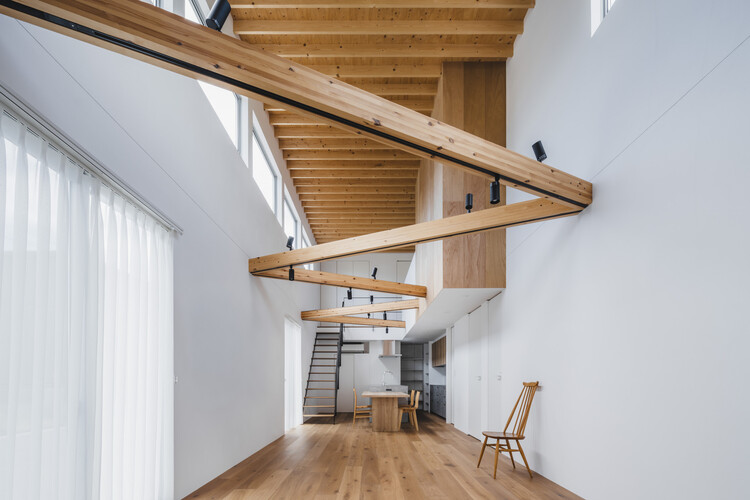 Grand Room House . Image © Ooki JinguThe House Apart
Through carefully placed side openings, the simple black box-like house encourages visual and spatial connections among three generations of family and neighboring surroundings. Exposed wooden beams bring order to the modest facade.
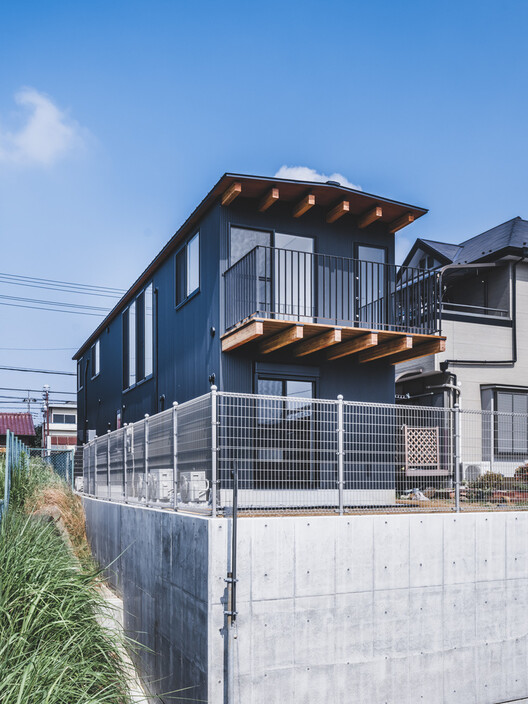 © Ooki Jingu
This article is presented by Buildner. As sponsor of ArchDaily’s 2025 Next Practices Awards, Buildner—the world’s leading architecture competition organizer—helps architects get what they enter competitions for: recognition, opportunity, and progress.
Exercise your creativity now: the Buildner UNBUILT Award 2026 is open to all, with a €100,000 prize fund. Submit your unrealized designs and celebrate your creativity now.