
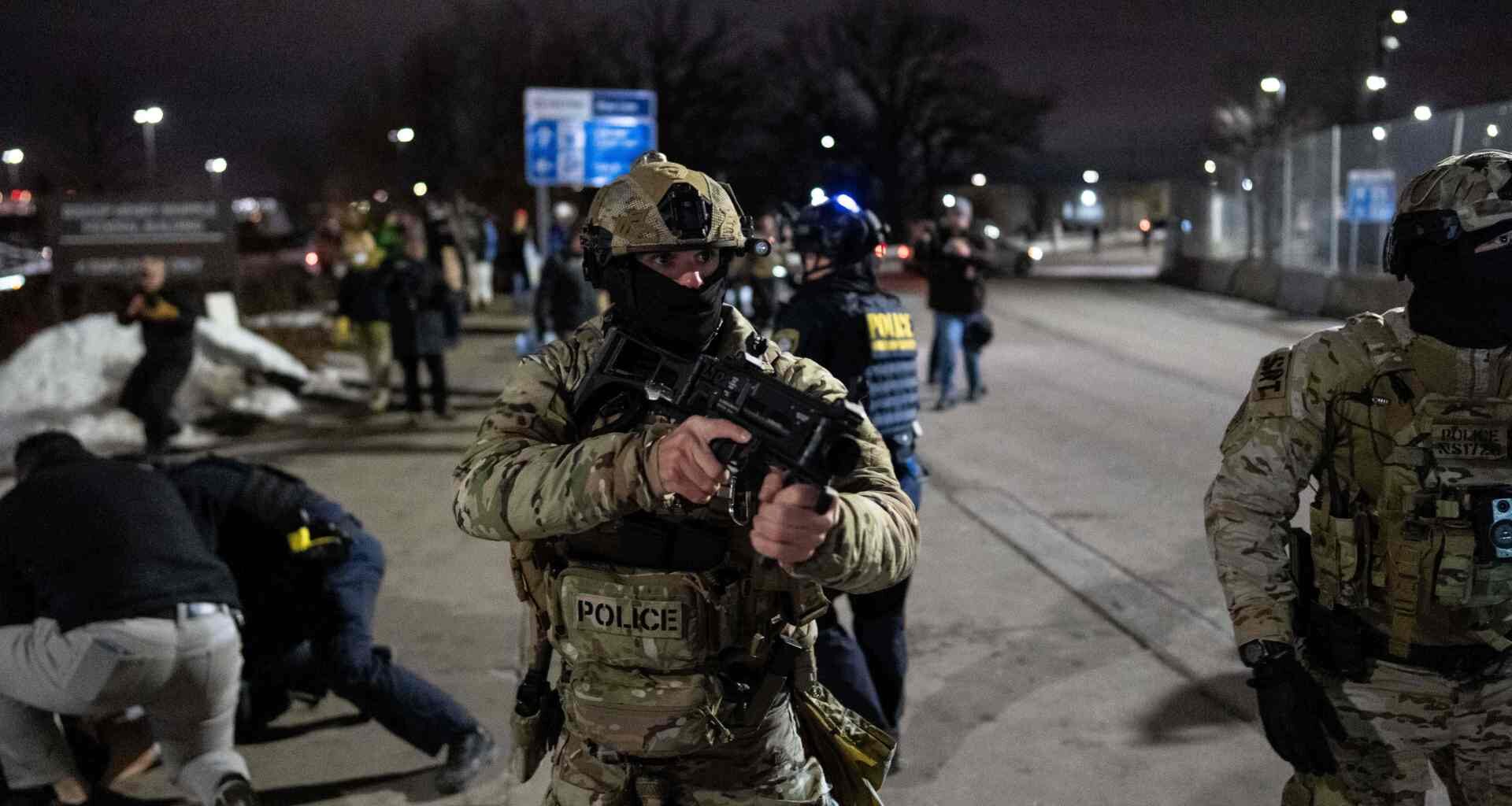
After repeated clashes and a fatal shooting, the injunction bars federal agents from detaining or retaliating against peaceful protesters.
Published On 17 Jan 202617 Jan 2026
Click here to share on social media
share2
A federal judge in Minnesota has ordered the United States’ immigration agents deployed to the state to curb some of the tactics they have used against observers and protesters of their enforcement actions.
Tensions over the deployment have mounted in Minnesota since an Immigration and Customs Enforcement (ICE) agent fatally shot a 37-year-old mother of three, Renee Nicole Good, behind the wheel of her car earlier this month.
Recommended Stories list of 4 itemsend of list
Good was taking part in one of numerous neighborhood patrols organised by local activists to track and monitor ICE activities.
On Friday, US District Judge Kate Menendez’s court injunction barred federal agents from retaliating against individuals engaged in peaceful, unobstructive protest activity.
Officers were explicitly prohibited from arresting or detaining people protesting peacefully or engaged in orderly observations, if there was no reasonable suspicion that they had committed a crime or were interfering with law enforcement.
The ruling also bans federal agents from using pepper spray, tear gas or other crowd-control munitions against peaceful demonstrators or bystanders observing and recording the immigration enforcement operations.
The US Department of Homeland Security (DHS) was given 72 hours to bring its operation in Minneapolis into compliance.
The court ruling hands a victory to activists in Minneapolis, the state’s most populous city, two weeks after the Trump administration announced the deployment of 2,000 immigration agents to the area.
Their numbers have since grown to nearly 3,000, dwarfing the ranks of the local police. The DHS calls it the largest operation of its kind in the country’s history.
Crowds of protesters across Minneapolis have clashed with the immigration officers, opposing their efforts to target undocumented migrants, with some officers responding with violence.
Amid the escalating dispute between Trump and local state and city leaders, the president threatened on Thursday to invoke the Insurrection Act, allowing him to deploy the military to police the protests.
“If I needed it, I would use it. I don’t think there is any reason right now to use it,” Trump told reporters at the White House when asked about the move.
The Insurrection Act allows a president to sidestep the 19th-century Posse Comitatus Act, which removes the military from regular civil law enforcement, to suppress “armed rebellion” or “domestic violence” and deploy soldiers on US soil “as he considers necessary”.