
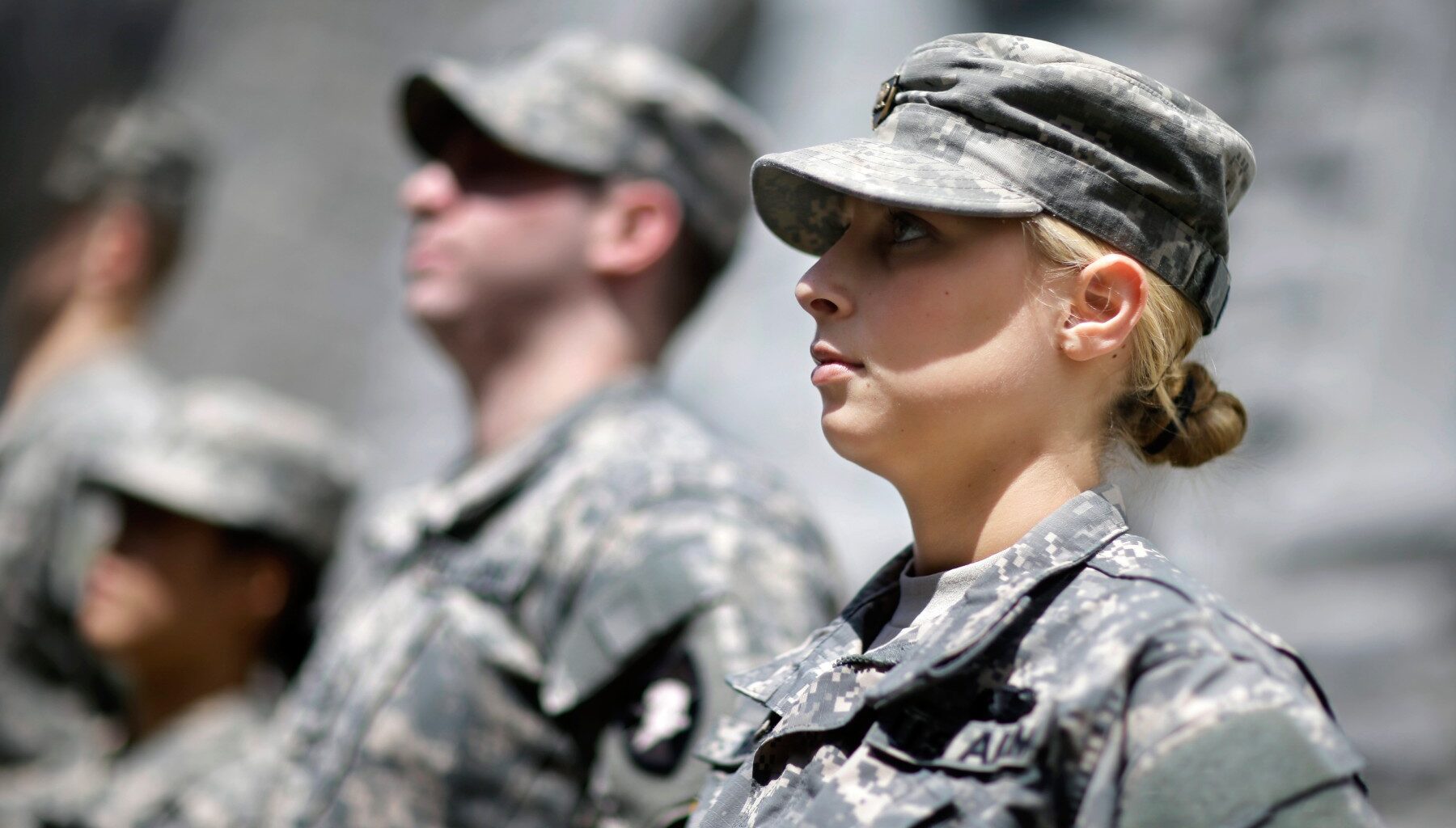
The U.S. Military marks a milestone this month: January 1, 2016 – ten years ago – was the official deadline for the U.S. Military to fully integrate women into all combat roles. In fact, though, women began serving in combat roles several years earlier and American women have been engaged in battles on or near the front lines for more than 200 years, said Liz Escobedo, an associate professor of history at the University of Denver, who has studied women’s various contributions to the military throughout U.S. history.
“We see women engage time and again and getting injured in combat situations in their support roles.”
Here are some takeaways from our conversation with Professor Escobedo:On the earliest roles of American women on the battlefield
As early as the American Revolution and the Civil War, women were following their husbands, sons and fathers to the front lines and helping with laundry, providing bandages for those who were injured and cooking for the troops, said Escobedo.
“You even had some women who would dress up as men and actually engage in fighting,” she said.
During the Civil War, women increasingly took on roles as nurses on the front lines.
The evolving role of women in the US Military during World War II and beyond
During World War II, Escobedo said, women were integrated into many aspects of the U.S. Military and were critical to the success of the war, engaging in everything from treating injured troops to clerical work to driving trucks. Following the war, in 1948, the Service Women’s Integration Act passed, which allowed women to become permanent members of the U.S. Military.
“However, it also stipulated that they could not be assigned combat roles, and this lasted through the 1990s and early 2000s,” Escobedo said.
The first Gulf War marked a period where women were experiencing combat, and their participation is widely visible to the public
Escobedo said that’s when “the lines between what is combat and what is not become very arbitrary.”
“The press, of course, is there … and the American people are seeing that women are engaged in combat situations,” she said. “So this is when we begin to have really serious conversations about what the role of women should be in the military and [whether] we change the stipulation that women are not allowed in combat by law, given the fact that their experience doesn’t match what is happening in terms of legislation and Pentagon protocols.”
The changing views of military leadership on women serving in combat
As the Global War on Terror continued through the 2000s, military leadership began to recognize that women were central to the success of military missions and that there was “no clear front and back line in combat,” said Escobedo.
“Military leadership comes down pretty firmly that we should be allowing women in combat roles, so in 2013, we see [then Defense] Secretary Panetta coming forward and saying that we are going to start implementing protocols… to ensure that women are given opportunities for combat roles and that this would be completed no later than January 1, 2016.”
On how the announcement is received
Escobedo said the response was divided, with ongoing debates about the policy in congressional circles, military leadership and the press.
“There are those individuals who feel that having women in combat roles would somehow lower the efficiency of military capacity, that it would be a blow to the cohesiveness of military units. Some are arguing that this goes against traditional gender roles and that women are those who are to be protected.”
At the same time, Escobedo said, there is the larger societal debate about equality of the sexes. If women aren’t allowed in combat, it means many women are also not able to advance in their military careers.
Defense Secretary Pete Hegseth’s views on women in combat:
Prior to joining the Trump administration, Hegseth said that he didn’t support women in combat, Escobedo noted.
“This became a moment of contention and controversy during his confirmation hearings and it was there that he affirmed ‘Yes, I do believe that women can serve in all roles in the military,’” Escobedo said.
Since then, Hegseth has advocated for a “male standard” for those who are serving in combat and recently ordered a six-month review of women in ground combat roles to ensure the military “effectiveness” of women in these jobs.
On the thinking behind Hegseth’s review
“He is concerned with the challenges to traditional gender roles and this idea that the military is by and large a male institution with a warrior ethos,” Escobedo said. “And that those women who are in the military, and especially those who will be engaging in combat roles, are challenging those ideas of a very male-centered warrior ethic.”
Escobedo said a lot of women in the military and female veterans have challenged this position, saying there already is a gender neutral standard for women in combat roles. “So there’s some confusion here about what exactly it is that Secretary Hegseth is looking to change.”
On whether the standards for men and women in non-combat roles differ
Escobedo said there have historically been different standards in the physical fitness test when it comes to age and gender.
“But what a lot of female veterans and women who are in the service…point out is that given Secretary Hegseth’s history of expressing concern over women in combat roles, it’s particularly alarming that he is bringing up these standards around gender…[yet] not saying that age standards need to be revised.”