
Few would argue that while trends come and trends go, style remains eternal.
Equally inarguable is the reality that trends can be fun! Just think of last year’s Labubu monster toy and Dubai chocolates, and especially the combination of the two trends, the Dubai Chocolate Labubu, an amalgamation for which people were inexplicably willing to plunk down upward of $30 for a chocolate bonbon in the shape of the friendly little creature soaked in a cloyingly syrup that was supposed to taste like pistachio but didn’t.
As trends tend to do — at least in the 20th and 21st centuries — they reemerge after a hiatus of 20 or more years. We are seeing this now with a reembrace of “brown” furniture; the plaids, jewel tones and chintz Ralph Lauren and Laura Ashley ushered into Americana in the 1980s; and the built-ins that were de rigueur of high midcentury modern architecture.

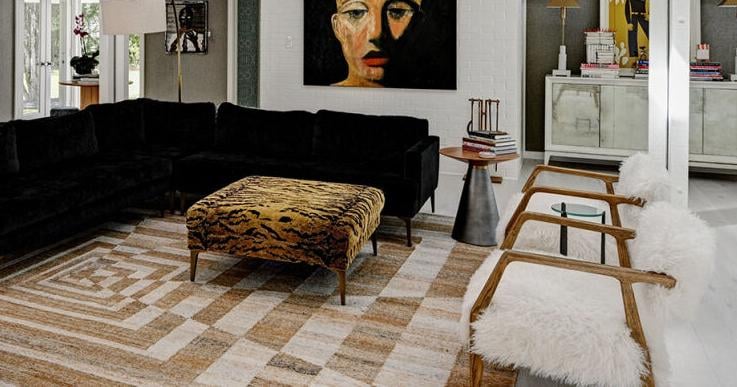
Art deco silhouettes are returning, says designer Penny Francis, along with a return to maximalism.
Returning are “art deco silhouettes in furniture, lighting and fabrics,” said New Orleans-based interior designer Penny Francis of Eclectic Home. “We see a return to maximalism, rooms that are nostalgic and layered interiors.”
At the same time, nonsensically cluttering our beds with heaps of pillows and whatnot is a goner.
“The biggest trend I am seeing in bedding is less clutter,” said interior designer Grace Kaynor, of Sotre, a Magazine Street studio specializing in fine textiles. Kaynor said the trend is toward “fewer monograms and fewer extra-large European pillows. So, one extra-large Euro instead of three on a king bed, maybe a pattern for a lumbar pillow and cooling, temperature-regulating sheets. It’s about quality and comfort. People want lasting investment pieces that will help them get a good night’s rest.”
Also, Kaynor said having plants in abundance is a huge trend. “They clean the air and add color without being too much,” she said.
Interior designer Grace Kaynor says having an abundance of plants indoors is a definite trend. ‘They clean the air and add color without being too much.’
Jeff Strout
Their color is trendy as well.
“Green is the new neutral,” added Tanga Winstead, of Tanga Winstead Designs.
We are eschewing white and neutrals (whatever were the brains at Pantone thinking in naming the white “Cloud Dancer” as the color of the year?) in favor of colors that express us, moving from cool to warm (even with white when we must), and embracing personality and maximalism over sterility and minimalism. We want natural materials that will age well (hello, unlacquered brass, unpainted wood) and bedrooms that swaddle us in a plush cocoon so we can shut out the clamoring bang of society’s drum.
This soft blue kitchen is by interior designer Curtis Herring. ‘Introducing color makes the kitchen cozy, gives it more character, and makes it more connected to the rest of the home. At the same time, choosing proven, timeless colors will eliminate any short-lived trends,’ he says.
PROVIDED PHOTO
The end of the all-white kitchen
“We are moving away from the all-white kitchen and embracing color in cabinetry, finishes and fabrics,” said New Orleans-based interior designer Curtis Herring. “Introducing color makes the kitchen cozy, gives it more character and makes it more connected to the rest of the home. At the same time, choosing proven, timeless colors will eliminate any short-lived trends.”
Elsewhere, color gets more leeway.
An antique chest anchors a piece of modern art.
PHOTO BY J_Stephen_Young
“Moody colors, high gloss/high-shine finishes in paint can be done on a ceiling, door trim or interior doors if not the entire room,” Francis added.
Also, Francis said, think of the unexpected and playful, such as whimsical accents in architectural details like ironwork and millwork.
Reembracing natural wood
A return to the sensibility that natural wood bespeaks character and beauty means that Granny’s armoire can decamp from the attic. Antiques are a thing again.
“Brown wood furniture — burl, walnut and oak finishes in cabinets, floors and furnishings add warmth and depth,” Francis said.
But they don’t have to dominate.
“Mixing antiques and heirloom pieces with contemporary pieces creates a layered look that feels curated and timeless,” Winstead said. “We want quality, warmth and texture.”
Interior designer Curtis Herring favors bold patterns and florals on walls to ‘create a visually dynamic space with depth and personality that paint cannot provide.’
A thing for prints and hides
“Using bold patterns and florals on walls can create a visually dynamic space with depth and personality that paint cannot provide,” Herring said. “By incorporating the same pattern in fabrics, the design feels more layered and unified.”
Zebra wallpaper illustrates a continuing trend toward animal prints.
PHOTO BY Jeff Strout
One pattern has never really gone away. “The animal print, which came into fashion during the reign of Marie Antoinette, is still going strong as an accent,” Winstead said.
Francis anticipates the animal print trend to intensify as the year progresses. “The use of animal prints in upholstery, animal furs in throws, cowhide rugs and bold animal prints in wallpaper — you will see this throughout the year in design.”
“Custom banquettes maximize seating space and provide hidden storage,” says Tanga Winstead of Tanga Winstead Designs, which specializes in getting the most out of small spaces.
PROVIDED PHOTO
Stash your stuff and make it multipurpose
While maximalism is feeling the love, it’s a curated version of the style, not a cluttered one.
“Custom banquettes maximize seating space and provide hidden storage,” said Winstead, whose firm specializes in getting the most out of small spaces. “We also want pieces that are highly functional.”
Think performance fabrics and swivel or motion chairs that can be used in different spaces, from dining to living and home office spaces.