
(Credits: Far Out / YouTube Still)
Sat 17 January 2026 21:12, UK
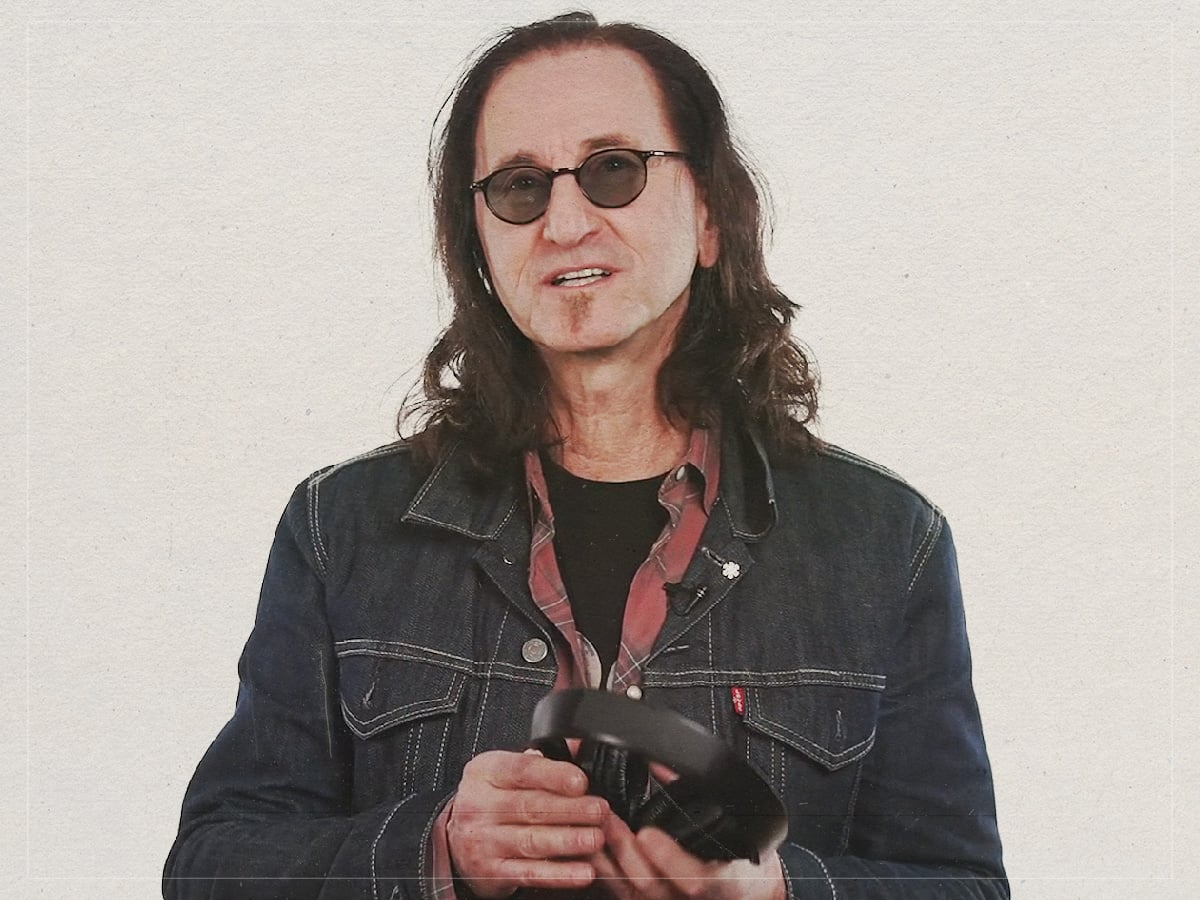
As one of rock’s most continually fascinating bassists, Geddy Lee stands on a pedestal of his own, approaching his instrument with formidable skill, but even the greats have their heroes, placing them on pedestals of their own.
For Lee, his love for rock music can be traced to the likes of Yes’ Chris Squire, Cream’s Jack Bruce, Jeff Beck and psych rock/proto-prog band Procol Harum. “That’s how I learned to play bass, emulating Jack Bruce and people like that,” Lee revealed in the 1993 book Bass Heroes. A north star of Lee’s musicality would be found in John Entwistle and his revolutionary playing in The Who, the introduction to whom for Lee began, as it did for many, with ‘My Generation’. “I used to go up to Sam The Record Man in town to get my music,” he reflected in an interview with Team Rock in 2016, “That’s where I got Live at Leeds one Saturday morning.”
The band’s first live album, Live at Leeds, immortalises their performance at the University of Leeds Refectory on Valentine’s Day, 1970, to be later released that May. Being the only live album of The Who’s with their classic lineup of Entwistle on bass, Roger Daltrey on vocals, Pete Townshend on guitar and Keith Moon behind the drums, its existence followed the success of 1969’s Tommy, the legendary rock opera that saw the band heralded as one of the world’s greatest live rock ‘n’ roll acts. However, The Who were troubled by Tommy’s reputation as ‘high art’, as promoted by their manager, Kit Lambert, and wanted their stage show to hold equal importance to the album’s rock-opera format.
Returning to England in 1969, The Who set out to release a live album; initially, the band wanted to compile recordings from concerts that were recorded earlier in the United States, but Townshend, not wanting to listen to every recording they had accumulated to choose the best ones, rejected the idea. In turn, the guitarist even asked their sound engineer, Bob Pridden, to burn the tapes, a choice which, in his memoir, Townshend recalled as “one of the stupidest decisions of my life”.
Undeterred, however, the band scheduled two shows, intent on recording for the live album, but with technical problems occurring at their show in Hull, the Leeds performance was the chosen one, beginning with Entwistle’s ‘Heaven and Hell’ and ushering in a performance from the bassist that stuck with Lee forever.
“The bass in ‘My Generation’, I mean, John Entwistle, my God, he was such an absolute influence on me,” Lee exclaimed, “His playing on Leeds is unsurpassable!” On Live at Leeds, ‘My Generation’ is transformed into a 15-minute rendition, incorporating improvisations and a song medley, including extracts of ‘See Me, Feel Me’ and ‘Sparks’ from Tommy. Another standout performance is that of ‘Summertime Blues’, an Eddie Cochran tune originally released in 1958, which Lee says he’s “a big fan of”. continuing that Rush covered the song “to a large degree because of their version”.
In contrast to Cochran’s original, The Who rearranged ‘Summertime Blues’ with power chords, a key change and Entwistle’s deep-bass voice, singing the lines, “Like to help you son, but you’re too young to vote”.
Lee continued to explain his love for The Who, mourning the fact that he never got to see them perform live with drummer Keith Moon, before his untimely passing in 1978. “No matter what they do, Pete Townshend’s writing has always been at the very top of his craft,” Lee asserted, “[It is] the quintessential combination of heavy and melodic.”
Across The Who’s expansive discography, however, Live at Leeds remains at the forefront of Lee’s mind. “Even today, Live at Leeds sounds so alive; it’s a real piece of that period of rock,” he says, adding, “It’s like a bootleg, the artwork, the tone; that was their attitude, I think. It was raw: ‘Here it is’.”
Related Topics