
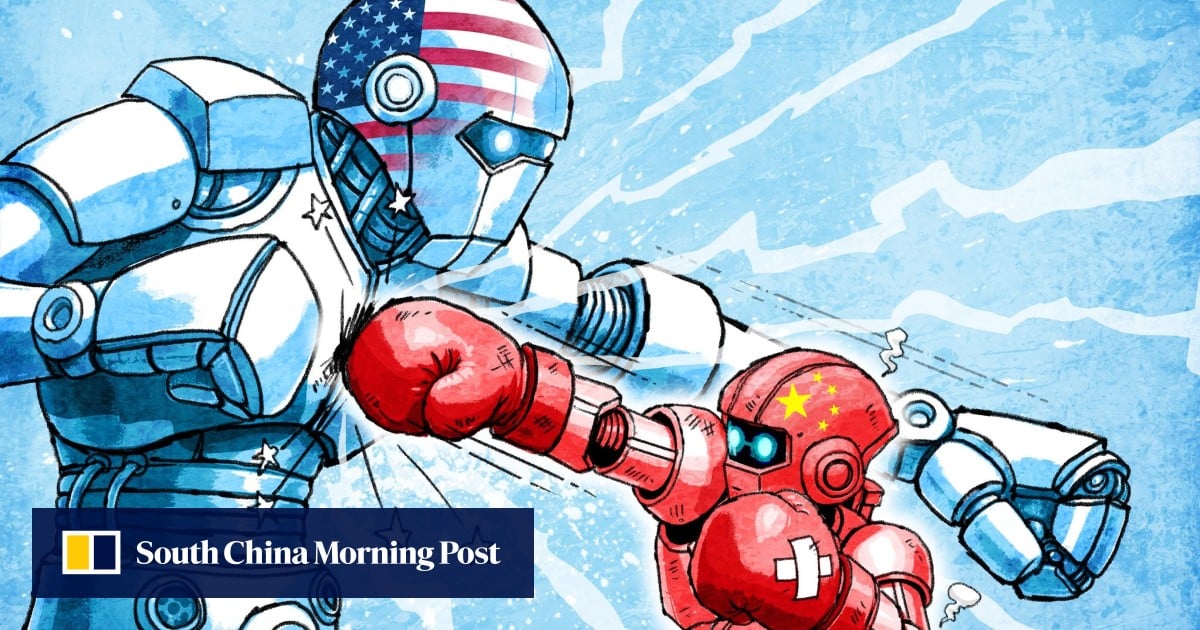
“Small yard, high fence” was how Jake Sullivan, national security adviser under President Joe Biden, described US tech policy towards China.
The approach, designed to fence off sensitive US technologies from China, was most commonly associated with export controls that, among others, restricted Chinese firms’ access to Nvidia’s advanced chips, the critical inputs for developing cutting-edge artificial intelligence systems.
Beijing is now fighting back by taking a leaf out of that playbook. For years, it was the US erecting barriers and driving decoupling between the world’s two tech superpowers. But two developments at the start of 2026 suggest that the Chinese government is no longer just the target of such measures, but also a driver of decoupling itself: its apprehension towards Nvidia’s high-end H200 chips being allowed into the country, and its probe into Facebook owner Meta Platforms’ acquisition of Chinese-founded AI start-up Manus.
Earlier this week, Beijing told domestic tech companies not to purchase Nvidia’s chips unless absolutely necessary, with new rules set to cap the total number of advanced AI chips that local firms can import, according to multiple reports.
A Chinese data centre employee told the Post that they have been preparing to build server stacks in Inner Mongolia based on H200 chips to serve major clients such as Alibaba Group Holding and ByteDance. However, the government had instructed the firm to reserve stack space for domestic chips, the person said. Alibaba owns the Post.
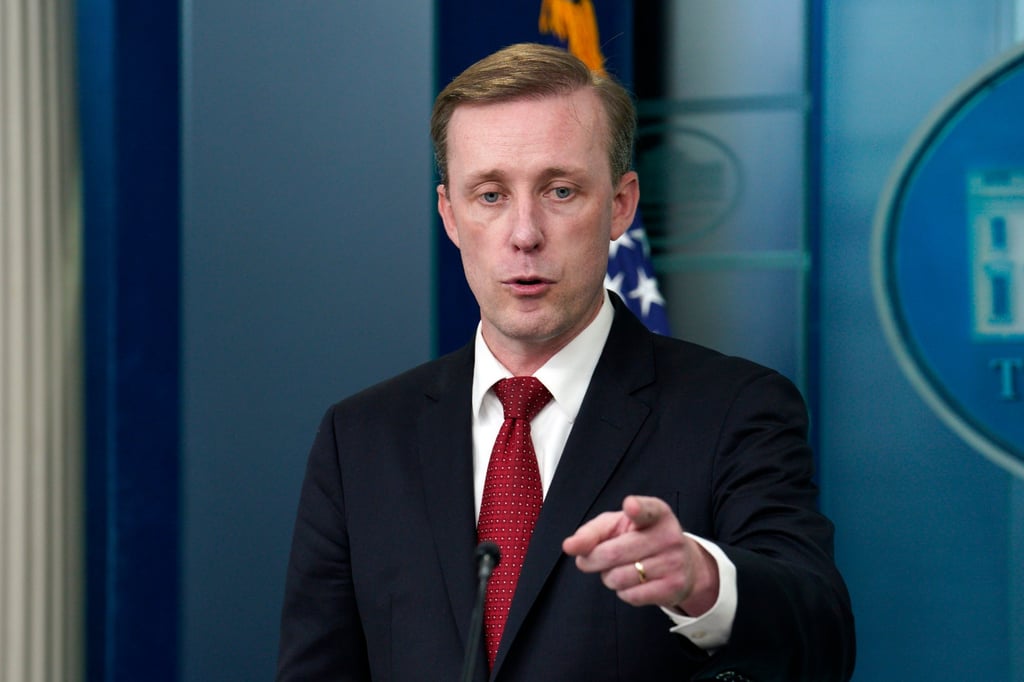 National security adviser Jake Sullivan speaks during a press briefing at the White House in Washington, D.C., in this file photo dated October 1, 2024. Photo: Abaca Press/TNS
These restrictions signified a new phase in the US-China tech war where “the offensive and defensive roles have shifted”, said Arisa Liu, chief director and research fellow at Taiwan Industry Economics Services, a databank under the Taiwan Institute of Economic Research.