
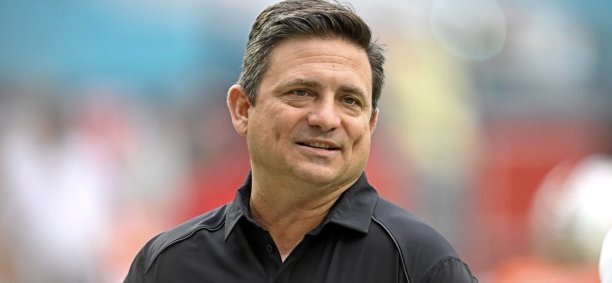
Shannon Dawson met with reporters for the National Championship Media Day. A full transcript is below:
Question: What type of impact does a player like D’Angelo Ponds have on your offense Monday night?
Shannon Dawson: He’s always around the ball. The kid is very seldom out of place. He’s a really good football player and he’s one of a lot that play for them. The structure of their defense allows him to get his eyes on the quarterback and trigger on the ball, and he does a really good job within his scheme, but he’s also very instinctive. When the ball comes his way, he can leave and trigger as well as I’ve seen.
Question: Coach, going back to the Texas A&M game, you leaned heavily on the run. How do you balance patience with adapting in a win-or-go-home game?
Shannon Dawson: It’s an internal struggle at times. Inherently I want to be aggressive, but ultimately I want to win the game. I have to be in tune with the flow of the game and what’s working. We communicate between every drive, we watch the iPads, and we try to pinpoint what’s working. The flow of the game matters. In that game there were some tough circumstances that dictated things, but we want to be aggressive — I call it cautiously aggressive. We lean on the run game because we’ve done it all year, but we also have to push the ball down the field at times. It’s just a back-and-forth with when to take those chances.
Question: When you evaluated Carson Beck out of the portal, what concerns did you have about his health, and how did that relationship form?
Shannon Dawson: It was a completely different journey because he didn’t go through spring. We had some concerns early about the surgery, but we talked to a lot of doctors. I had Nick Mullens in the past with a similar surgery, worse than Carson’s, and he came back confident the next year. So we had a lot of conversations to get over that hump. The relationship started at an awkward time — it’s more like an NFL approach now — but our personalities mesh very well. He’s low-key, very easy to coach, very cerebral, very coachable. That helped the process.
Question: Beyond production, what has Marty Brown brought to this team?
Shannon Dawson: Consistency. His character is off the charts. He’s a guy a lot of kids should look at for perseverance and attitude. Things didn’t always go his way this year, but he stayed constant and positive. When his number was called, he did his job. In today’s “I’ve got to get mine” mentality, he’s a great example of staying the course, blocking out the noise, and taking advantage of his opportunity. I love the kid — his attitude and character pushed him through.
Question: With one-year transfer quarterbacks, how much do you really know what you’re getting?
Shannon Dawson: Other than watching film and doing background research, things happen quickly. With Carson, I was fortunate to talk to Todd Monken and Buster Faulkner, who knew him well and gave me real insight into his personality. That cut through a lot of the narratives out there. On tape, the talent was obvious — that part was easy — but those conversations made the decision really easy.
Question: Is it inevitable that you’ll eventually get a portal quarterback who doesn’t work out?
Shannon Dawson: Nothing’s 100 percent in life. I’m an old-school soul — I like developing kids, and reps in a system matter. At some point that’s going to mean more again.
Question: What stood out most about Carson when you first evaluated him?
Shannon Dawson: He had played in a lot of big games. We felt like we were a really good team and we needed someone who had been there before. Experience was huge. Beyond that, I care most about accuracy from the pocket. If you can’t throw accurately from the pocket, I’m not that good of a coach. On film he was a progression quarterback — sitting in the pocket, finding lanes, triggering with accuracy. He was very cerebral. I also think he’s more athletic than people give him credit for, and we’ve encouraged him to use his legs more recently.
Question: What did you see from Malachi Toney when he first arrived on campus?
Shannon Dawson: Not much until we started practicing. His ball skills were elite, but once we started practice he made plays every day — sometimes plays that made you scratch your head. He was just made to play slot receiver in our offense, and he does a **** good job at it.
Question: How have the last two weeks been balancing portal work for next year with preparing for a championship game?
Shannon Dawson: For me, I focus on the game. I don’t really get involved in that right now.
Question: Is experience at quarterback more important than taking a talented redshirt freshman out of the portal?
Shannon Dawson: Experience matters at every position. Older kids typically play better than younger kids. If you’re going to roll the dice, that’s usually the better bet. I do think we have the best quarterback room in the nation.
Question: How have you seen Carson settle into Miami after a hectic start?
Shannon Dawson: He’s very resilient. None of that early stuff bothered him. Even after losses, he moved on quickly. He has short-term memory, doesn’t get too high or too low, and stays even-keeled. He’s hard on himself — a perfectionist — but that’s better than pointing fingers. That’s why he handles adversity the way he does.
Question: How challenging is Indiana’s gap-sound, attacking defense?
Shannon Dawson: Very challenging. They’re elite at gap integrity. Their run fits with the D-line, linebackers, and safeties are rarely out of position. They dissect things as quickly as any defense I’ve seen. If you give them a tell, their linebacker No. 4 will be at the point of attack before you are. At this point in the season, everyone knows who everyone is — it’s about execution. They’re extremely well coached, elite, and hard-playing.
Question: Their “illusion” defense can look different pre-snap than post-snap — how do you prepare for that?
Shannon Dawson: They force you to play quarterback after the snap. We’re built for that because we’re a reactive, progression-based offense. Nothing is predetermined for us. Our quarterback is trained to read space post-snap. Their coverages are elite — subtle changes, great eye discipline, and they occupy space extremely well. In a way, they play coverage like an option defense — you don’t see it often, so it feels different.
Question: Why did you target C.J. Daniels in the portal?
Shannon Dawson: He had a lot of film playing good football. We needed an older, experienced receiver. We knew the player we were getting, but we didn’t fully know the person — and we knocked that part out of the park. His leadership and character are elite. He blocks, does the dirty work, and keeps the room pointed in the right direction.
Question: What has impressed you most about Mario Cristobal’s leadership over three years?
Shannon Dawson: His talent evaluation, especially up front, and how he builds teams from the O-line and D-line out. Also, how he handled our losses this year — no overreaction, just “get back to the process.” That demeanor helped our staff and our players.
Question: Was that different from your first two years?
Shannon Dawson: No, it’s been consistent. We stay even-keeled through adversity, which is necessary to coach productively and manage games.
Question: How would you describe Indiana’s defensive identity?
Shannon Dawson: Very hard to run on, extremely gap-sound, and they strain better than almost anyone. Their zone coverage is elite — mostly zone, mixed in smart ways. They don’t get predictable; it’s like they pull coverages out of a hat. Their eyes are always on the quarterback, they get their hands on the ball, and they tip a lot of passes. It’s a very savvy unit.
Question: How does practicing against your own defense help you prepare for Indiana?
Shannon Dawson: Our defenses are similar philosophically, so those weekly reps help. More importantly, our pass game isn’t dictated by pre-snap looks — we’re progression-based. We ask our quarterback to see space and work through reads. I feel like we’re equipped, but not many teams have had success against them, so we’ll see how it goes.