
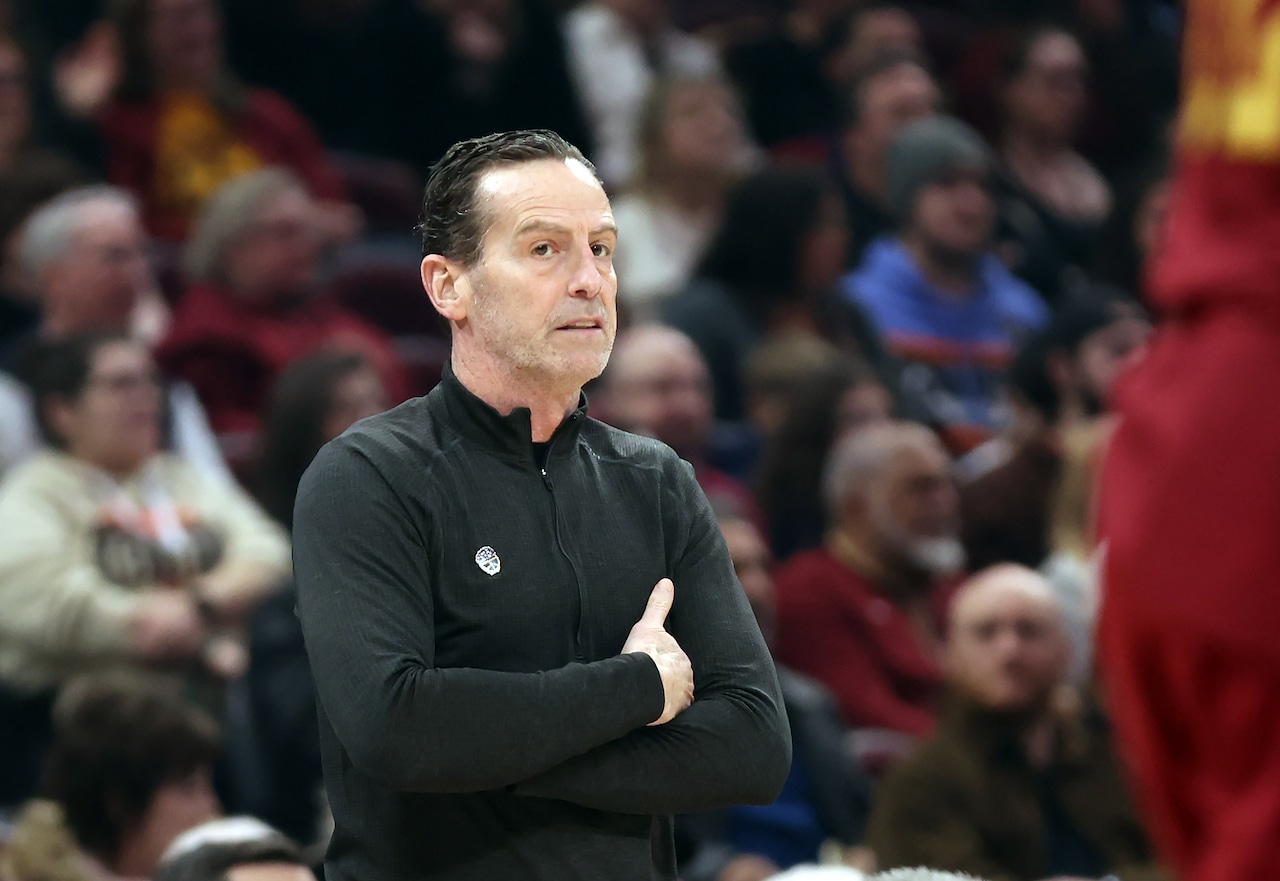
CLEVELAND, Ohio — Before the summer truly began, before free agency and training camp optimism blurred the edges, I wrote about five areas the Cavs had to address if they were going to become a team capable of getting out of the Eastern Conference semifinals.
Last spring, Cleveland was bounced by the Indiana Pacers in five games. That conference semifinal series exposed weaknesses that were predictable, exploitable and, in many ways, self-inflicted.
The summer was supposed to be spent correcting these areas. Turning playoff lessons into progress. Because the expectations coming into their 2025-26 campaign had a baseline of a deeper playoff run.
So now, 43 games into the season, this feels like the right moment to look back as they welcome the reigning champion OKC Thunder on Monday.
Cleveland sits at 24-19, sixth in the East. That record exists in tension with reality. It’s underwhelming for a team that carried championship aspirations into October. Not because the Cavs are incapable, but because many of the flaws that ended their season last spring have followed them into mid-January.
This is not a reaction to a bad week or a cold stretch. It’s not a referendum on what the Cavs might become by April. These grades are based on the entire first half of the season. Not the first 10 games. Not the last 10. All of it.
And they’re rooted in what has actually happened.
Some of these evaluations will read harsh. They’re measured against the standard the Cavs set for themselves. The standard of a team that finished with the best record in the Eastern Conference last season and talked openly about chasing a championship.
So, here are the grades — five checkpoints from a column written months ago — about where the Cavs stand halfway through a season that still holds promise, but far less margin for error than anyone expected.
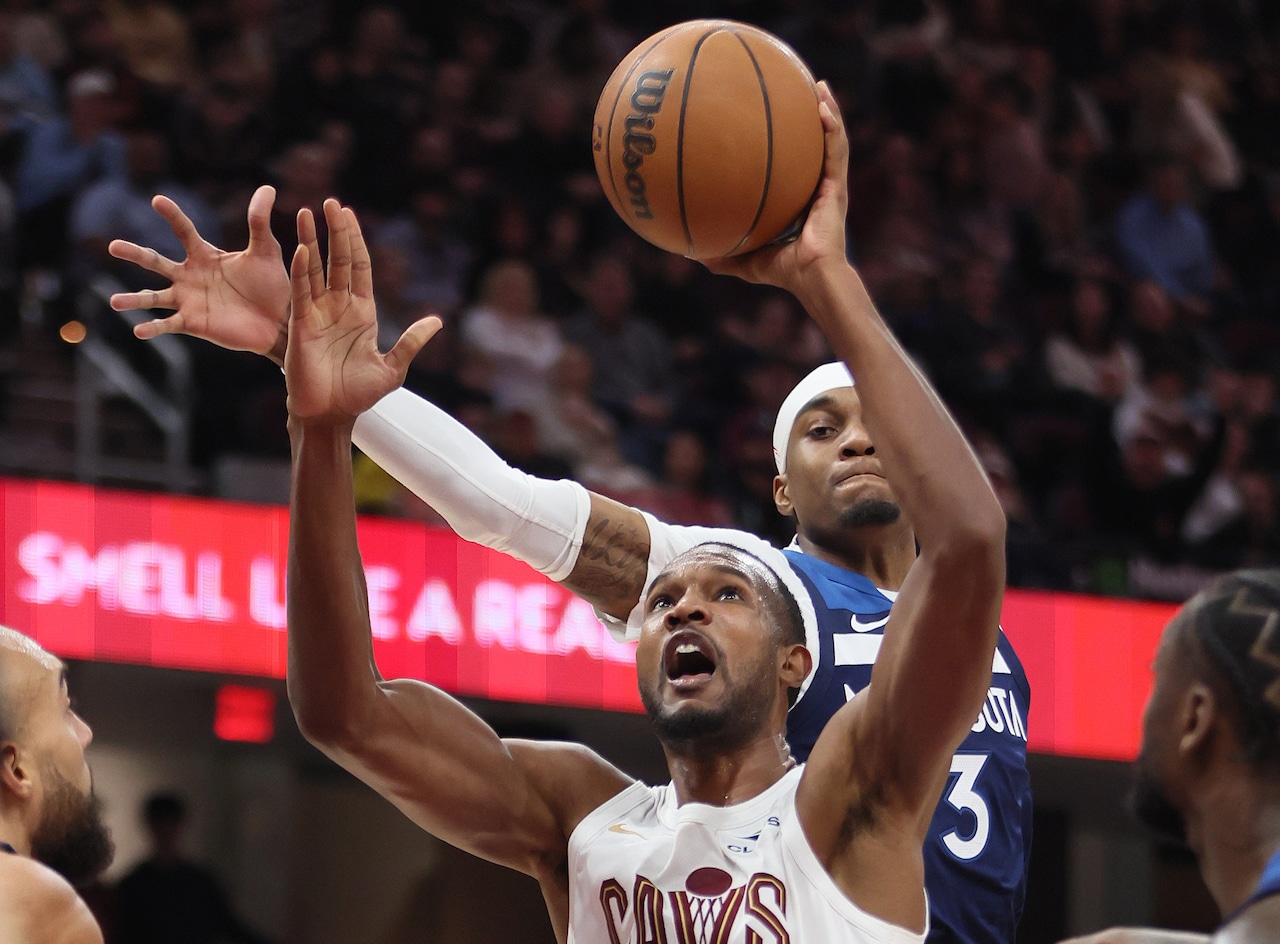 Cleveland Cavaliers center Evan Mobley goes up for a dunk as Minnesota Timberwolves forward Jaden McDaniels tries for the block in the second half. John Kuntz, cleveland.com1. Evan Mobley as Kenny Atkinson’s summer project
Grade: D
When the Cavs’ season ended last spring, the conversation split in two directions. What would have happened if they were healthy? And how much more is there for Evan Mobley to give?
Mobley was coming off an All-NBA Second Team season and his first All-Star appearance. The assumption was that this was his new floor, not his ceiling. The organization spoke openly about another offensive leap.
“He’ll be an offensive hub of sorts. But if you watch him this offseason, he’s been locked in,” president of basketball operations Koby Altman said at his pre-training camp press conference about Evan Mobley. “He is really serious about taking that leap to being a top five player in the league. … I think he’s ready to take that next step. And, I say it all the time. We go as he goes, as he continues to elevate his level, our organization continues to grow.”
To get there, he would need increased aggressiveness, tighter ball-handling, improved shot consistency and sharper decision-making.
So far, that leap hasn’t materialized.
Mobley is shooting 51.7% from the field, his lowest mark since his rookie season. After hitting 37% of his 3s last year, that number has dipped to 33.1%. The shot looks flatter. The confidence is shakier. Too often, he appears more focused on finding the next pass than imposing his own offense.
That’s why Kenny Atkinson has gone away from him as an offensive focal point.
At the free throw line, the wavering confidence shows. Mobley is shooting a career-worst 63.6%.
Yes, his passing has improved. He’s averaging a career-high 4.1 assists per game as Cleveland has tried to expand his role as a connective piece. But that growth has come with a cost. He’s also committing a career-high 2.2 turnovers per game.
And still, somehow, his usage is slightly lower than last season.
Taken together, the picture is difficult to ignore. Mobley has regressed offensively.
The most frustrating part is that the flashes are still there. Every so often, he looks like the complete two-way force Cleveland is building around. Then it disappears. He slides back into the background.
For a player on a max contract, for a cornerstone whose development defines this franchise’s future, that inconsistency simply isn’t good enough.
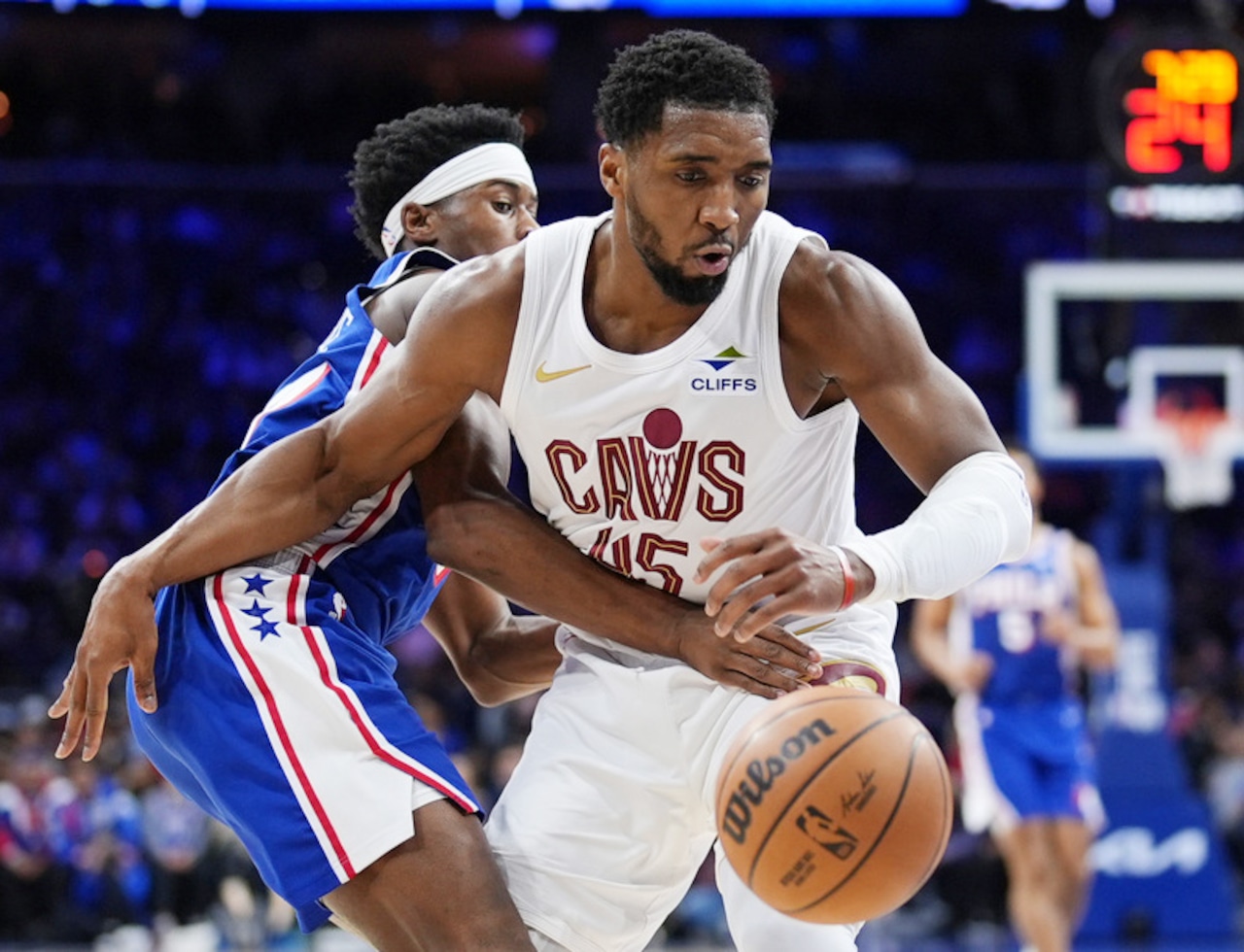 Cleveland Cavaliers’ Donovan Mitchell, right, battles for the ball against Philadelphia 76ers’ Vj Edgecombe during the first half of an NBA basketball game Wednesday, Jan. 14, 2026, in Philadelphia. Matt Slocum, AP2. Breaking the press: Cleveland’s must-fix
Grade: B-
This is the Cavs’ highest grade, largely because they haven’t been tested consistently. Also, they’ve treated it as a collective problem rather than a Donovan Mitchell or Darius Garland responsibility.
When teams have applied backcourt pressure, Cleveland has responded with more poise than in recent seasons.
They’ve used the inbounder as a screener to manufacture space. They’ve empowered Jaylon Tyson, Craig Porter Jr., Tyrese Proctor and even Nae’Qwan Tomlin to initiate offense and disrupt defensive targeting.
But this grade comes with a caveat.
Most teams have not committed to full-court pressure against Cleveland, yet. When the postseason arrives and opponents send multiple defenders into the backcourt with purpose, this will be tested again. What has worked in moderation will need to hold up under sustained stress.
Progress is evident. Proof will come later.
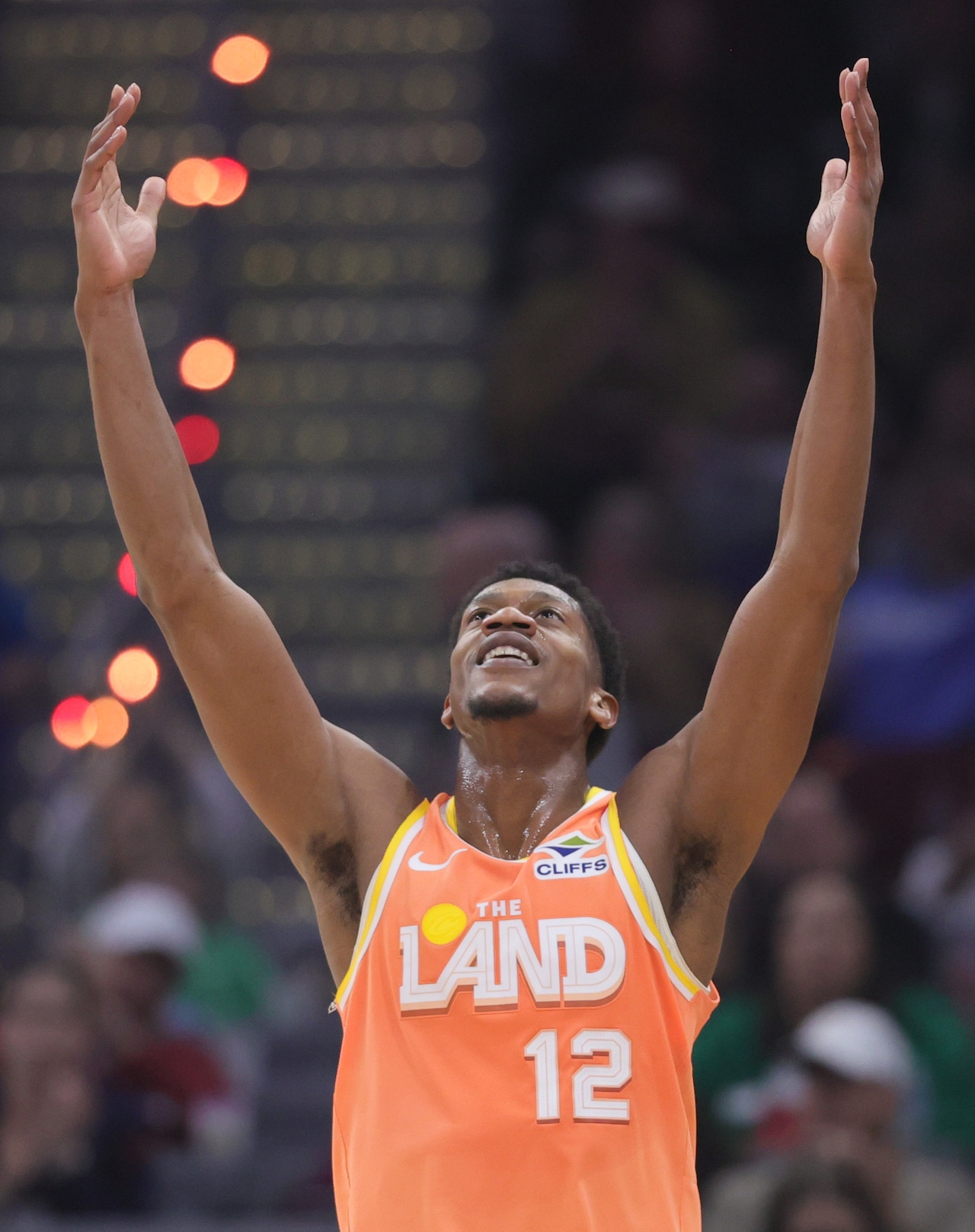 Cleveland Cavaliers forward De’Andre Hunter celebrates his three-point score in the first half at Rocket Arena. John Kuntz, cleveland.com3. Getting to know De’Andre Hunter
Grade: C+
De’Andre Hunter’s first full season in Cleveland has unfolded as a study in role clarity — or the lack of it.
Atkinson followed through on his promise to understand Hunter better, traveling to Los Angeles to spend time with him before the season. One of the defining conversations revolved around how Hunter saw himself. With Max Strus and Garland injured to start the year, Atkinson asked whether Hunter preferred to start or come off the bench. Hunter chose the starting lineup.
That experiment lasted 23 games.
As the Cavs struggled early, Hunter was moved to the bench, where he has been the sixth man for the last 15 games.
Statistically, it’s been one of the worst starts to a season of his career. He’s scoring the third-fewest points per game he’s ever averaged (14.1), while posting his second-worst field goal percentage (43.2%) and worst 3-point percentage (30.9%).
And yet, the impact metrics tell a more nuanced story.
Over Cleveland’s last 10 games, in which they are 7-3, Hunter owns the best net rating on the team at plus-13.1 per 100 possessions. As lineups have stabilized and his responsibilities have clarified, his comfort level has slowly returned.
There’s also a lingering question about whether Cleveland abandoned something too quickly.
Last season, the five-man lineup featuring Hunter alongside the Core Four played just 39 minutes together but posted a net rating of 18.5. This season, that same group has logged 51 minutes across six games and owns a net rating of 25.6. It has worked, yet Atkinson has largely shelved it anyway.
If that lineup is going to be reliable in the playoffs, it needs reps now. Matchups will dictate usage, but familiarity can’t be rushed.
For now, Hunter’s grade is the one I’m most hesitant about. The production hasn’t matched expectations. The offensive efficiency has dipped. The defense, while still impactful, has been uneven.
At his best, he’s one of Cleveland’s most reliable isolation defenders. At his worst, he drifts off the ball and loses his man for a beat; this forces the rest of the defense into late rotations that can break the possession.
How this season is ultimately judged for Hunter will hinge on two things. How clearly Atkinson defines his role and how often that role changes.
When Hunter’s responsibilities are steady, his game settles with them. Inconsistency has followed whenever that hasn’t been the case.
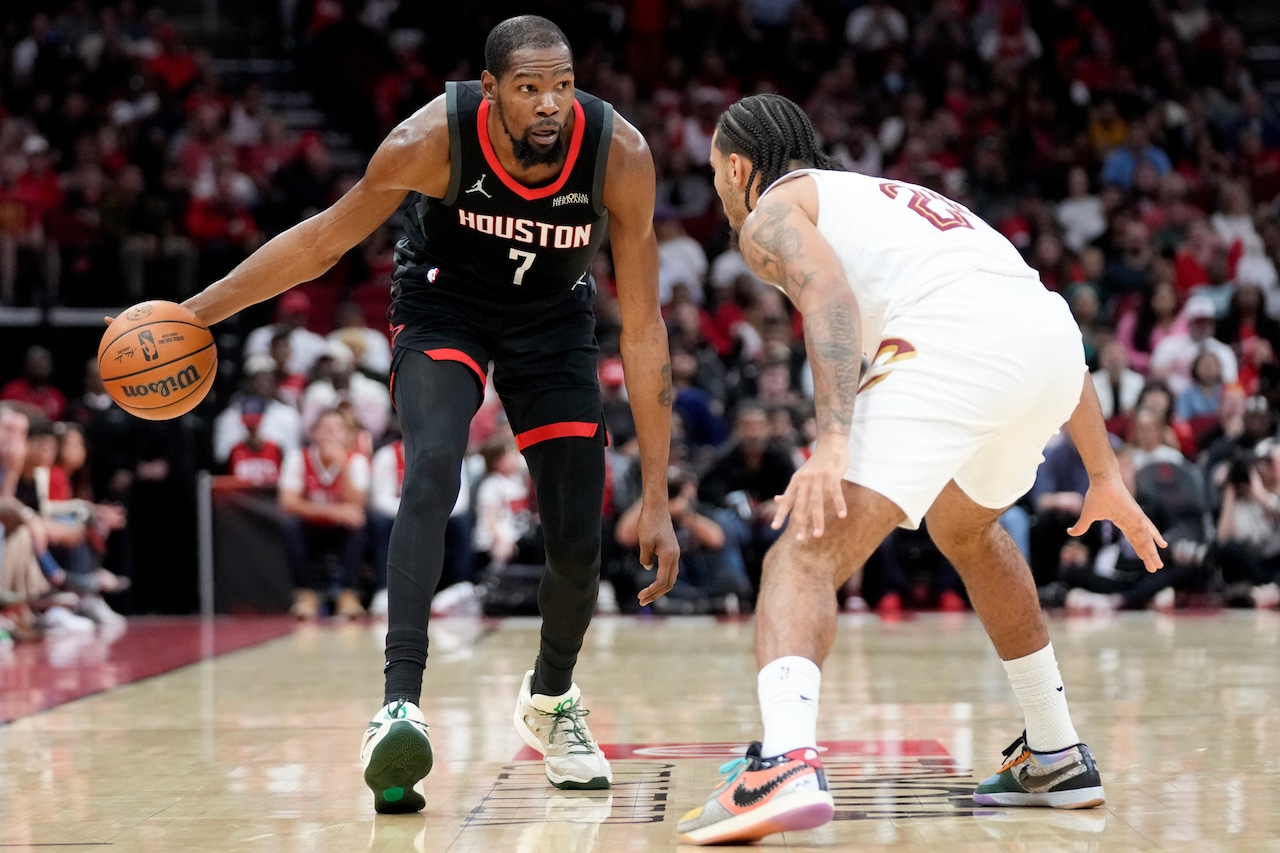 Houston Rockets forward Kevin Durant (7) dribbles as Cleveland Cavaliers guard Jaylon Tyson defends during the first half of an NBA basketball game, Saturday, Dec. 27, 2025, in Houston. (AP Photo/Eric Christian Smith)AP4. Reclaiming Cleveland’s defensive identity
Grade: D
Cleveland changed its defensive approach this season, placing greater emphasis on the perimeter and trying to disrupt actions earlier by applying pressure up the floor with the thought of slowing the opposition’s approach to the scoring zone.
After losing defensive stopper Isaac Okoro, this theory was already questionable, and the results haven’t validated it.
Mobley and Jarrett Allen remain premier rim protectors, but they’re being pulled away from their strengths more often. Switches, spacing and zone looks, including a 3-2 alignment with Mobley at the top, have left the back line vulnerable.
Not to mention, communication has slipped. Off-ball awareness has wavered. Backcuts and driving lanes have become too easy once the first line of defense is broken.
Yes, Cleveland’s activity numbers look better. Deflections have jumped from 16.2 per game last season to 20.3 this year. Steals are up slightly as well, from 8.2 to 8.8 per game. But more activity hasn’t meant more stops.
The Cavs are allowing the same number of shots at the rim as last season (25.9 per game). Opponents are converting 62.9% of those attempts, up barely from 62% a year ago. This indicates that teams are still getting their shots at the rim despite the perimeter emphasis.
And the larger picture is worse.
Cleveland’s defensive rating has cratered from 111.8 points allowed per 100 possessions last season, good for eighth in the league, to 114.3 this year, which ranks 15th.
This is a franchise that not long ago was defined by its defense.
In 2021-22, the Cavs finished fifth, allowing 108.9 per 100 possessions. In 2022-23, they were the best defensive team in the league at 109.9.
Now, Cleveland owns the worst 3-point defense in the NBA, allowing opponents to shoot 38.3% from beyond the arc. Closeouts are late. Pick-and-pops and pick-and-rolls have been lethal.
Atkinson has said at various points that the defense was ahead of the offense, or that offensive struggles have hurt the defense. That’s revealing. Elite defensive teams don’t fluctuate with shot-making. They don’t need their offense to be clean to stay organized.
Too often this season, missed shots turn into compromised floor balance. Cavs players are still below the free-throw line while opponents are already initiating offense. Some possessions don’t even allow Cleveland to set its defense at all.
That’s not the profile of a defense-first team. It’s the profile of one that wants to be aggressive without being connected. Active without being disciplined.
And until Cleveland reconciles that tension consistently, the identity they keep talking about will remain lip service.
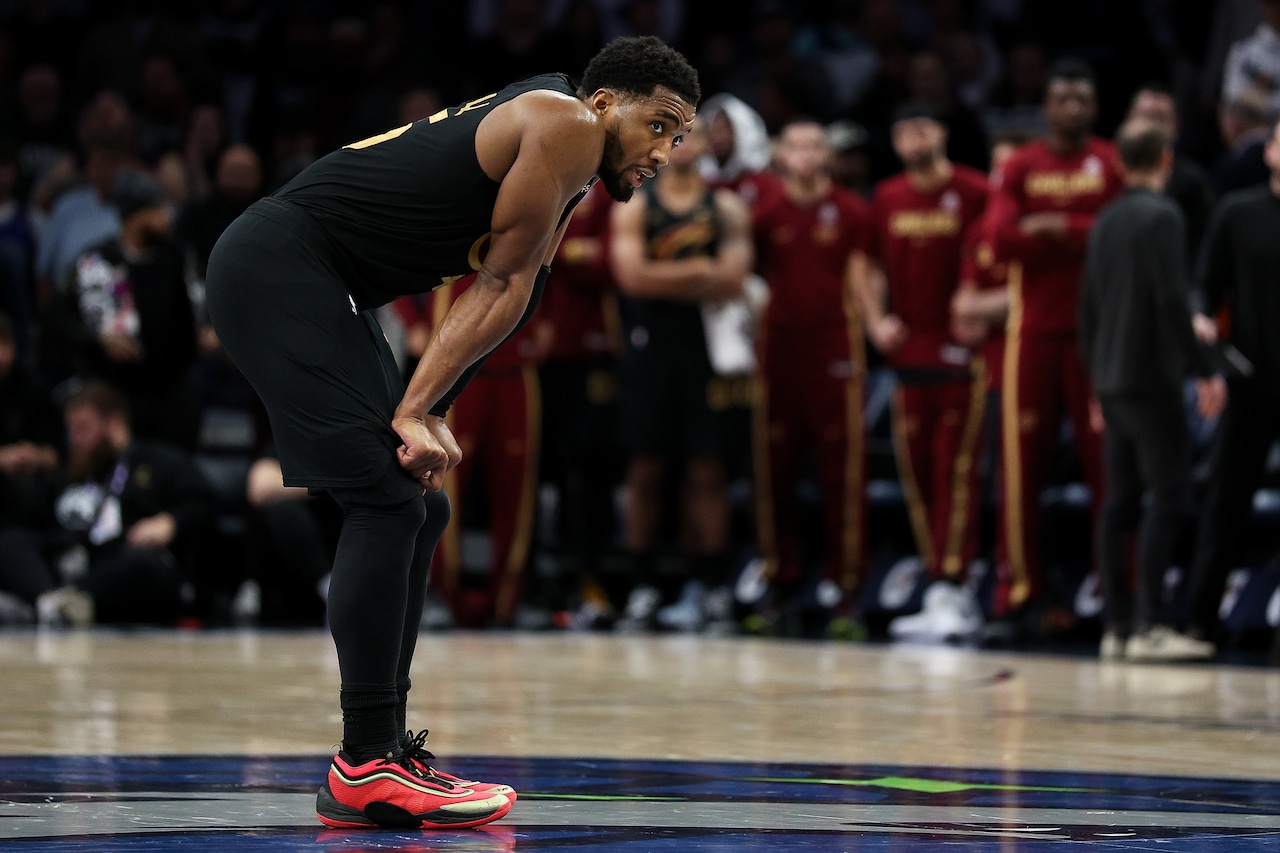 Cleveland Cavaliers guard Donovan Mitchell (45) reacts during the second half of an NBA basketball game against the Minnesota Timberwolves, Thursday, Jan. 8, 2026, in Minneapolis. (AP Photo/Matt Krohn)AP5. Never get run off the floor again
Grade: F
This remains Cleveland’s most damaging flaw.
Teams that play fast have a clear blueprint against the Cavs. Miami, Atlanta, Utah and Chicago are the top four teams in the NBA for pace, in order. None of those teams have better records than Cleveland. But all of them have beaten the Cavs by turning games into track meets.
This was supposed to be addressed through conditioning. Through emphasis. Through accountability.
Instead, it keeps happening.
Sometimes it’s effort. Sometimes it’s positioning. Sometimes it’s decision-making after missed shots. Too often, it’s all of it.
Opponents actively hunt transition opportunities against Cleveland, knowing they can tilt games before the Cavs settle in.
Even teams that aren’t built to run have noticed. The Raptors have the seventh-slowest pace in the league (99.11), yet Scottie Barnes made a point of pushing the ball relentlessly, turning exhaustion into an advantage.
Minutes have already been raised from last season’s career lows to workloads that more closely resemble the postseason. And yet, even with those adjustments, Mitchell has acknowledged (at times) feeling the effects late in games, fighting fatigue during some fourth quarters.
Cleveland will continue to monitor workloads for its players — especially those with injury histories — as the second half of the season unfolds and the focus shifts toward playoff preparation.
So what happens if the Cavs finally push beyond the semifinals?
Since the 2023 playoff series against the Knicks, Cleveland hasn’t been fully healthy when it matters. Injuries, wear and tear and attrition have followed them into every postseason.
If they want to play more than two rounds, they’ll need to prove they can survive the physical toll. And that starts with teams trying to run them off the floor.
I placed much of the responsibility for addressing these areas this summer on Atkinson. On his ability to bring alignment to a roster at a critical point in the franchise’s timeline and give the Core Four a clearer path forward. It’s still fair to critique Atkinson for falling short in some areas or for his lineup/rotation decisions. But he also needs more from his players. He can’t execute the plays for them. He can’t manufacture effort, energy or physicality in the middle of a game. That has to come from the floor.
And through 43 games, it hasn’t come consistently enough.
Yes, the Cavs have trended in the right direction over the last 10 games. Yes, there’s time left. But this is more about whether non-negotiables show up because Cleveland is chasing a top-four seed, or because it’s become the standard. Championship teams don’t toggle intensity on and off.
These grades reflect the entire first half of the season. They aren’t predictive, either. There’s no crystal ball here. No assumptions about health, matchups or who might be available when the games finally carry weight.
The Cavs can still challenge the East. That remains true. They’ve also given opponents a growing playbook for how to attack them. That’s true, too.
This was never about being right for the sake of it. It was about identifying what mattered most before the summer began and measuring whether Cleveland addressed it with enough urgency. So far, those areas have continued to shape games … and not in Cleveland’s favor often enough.
The 82-game season still leaves room for correction. Time hasn’t run out. But whether this season becomes a step forward or another hard lesson will come down to a simple question the Cavs can no longer avoid.
Not whether they can fix it — but whether they will.