
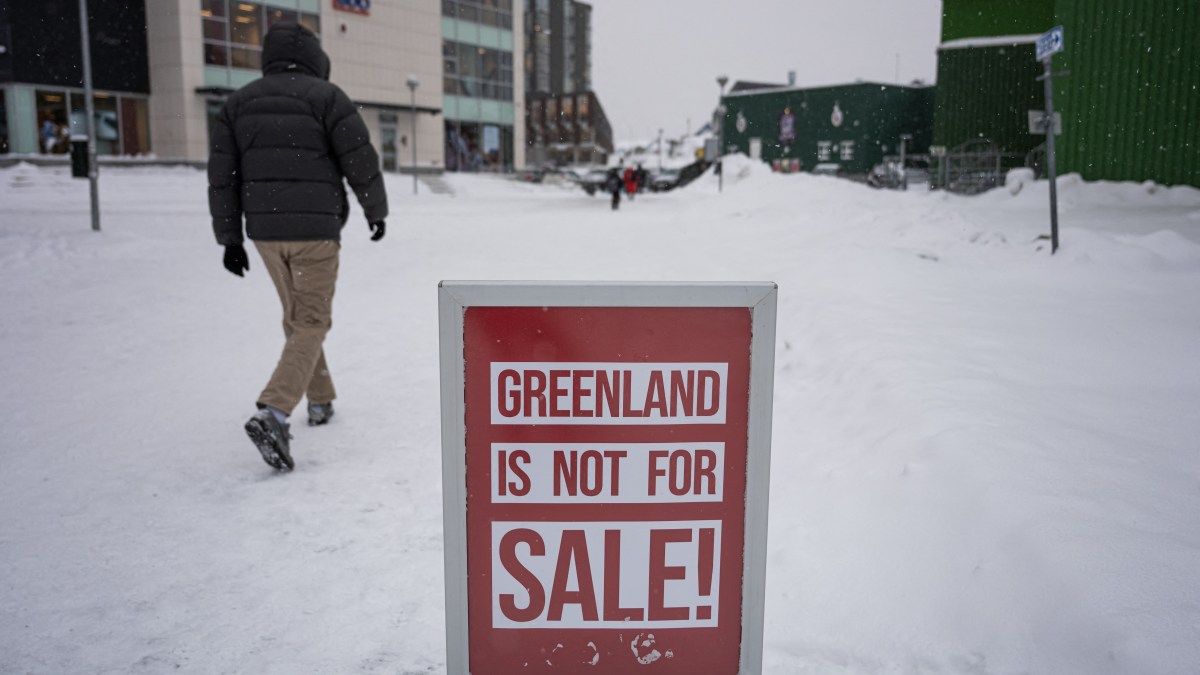
President Trump refused to rule out military action to seize Greenland as he told Europe to “focus on Ukraine” amid a chorus of opposition to his ambitions from Nato allies.
The president of the United States also pinned some of the blame for his aggressive territorial claims on Norway, accusing it in a text message to its prime minister of failing to ensure he won the Nobel peace prize.
Trump is due to speak at the World Economic Forum in Davos on Wednesday. While in Switzerland, he is likely to face some tense encounters after sticking with his threat to impose tariffs on Britain and seven other allies including France and Germany from February 1.
A potential route for de-escalation emerged on Monday night with a report that Trump had told Sir Keir Starmer in a phone call on Sunday that he may have been misinformed about the true purpose of the latest European and British military deployment to Greenland. Trump interpreted the move as a hostile provocation, while Starmer told Trump it was actually about addressing US security fears, Sky News reported.

Starmer says the UK would stand up for national interests while prioritising dialogue with allies over Greenland tensions
TOLGA AKMEN/EPA
Starmer called Trump’s tariff threat against the countries that were involved in the deployment “completely wrong” on Monday but ruled out a tit-for-tat response in favour of dialogue. European Union leaders will discuss a call from France for strong economic retaliation on Thursday.
Asked by NBC News on Monday night whether he would use force to take Greenland, an autonomous Danish territory, Trump said: “No comment.”
The White House had said on January 5 that “utilising the US military is always an option at the commander-in-chief’s disposal”.
NBC asked whether Trump was serious about following through with his plans to hit the UK and other European members of Nato with tariffs unless he got his way over Greenland.
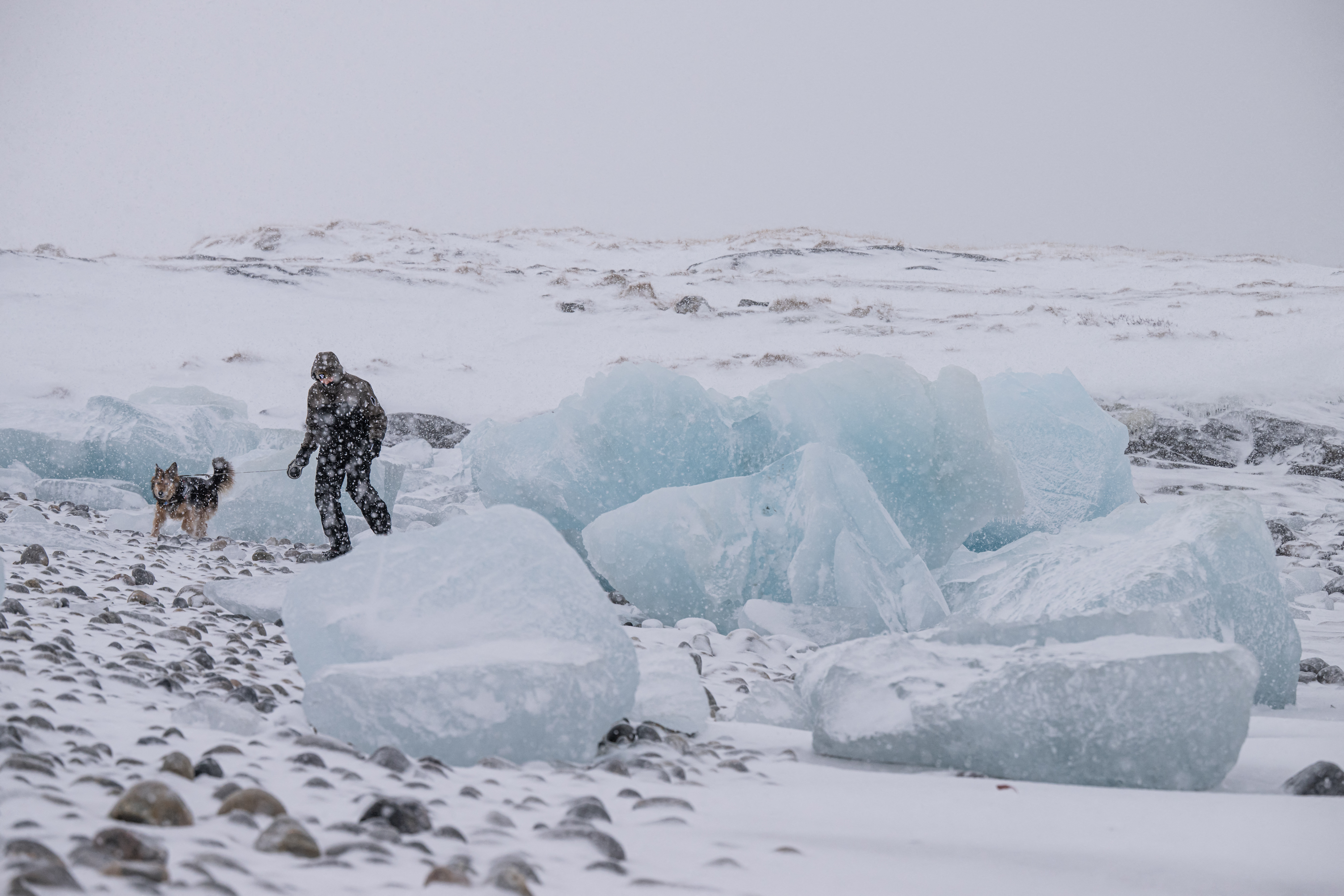
Nuuk, Greenland
JONATHAN NACKSTRAND/AFP/GETTY IMAGES
“I will, 100 per cent,” he said. “Europe ought to focus on the war with Russia and Ukraine because, frankly, you see what that’s gotten them. That’s what Europe should focus on — not Greenland.”
Trump went on to justify the inclusion of Norway in his tariff threat by insisting it could have intervened to ensure he won the Nobel peace prize. The award is decided by the Norwegian Nobel Committee, a five-member panel appointed by Norway’s parliament.
Jonas Gahr Store, Norway’s prime minister, published a text message that Trump sent him on Sunday. “Considering your Country decided not to give me the Nobel Peace Prize for having stopped 8 Wars PLUS, I no longer feel an obligation to think purely of Peace,” Trump’s message said.
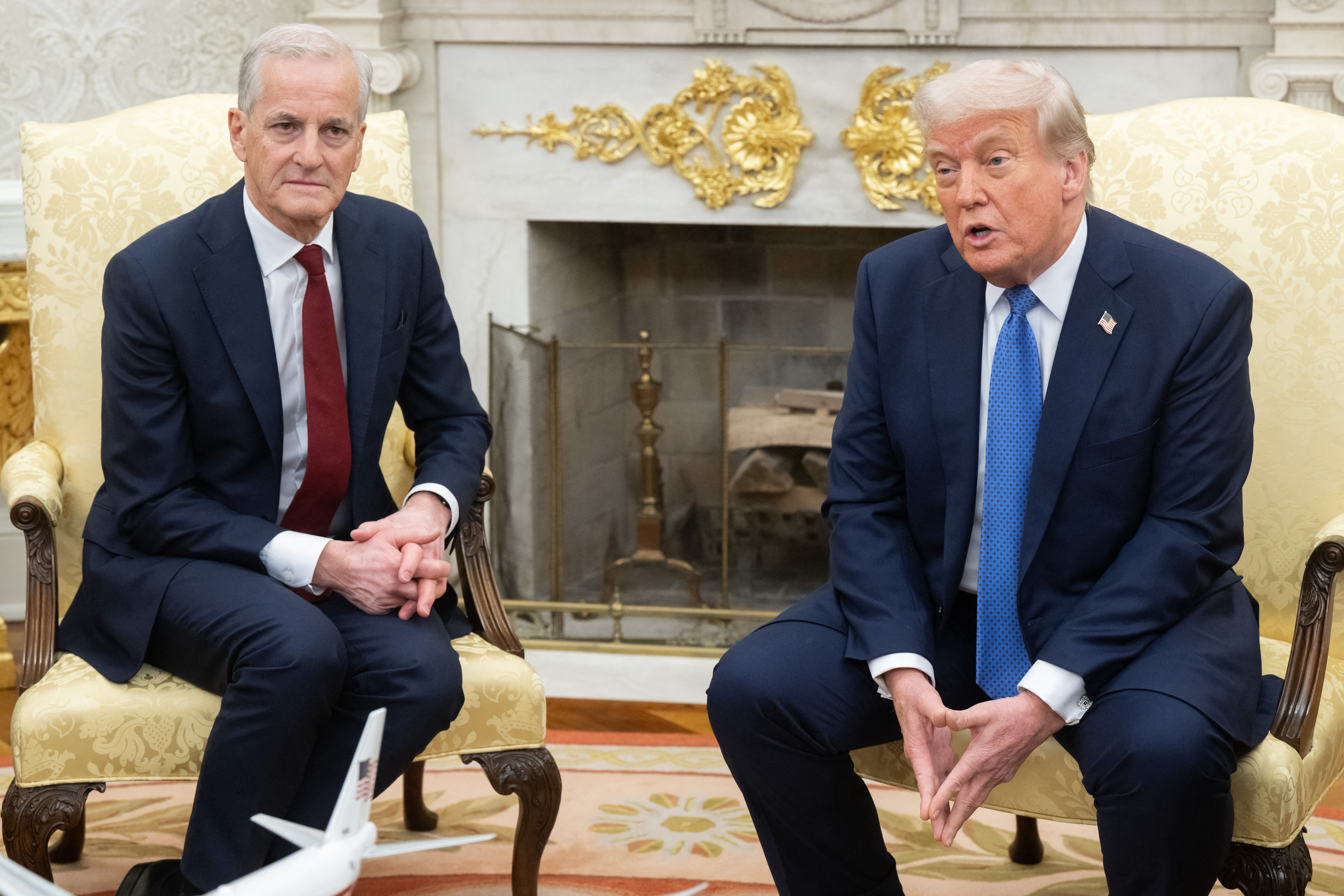
Jonas Gahr Store met President Trump last year
SAUL LOEB/AFP
The president told NBC he rejected the idea that Norway’s government had no influence on the prize. “Norway totally controls it despite what they say. They like to say they have nothing to do with it, but they have everything to do with it,” he said.
The Nobel committee is led by Jorgen Watne Frydnes, 41, a University of York graduate who is formally apolitical but well liked in Norway’s ruling Labour Party. Asle Toje, 51, the vice-chairman, has conservative leanings and, in his capacity as a political analyst, has argued that Trump needs to be treated in a more nuanced light.
• Why the Arctic Circle is in everyone’s sights
The three remaining committee members are: Anne Enger, 76, a former leader of the Centre Party; Gry Larsen, 50, a well-connected former Labour Party politician; and Kristin Clemet, 68, a Conservative former education minister who also runs a liberal think tank.
Scott Bessent, the US treasury secretary, said: “The president is looking at Greenland as a strategic asset for the United States. We are not going to outsource our hemispheric security.”
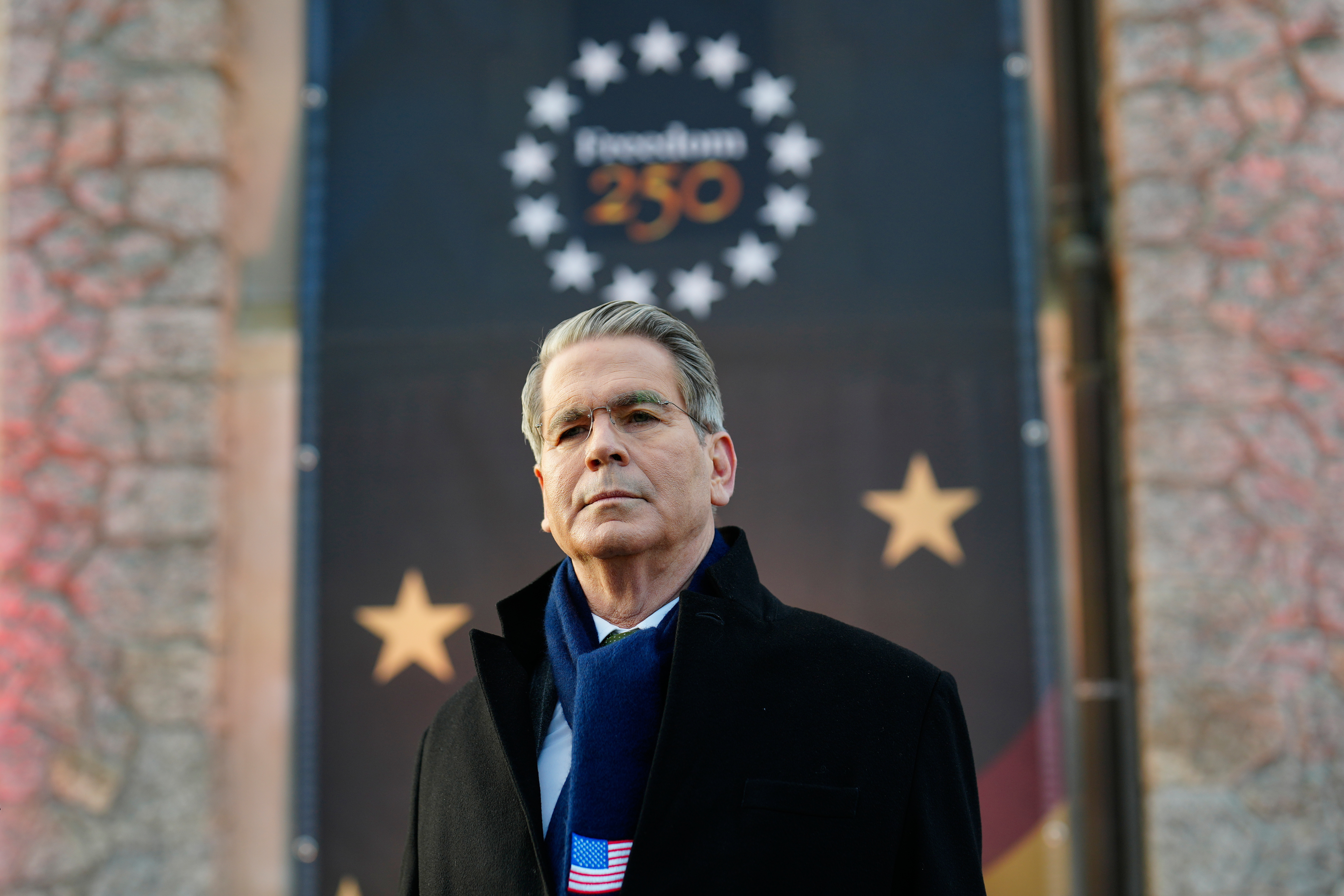
Starmer said on Monday that he did not believe Trump was truly considering military action in Greenland. He insisted that he would stand up for the UK’s “national interests” but would continue to work closely with the US to put pressure “where it belongs” on President Putin of Russia. “The UK and the US are close allies … That relationship matters profoundly,” he said.
A trade war was “not the right way to resolve differences within an alliance”, he added. However, President Macron of France urged the EU to use its “big bazooka” economic anti-coercion instrument to target the US. A list of tariffs on €93 billion worth of US goods that was drawn up during a previous trade dispute last summer will kick in on February 7 unless EU member states agree to keep them frozen.
Roland Lescure, the French finance minister, said: “An ally and friend for 250 years is considering using tariffs. We don’t like tariffs, but we particularly dislike tariffs being used as a geopolitical weapon.”
Friedrich Merz, the German chancellor, openly distanced himself from Macron and warned that a trade war would hurt everyone involved.
Denmark warned against “sending a signal of weakness” to the US as the Danish army chief arrived in Greenland at the head of a “substantial” contingent of troops. On a visit to London, Lars Lokke Rasmussen, the Danish foreign minister, said: “It is important that all of us who believe in international law speak out to show Trump that you cannot go down this road any further.”
Asked to comment on Starmer’s view that Trump was not serious about US military action, Anna Kelly, a White House spokeswoman, said: “President Trump believes Greenland is a strategically important location that is critical from the standpoint of national security, and he is confident Greenlanders would be better served if protected by the United States from modern threats in the Arctic region. The president is committed to establishing long-term peace at home and abroad.”