
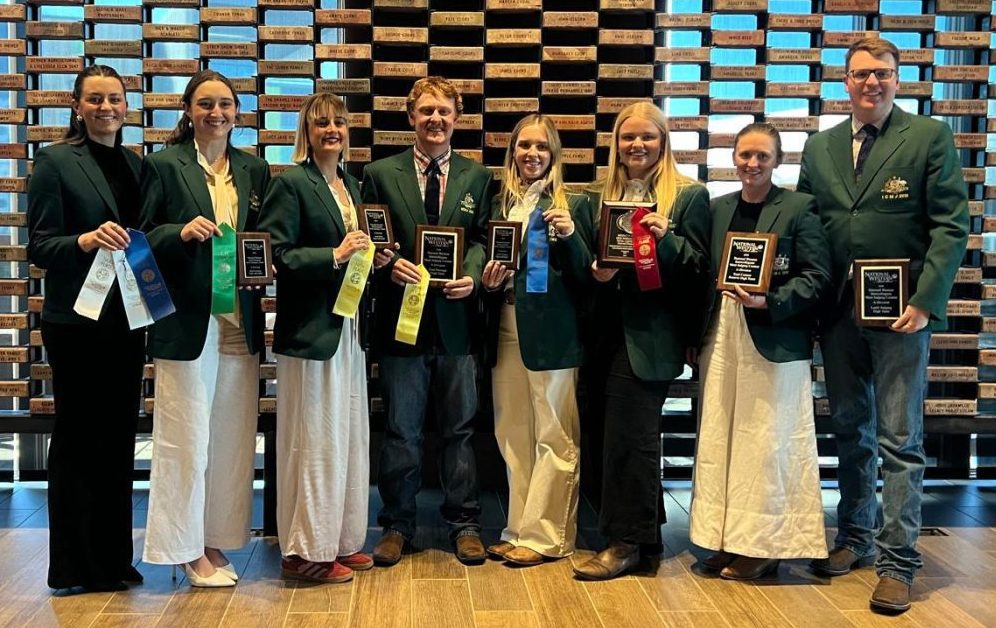
 The Australian ICMJ team has won Reserve National Champion Team at the at the National Western Meat Judging Contest in Denver, Colorado.
THE Australian ICMJ team has achieved some of its best ever results at the National Western Meat Judging Contest in Denver, Colorado this week, earning the Reserve National Champion Team award.
The team of five, made up of Piper Christensen and Will Lawrence from the University of Queensland, Penelope Crothers from Marcus Oldham College, Sarah Bradfield from University of New England and Murdoch University’s Zoe Skinner, also took out first place in the Lamb Judging and Total Placings.
Zoe Skinner was the best-performing Australian, with several individual awards including Reserve Individual Champion Overall, Beef Grading High Individual, Beef Judging 3rd Individual, Total Beef High Individual and Lamb High Individual.
The National Western Meat Judging Competition is one of several meat judging competitions the team takes part in during a three-week US industry tour.
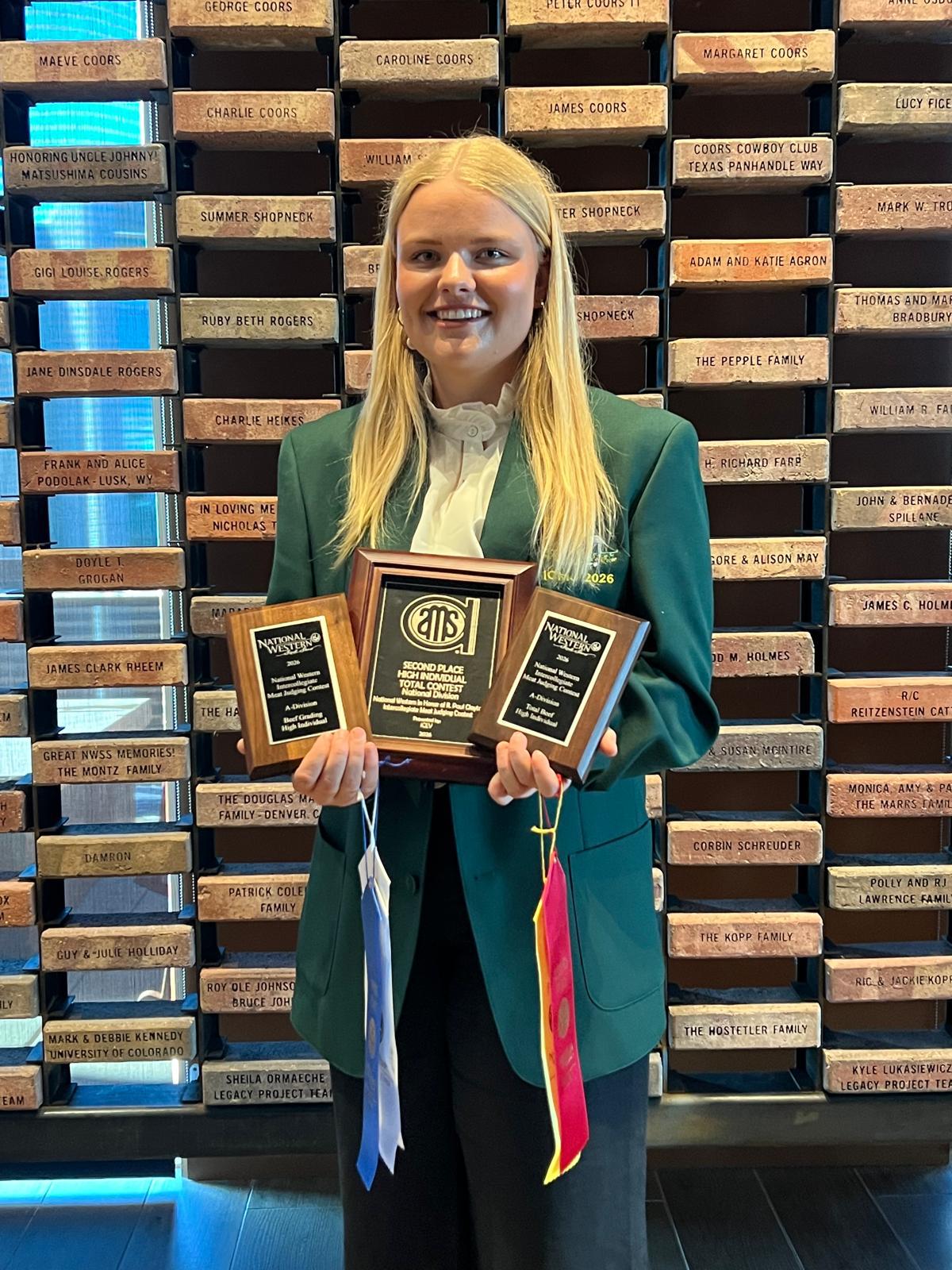
Zoe Skinner was named Reserve Individual Champion.
Meat judging involves assessing beef, lamb and pork carcasses and primal cuts on eating quality and yield attributes, such as marbling, trimness and muscling.
These skills are highly valued across the global meat industry and the ICMJ program is a well-recognised pathway for entry into the industry.
Beyond assessment of carcasses, the ICMJ program also sets up participants with skills in time management, decision making, teamwork, goal setting, critical thinking, communication and networking skills just to name a few.
The 2026 Australian ICMJ team was selected at the completion of the ICMJ AUS-MEAT Intensive Industry Education and Development Program held in south-east Queensland in September last year, which involved 20 agriculture and veterinary science students from universities all around the country.
Australian ICMJ team coaches Aimee Bolton, Jake Bourlet and Ellie Hays said they were extremely proud of the team’s performance.
“The meat judging circuit in the United States is highly competitive and many students spend months preparing for these competitions,” Ms Bolton said.
“It’s a big challenge for our Australian students to learn the USDA yield and quality grading systems in a matter of weeks and then apply that knowledge in a highly competitive setting.
“They have worked extremely hard during the training sessions we’ve had since arriving in the US and learned a lot from the processing plant visits so far,” Ms Bolton said.
The US industry tour gives students the opportunity to build connections with key importers of Australian meat products and allow them to see first-hand how Australian beef, pork, lamb and goat reaches American consumers.
The team has already toured major processors, feedlots, ranches and meat science departments across Texas and met with representatives from the National Cattlemen’s Beef Association.
With five days left on the itinerary, they’ll make several stops in Oklahoma and Colorado including the Denver Stock Show, a dairy operation, and other processing facilities. Students also have the opportunity to undertake further industry placement in the US at the end of the tour.
The ICMJ program is supported by ICMJ’s foundational partners, Meat & Livestock Australia and Australian Meat Processor Corporation as well as a range of industry partners.