
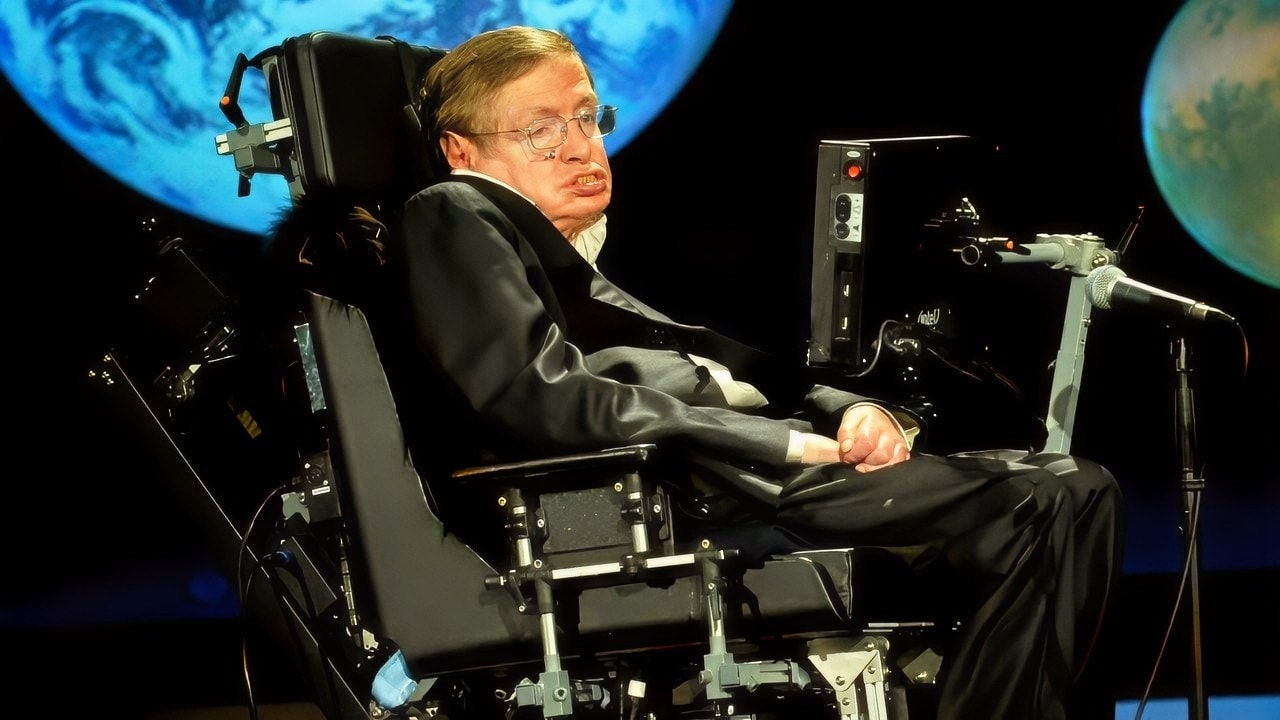
Space Quote of the Day: Stephen Hawking’s “Advanced Monkeys” Line Still Hits Hard
“We are just an advanced breed of monkeys on a minor planet of a very average star. But we can understand the universe. That makes us something very special.” -Stephen Hawking.
Hawking shared this quote in an interview with the German media outlet Der Spiegel in 1988. The gifted scientist was referring to space exploration and how the human race could seek the stars and leave the planet at will.
Are We More Than Just Evolved ‘Monkeys’?
Hawking curiously refers to “monkeys,” and he makes a strong case for evolution.
He also looked at the earth as a small planet in the entire realm of the living.
Earth’s sun is only one of billions of stars in the universe.
He wondered how such a run-of-the-mill location could have given rise to the human race.
Hawking believed that humanity was “very special” and could accomplish great things.
Only humans can figure out a way to leave the planet and ensure the survival of the species. Humans could always overcome difficulties.
While Hawking was not referring specifically to climate change, he believed that this dangerous situation could threaten Earth’s survival, and he thought humanity had the wherewithal to defeat it with a greater understanding of the problem.
When the Human Race Must Evolve Into Space Travelers
Exploring other worlds is a way to mitigate a difficult future. He knew that humans had much potential. Humanity will overcome adversity with greater understanding of the universe, he believed.
But are humans really that remarkable?
Hawking would have replied in the affirmative. Only an evolved race could ponder what the universe could hold. The Earth is still special despite its fleeting grasp of the cosmos. Somehow, humanity sees a future in which it could explore the stars.
He thought that the Earth belongs to all of humankind and that there needs to be a plan to explore other locations in the galaxy.
The Essence of Survival
Hawking always wanted to declare that humanity is important in the cosmos and that it could survive for many epochs.
The human race is unique and able to adapt and overcome – no matter what odds it faces.
Bringing Science to the Masses
Hawking was an accessible public intellectual.
He thought that ordinary people should be part of scientific discourse, which was usually found in academic journals and discussions. He brought deep intellectual rigor to the masses.
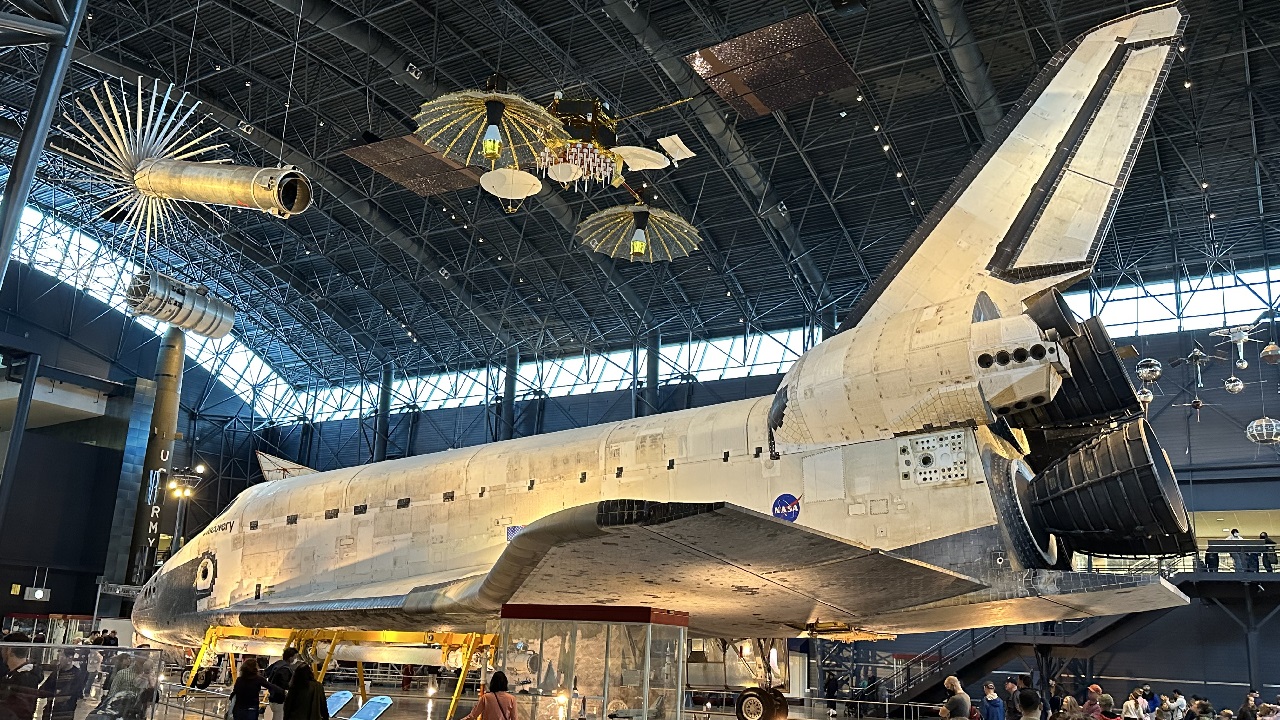
NASA’s Discovery. Image Credit: 19FortyFive.com taken on October 1, 2022.
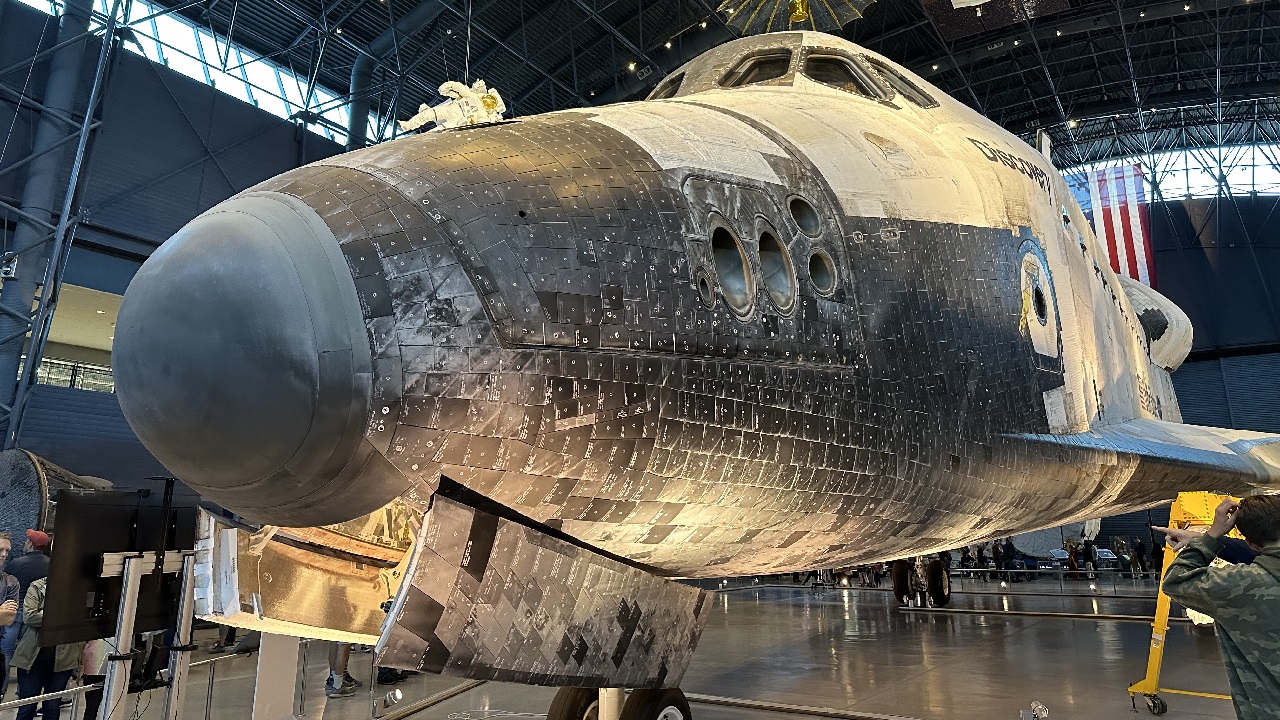
NASA’s Space Shuttle Discovery. Image Taken by 19FortyFive.com on October 1, 2022.
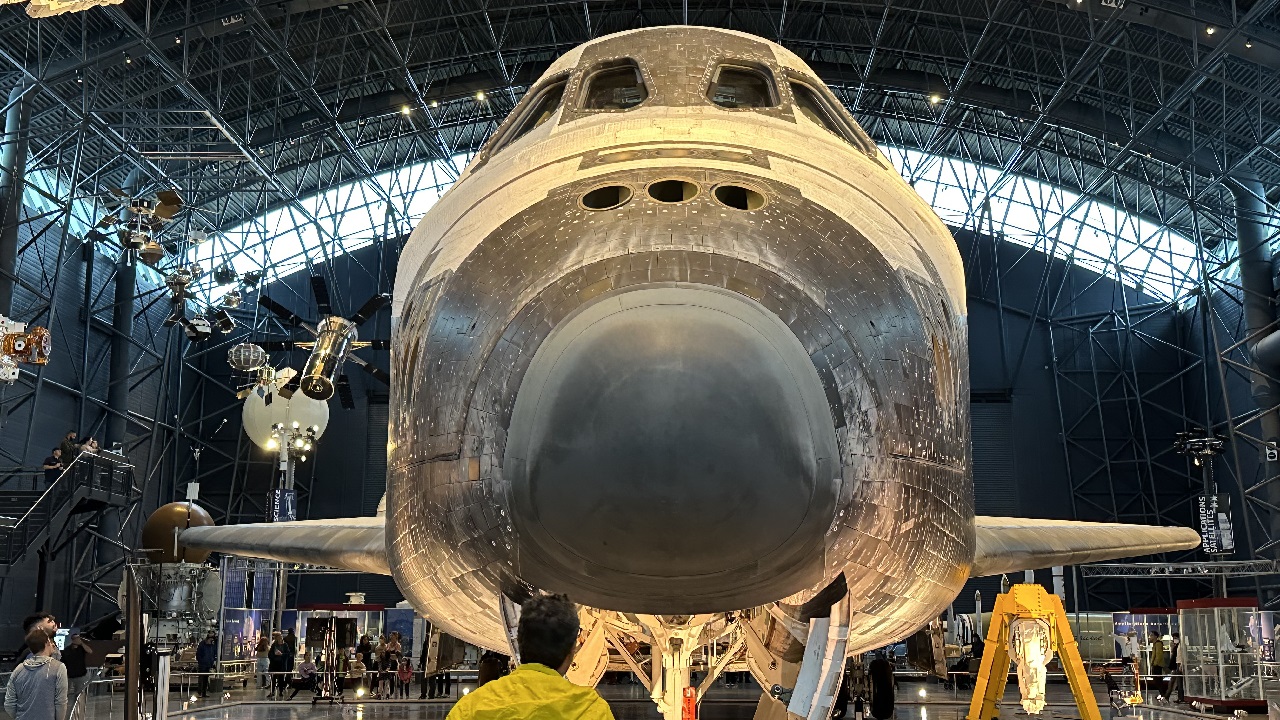
NASA Space Shuttle Discovery. Image Credit: 19FortyFive.com taken on October 1, 2022.
Hawking did not do it for fame; he wanted a real back-and-forth with people who did not usually think in such pithy overtures. Hawking knew that allowing people outside the usual scientific discourse would create a situation in which debate about the cosmos would foster a greater understanding of the need to explore space to ensure the human race survives for all eternity.
Biography of Stephen Hawking
Stephen Hawking was born in 1942 in Oxford, England. He studied physics at Oxford University and the University of Cambridge.
In the early 1960s, Hawking was struck with amyotrophic lateral sclerosis (ALS).
Hawking knew ALS would eventually be fatal. It was increasingly difficult to live with it, and he realized it would only be further debilitating and lead to paralysis. This did not deter him from working hard and conducting excellent research in general relativity.
The Curiosity of Black Holes
He was extremely interested in Black Holes. Hawking even conceptualized “mini Black Holes” – objects with one billion tons of mass that would occupy only the space of a proton.
This was related to quantum mechanics and the laws of relativity.
In 1974, Hawking posited that Black Holes could emit subatomic particles until they lose all energy and explode.
“Hawking’s work greatly spurred efforts to theoretically delineate the properties of black holes, objects about which it was previously thought that nothing could be known. His work was also important because it showed these properties’ relationship to the laws of classical thermodynamics and quantum mechanics,” according to Encyclopedia Brittanica.
Numerous Honors Awaited
In 1974, Hawking became a fellow of the Royal Society. He was also named a professor of gravitational physics at Cambridge. He even received the U.S. Presidential Medal of Freedom in 2009.
But it was his work as a public intellectual that brought Hawking fame. The scientist was able to break down difficult subjects into easy-to-understand prose and public comments. His bestseller A Brief History of Time entered him into the public lexicon. The book crossed over from difficult cosmology into a treatise that many people could understand.
Inspiration for Future Physicists
Hawking, due to his disability, inspired many future scientists. He conducted research despite personal hardships and never stopped his quest to educate many people about the ways of the universe.
He communicated through a speech synthesizer on a wheelchair. This made the public realize that adversity could be overcome through sheer intellectual power and the ability to make complex concepts simple for public discourse.
The Legacy of Stephen Hawking
Hawking exhibited courage and hope, allowing his imagination to run wild as more people became enthralled by his intellect. Hawking was not shy. He even appeared on episodes of the Simpsons.
He figured that the more people would understand the cosmos, the more effectively he could relate to them at a basic level with warmth and humor. He became an advocate for disability rights and scientific education.
Hawking died at the age of 76 in 2018. He lived life to its fullest despite hardship and knowing that his disease would eventually kill him. He wasn’t even supposed to live that long, according to his original prognosis.
Hawking will be remembered for his exceptional intelligence and his willingness to give back to people who became more familiar with his research over time.
The eminent physicist will go down as one of the most important public intellectuals of his era and will be celebrated by many for his wit and wisdom that led to a greater understanding of the universe.
About the Author: Brent M. Eastwood
Author of now over 3,000 articles on defense issues, Brent M. Eastwood, PhD is the author of Don’t Turn Your Back On the World: a Conservative Foreign Policy and Humans, Machines, and Data: Future Trends in Warfare plus two other books. Brent was the founder and CEO of a tech firm that predicted world events using artificial intelligence. He served as a legislative fellow for US Senator Tim Scott and advised the senator on defense and foreign policy issues. He has taught at American University, George Washington University, and George Mason University. Brent is a former US Army Infantry officer. He can be followed on X @BMEastwood.