
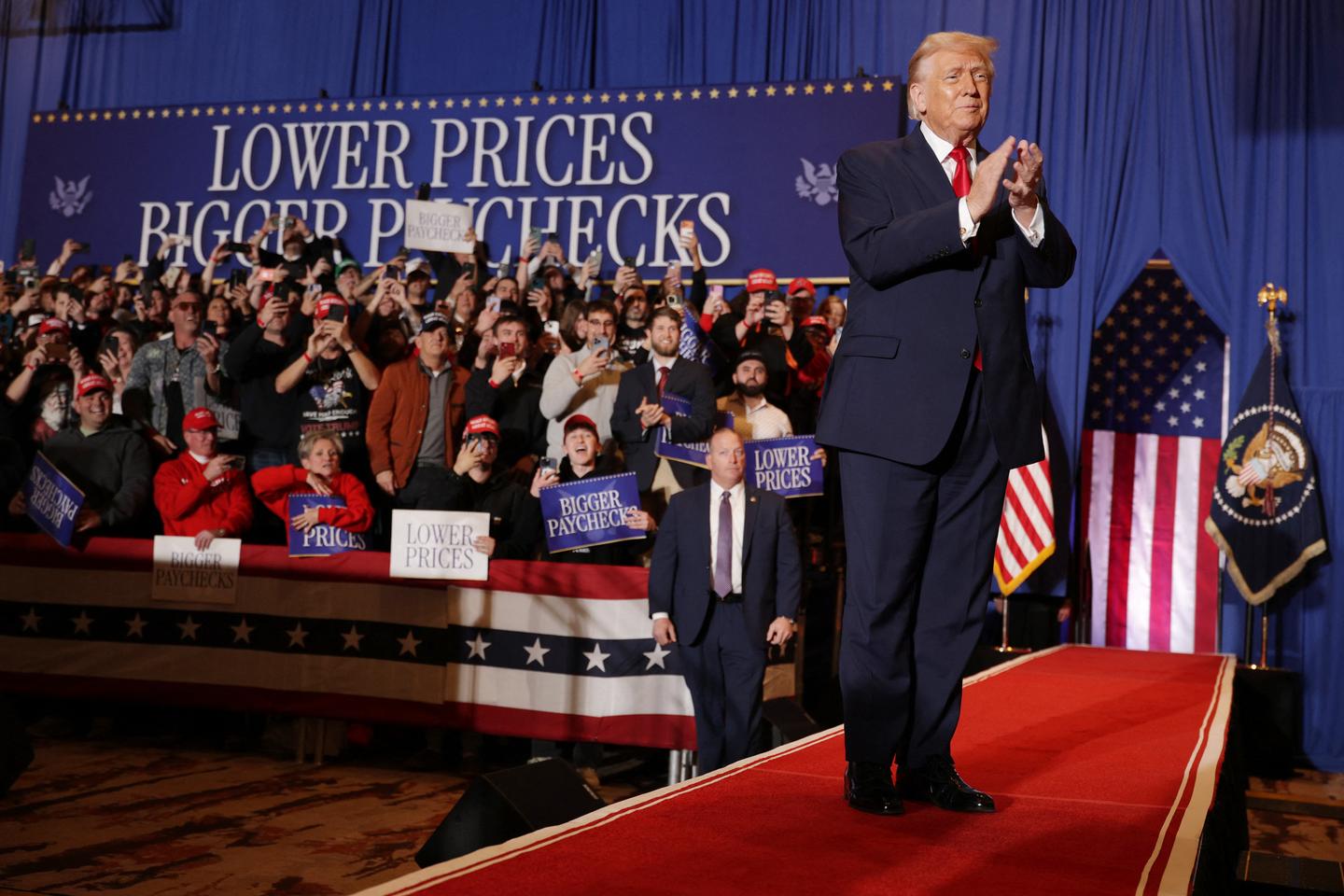
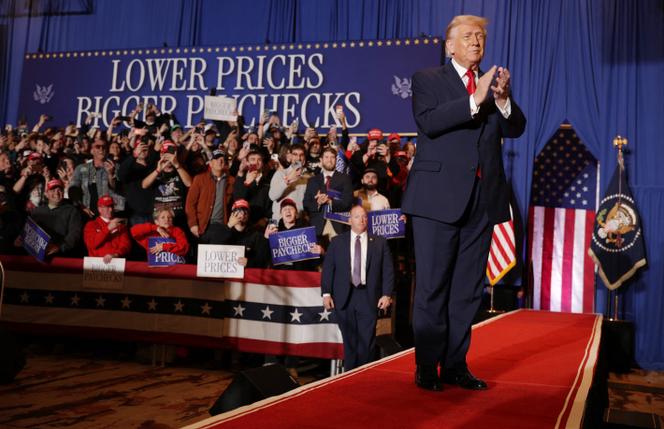
 US President Donald Trump at a meeting on the cost of living at the Mount Airy Casino Resort, in Mount Pocono, Pennsylvania, on December 9, 2025. ALEX WONG/GETTY IMAGES VIA AFP
Even Donald Trump eventually had to admit it. The soaring cost of living has become a central political issue in the United States. After calling it a “Democrat scam” for months, the US president reclaimed the term “affordability” in early January. The word has flourished in public debate since the summer of 2025, notably thanks to the efforts of New York’s new Democratic Socialist mayor, Zohran Mamdani. The term has even appeared on the White House’s website.
On paper, real average wages (adjusted for inflation) in the US increased by 1.1% in 2025, pushing up purchasing power. Yet many Americans feel crushed by extremely high prices, especially for day-to-day expenses such as housing, healthcare or energy. The pressure has not eased since the inflation spike that followed the pandemic, and voters blame government inaction. The same issue that cost the Democrats the presidential election in 2024 now threatens to drag down the Republicans in the November midterms.
Trump has therefore made a flurry of announcements aimed at reducing the cost of living for Americans. Among his proposals are new healthcare legislation to make insurers pay more, a ban on large real estate groups buying additional single-family homes, a pledge for the federal government to purchase $200 billion in mortgages to lower rates, the introduction of a 10% cap on interest rates for credit cards – hugely popular in the US – and a promise of a $2,000 check for low-income households, funded by tariffs.
You have 76.41% of this article left to read. The rest is for subscribers only.