
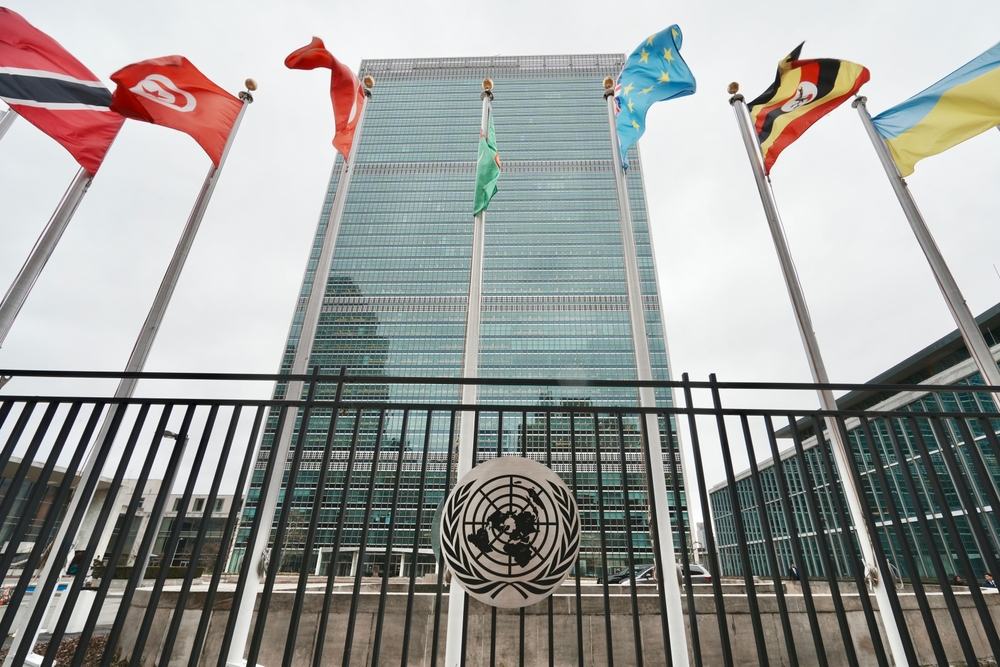
The United Nations is imperfect and often frustrating. However, it remains a force multiplier for the United States. Used effectively and monitored closely, the U.N. has the ability to advance U.S. security and protect American interests in a competitive, chaotic world.
Retreating from the field costs the United States agenda-setting power as well as veto power over initiatives that run directly counter to U.S. national security and economic interests. Absence doesn’t neutralize multilateral systems – it reallocates influence. When the United States disengages, it strengthens actors, like Russia and China, whose priorities diverge sharply from ours and who retain the veto power that can block real progress to resolving crises. Recent U.S. decisions to withdraw from or defund dozens of multilateral bodies, including 31 U.N. entities and 35 non-U.N. organizations, risk weakening institutions that serve U.S. interests while doing little to improve performance.
Demands to reform the U.N. are neither new nor unreasonable. Large, complex multilateral institutions must evolve to remain effective, accountable, and relevant to today’s security, economic, and humanitarian realities. And not every U.N. body performs well or merits unconditional support. Some entities are duplicative, inefficient, or politically compromised, including some organizations from which the United States recently withdrew.
As the administration continues its ongoing efforts to scrutinize U.N. and other multilateral organizations, the objective should be to improve performance, not to abandon influence. Performance metrics matter, and independent evaluations should guide funding decisions. Reform should be continuous, evidence-based, and unapologetically rigorous. And there should be consequences for failure.
In some cases, disengagement may be justified when reform is demonstrably impossible. However, broad disengagement without careful analysis undermines U.S. influence and weakens coordination in responding to global crises. It also closes off avenues for advancing core U.S. values, including support for civil society and democratic institutions which work to hold autocratic governments accountable.
The withdrawal from the U.N. Democracy Fund, which works to support civil society and democratic movements around the world, is a case in point. Whatever its imperfections, the fund has provided a multilateral channel to support local democratic actors in environments where bilateral engagement is limited or politically sensitive.
The same dynamic applies in counterterrorism. The U.S. withdrawal from the Global Counterterrorism Forum silences the American voice in a platform designed to address evolving terrorist threats, including in West Africa and the Sahel south of the Sahara, regions of direct concern to U.S. security interests. Similarly, withdrawal from the International Law Commission reduces U.S. influence over the development of international legal principles that directly affect American security and economic interests.
Exiting such forums doesn’t eliminate cooperation. It cedes leadership and agenda-setting to others. Walking away discards the very tools required to impose discipline, demand accountability, shape standards, influence leadership appointments, and block malign initiatives. International coordination doesn’t disappear when the United States exits. It simply continues without us.
As President George W. Bush said in his U.N. address in 2005, “The United Nations must be strong and efficient, free of corruption, and accountable to the people it serves. The United Nations must stand for integrity and live by the high standards it sets for others. And meaningful institutional reforms must include measures to improve internal oversight, identify cost savings, and ensure that precious resources are used for their intended purpose.”
Effective U.N. reform doesn’t happen in a vacuum or disengagement, but through leverage, discipline, and intensely focused U.S. leadership, such as through the following course of action:
First, the United States should lead on demands to strengthen accountability and oversight across the U.N. system, including an annual review of the efficiency, effectiveness, and strategic value to the United States of every U.N. body in which the United States participates.
Second, the United States should prioritize targeted U.N. reform and pursue specific, measurable measures. If that fails after sustained effort, withdrawal or reduction of funding should remain an option. The United States has the most powerful lever available in the multilateral system, the financial contributions made by the American taxpayer; in 2025 the United States funded 22% of the U.N. regular budget, approximately $820 million.
Third, the United States should lead coordinated international pressure for change. Reform efforts are far more effective when driven collectively with like-minded allies and partners.
When the United States is present, it shapes outcomes, advances national security priorities and presses relentlessly for reform. When it leaves, the gap is filled by others, and American interests are no longer at the table. Reform requires pressure, persistence, and leadership.