
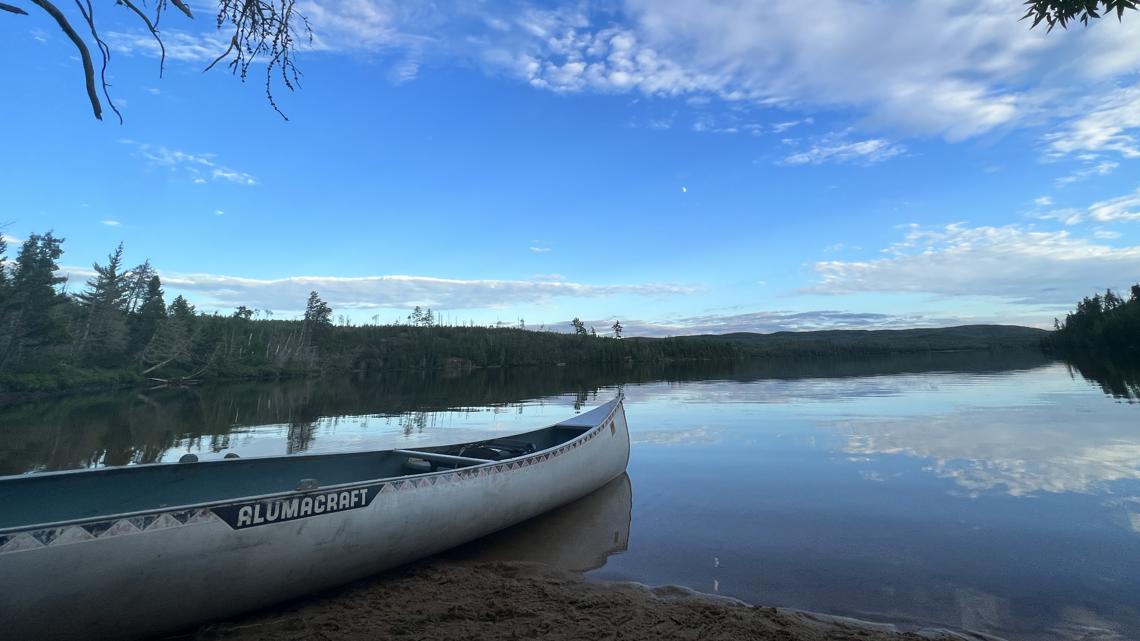
The protections outlined by the Bureau of Land Management encompass more than 225,000 acres in northern Minnesota’s Superior National Forest.
WASHINGTON — The U.S. House of Representatives voted Wednesday to go forward with a plan to overturn a 20-year ban on mining near the Boundary Waters Canoe Area Wilderness (BWCAW) and its watershed.
The bill now goes to the U.S. Senate for consideration.
House Joint Resolution 140, put forth by Republican Rep. Pete Stauber (MN-08), calls for the withdrawal of federal lands in Cook, Lake and St. Louis Counties from Public Land Order (PLO) 7917, which placed a ban on copper mining in the BWCAW for 20 years. The Biden administration signed the order in January 2023.
“By locking up the Duluth Complex—the world’s largest untapped copper-nickel deposit — President Biden cemented our nation’s reliance on foreign adversarial nations like China for critical minerals that will be necessary for the United States to compete and win in the 21st Century,” Stauber said in a press release earlier this month.
Stauber’s attempt to repeal PLO 7917 comes through the use of the Congressional Review Act (CRA), which grants Congress the authority to review and disapprove of federal actions within an allotted timeframe. Should both chambers of Congress and the president sign off on the resolution, PLO 7917 would be nullified.
“This CRA will not greenlight any proposed project. All it does is remove the dangerous, misguided ban that stops us from considering any project,” Stauber said on the House floor Wednesday. “This ban disregarded the science. It disregarded the facts. Lifting this ban will simply allow the science and the facts to prevail.”
RELATED: Mining the Truth: Cases for and against mining near the Boundary Waters
”Today, those who voted in favor of HJR 140 voted to sell out American public lands to foreign interests,” said Ingrid Lyons, Executive Director of Save the Boundary Waters, in a statement. “This bill sacrifices America’s most visited Wilderness for the benefit of a Chilean company that sends its concentrates to China. Now, we look to the Senate to protect the Boundary Waters, precedent, and public lands across the country.”
The protections outlined by the Department of the Interior’s Bureau of Land Management in PLO 7917 encompass more than 225,000 acres in northern Minnesota’s Superior National Forest.
The order states it is meant to “preserve fragile and vital social and natural resources, ecological integrity, and wilderness values” in the Rainy River Watershed, the BWCAW, the Boundary Waters Canoe Area Wilderness Mining Protection Area (MPA), and the 1854 Ceded Territory of the Lake Superior Chippewa.
It also seeks to “protect the health, traditional cultural values, and subsistence-based lifestyle of the Tribes that rely on resources in the region.”
National chair of the Campaign to Save the Boundary Waters, Becky Rom, spoke with KARE 11 in September, saying, “This is the fight of our lifetime.”
Stauber has previously introduced bills to overturn the mining ban, all of which have failed to get a vote in the Senate thus far.
In a video released by House Majority Whip Tom Emmer’s office, both he and Stauber spoke on repealing that 2023 order.
“This is not your grandfather’s mine, this is not your father’s mine,” Emmer said. “This is mining in the 21st century, which is safe, it protects the environment, but it gives us access to the critical minerals that we’re going to need to move this country forward into the future.”
Other organizations have spoken out in support of Stauber’s resolution ahead of Wednesday’s vote.
“Thank you to Congressman Stauber for his tireless leadership in working to reverse an unnecessary and harmful action that cut off access to a vital domestic source of critical minerals. He has consistently understood the importance these projects hold for Iron Range communities and the foundational role the region can play in strengthening U.S. national security,” Ryan Sistad, Executive Director of Better In Our Back Yard, said in part.
“Twin Metals Minnesota is very appreciative of Congress for their efforts to overturn an unnecessary and detrimental action that locked out a significant domestic source of critical minerals, which are needed now more than ever to accomplish our shared goals of energy security, creating good paying jobs and strengthening our nation’s supply chains,” Kathy Graul, spokesperson for Twin Metals Minnesota, said in part.
Twin Metals Minnesota is a subsidiary of Chilean mining conglomerate Antofagasta PLC. Stauber says passing the resolution doesn’t mean that any projects are greenlit, but says this will at least allow them to be considered.
Environmental advocates argue that lifting the ban will allow a foreign company into the United States to access mineral deposits.
“When we talk about mineral dominance in America, you know, this project doesn’t do that,” Lyons said, saying that the minerals mined would be sent to China for processing. “It actually is not America first when you’re selling out American public lands that belong to you and I and all Americans equally, to a foreign mining conglomerate that is basically just lining the pockets of China.”
“We will not rely on China or other adversarial nations. We can do it. This can be a win, win, win,” Stauber said on the House floor Wednesday. “If anybody knows how to mine, it’s the Minnesota miner.”