
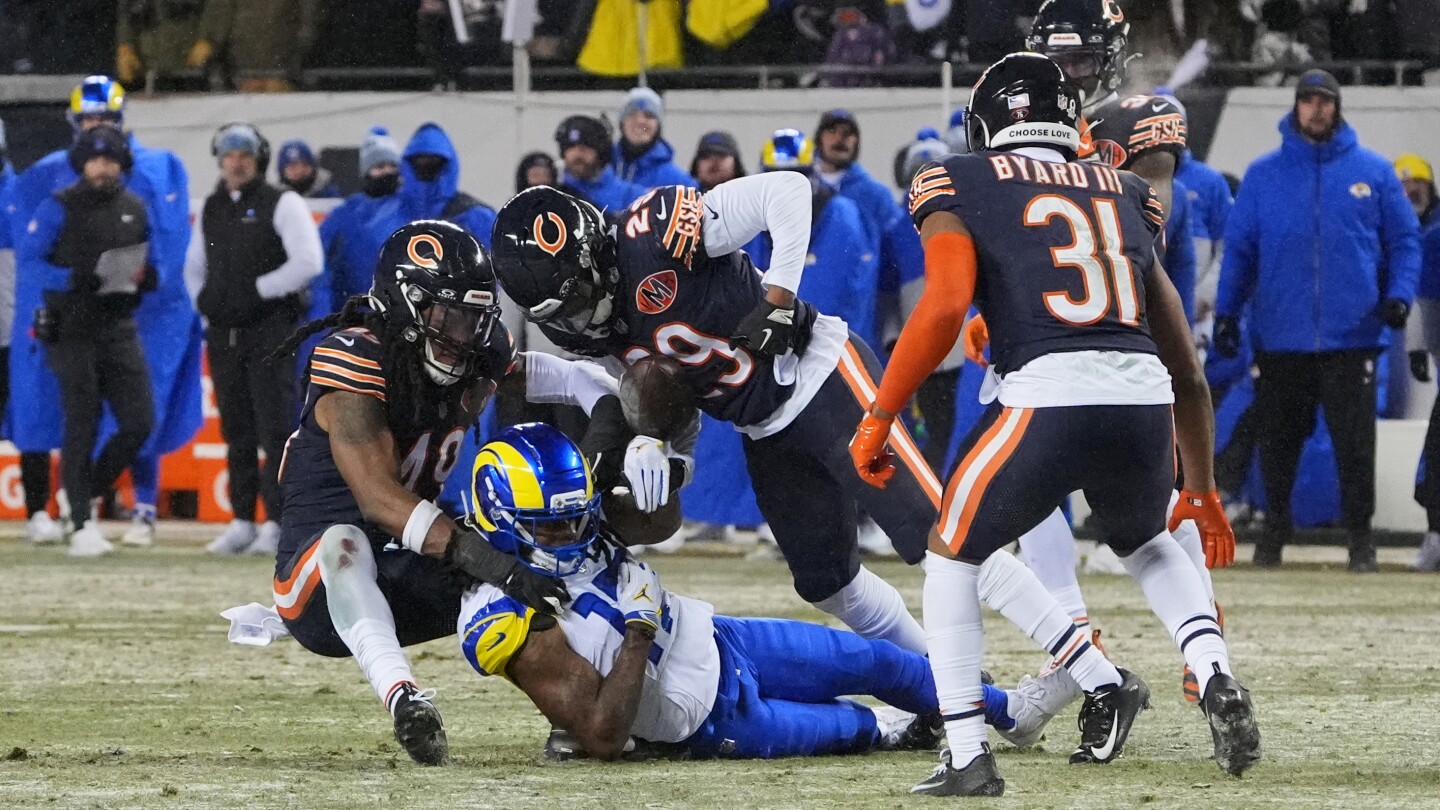
The NFL has a catch rule problem. And, as it does with plenty of other issues, the NFL seems to be content to ignore it. Or to claim that there’s no problem at all.
Via Mark Maske of the Washington Post, “The NFL and competition committee believe the catch rule is ‘pretty clear’ . . . and are not planning to make major offseason changes to it, although an individual team could make a proposal.”
That said, Maske adds that the league and/or the Competition Committee “may take steps to provide clarity about in-game rulings and improve the widespread understanding of the rule.”
The problem isn’t the rule. It’s the application of it. The three current problems, as explained here on Tuesday, are these: (1) the taking of a third step to complete the process has caused the league to ignore the other ways of doing so (extending the ball forward, taking an additional step, avoiding or warding off an opponent, or having possession long enough to do any of those things); (2) the explanation of the Aaron Rodgers catch on December 7 conflicts with the standard that was applied on Saturday to Bills receiver Brandin Cooks; and (3) the replay process is too vague and (to use the term uttered by Kyle Brandt on NFL Network the day after the Bills-Broncos game) “Orwellian.”
It’s like the legal system. The legislature creates the rules. The courts apply them. And the court — the league office and its team of referees and replay officials — has not been applying the rule as written and/or crafting standards aimed more at concealing errors and less at ensuring consistency. In the Cooks play, the process failed to entail sufficient transparency as to the application of the rule.
As to the third-step issue, the league office isn’t applying the rule correctly. As to the Rodgers/Cooks situation, NFL V.P. of instant replay Mark Butterworth justified the decision to turn an interception into a catch in the Steelers-Ravens game with language that, if applied to the Cooks play, would have reached the same outcome.
“The offensive player had control of the ball and as he was going to the ground . . . he never lost control of the ball and then his knees hit the ground in control,” Butterworth said at the time. “So therefore, by rule, he is down by contact with control of the ball.”
That’s the key question the league needs to resolve, when a player is going to the ground. If a player catches the ball and is going to the ground after being contacted by a defender, does the play end when the knee hits (as it did for Rodgers) or must the player still maintain possession (as it did with Cooks).
Of course, there’s no way to expressly address that wrinkle without admitting that one of the two rulings was wrong. And the league simply isn’t inclined to admit it was wrong, about any of these rulings.
So, yes, the rule is fine. And, no, the application of it is anything but.