
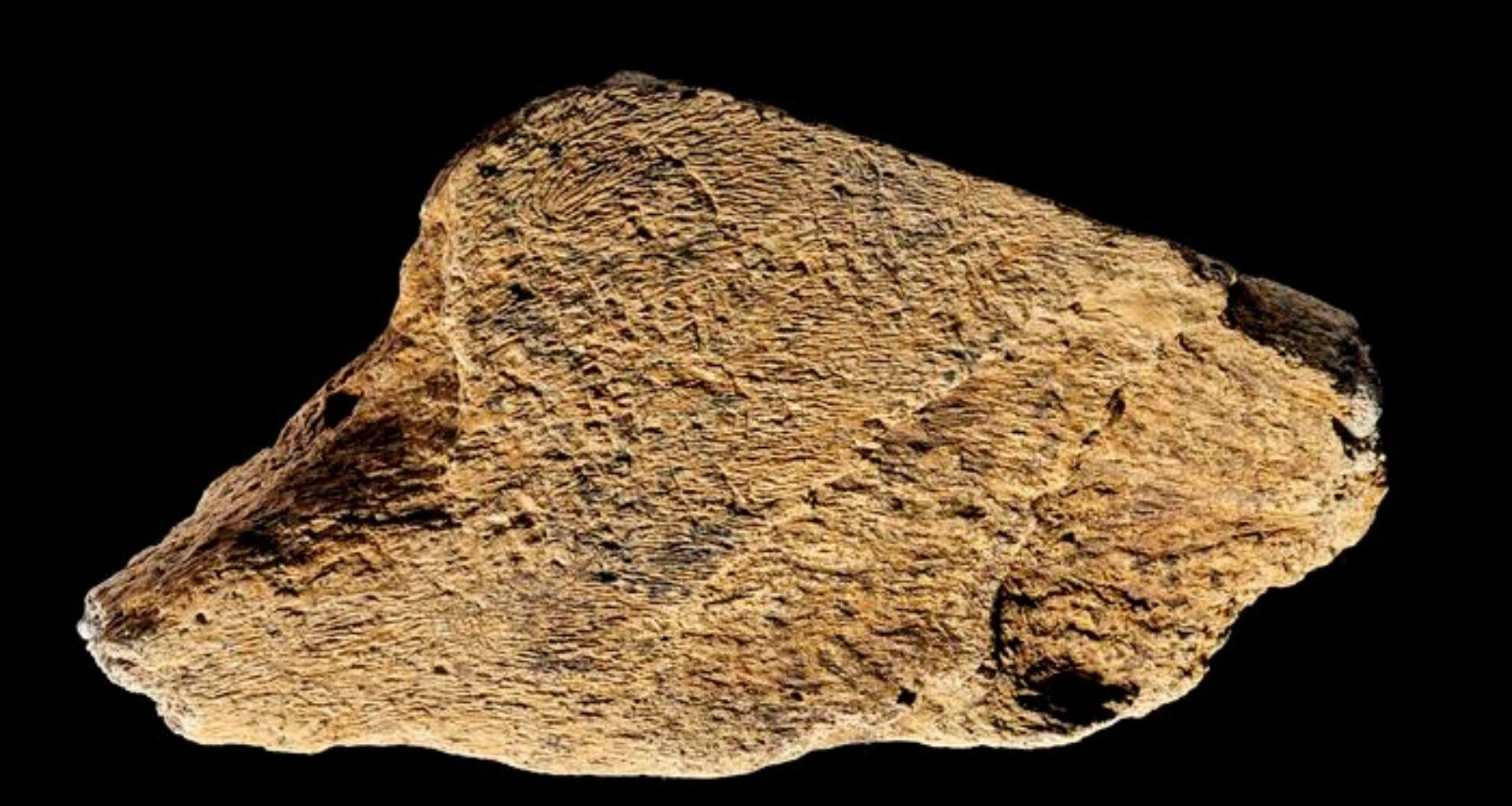
A roughly 500,000-year-old elephant bone hammer has been discovered in Boxgrove, England.
This find is said to be the oldest tool of its kind ever found in Europe.
Archaeologists from University College London and the Natural History Museum suggest the findings offer insights into the cognitive abilities of early human ancestors, such as Homo heidelbergensis and early Neanderthals.
The tool is a soft-hammer retoucher — a specialized tool used to sharpen dulled flint handaxes.
“This remarkable discovery showcases the ingenuity and resourcefulness of our ancient ancestors. They possessed, not only a deep knowledge of the local materials around them, but also a sophisticated understanding of how to craft highly refined stone tools,” said Simon Parfitt, lead author.
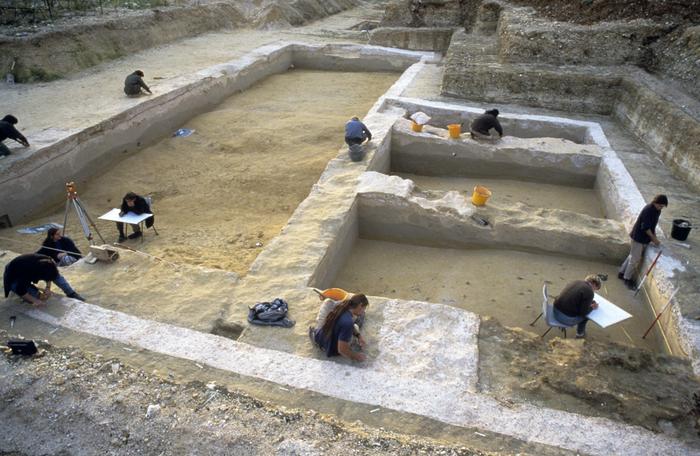 The Boxgrove archaeological site from the 1990s when the elephant bone tool was excavated. Credit: Boxgrove Project, UCL
Rare elephant bone
A triangular fragment of dense cortical bone was originally unearthed in the 1990s but remained a mystery for decades.
The artifact dimensions — approximately 11cm in length, 6cm in width, and 3cm in thickness — feature intentional modification marks consistent with tool production.
The bone’s extreme density confirms it belonged to a mammoth or elephant. Although the fragment is too small to identify the specific species or the exact part of the skeleton.
High-resolution scans revealed a hidden history. Microscopic bits of flint are still stuck within the bone’s impact marks, evidence of a tool that had been used time and again to sharpen stone blades.
This soft hammer enabled “knapping” — a precise sharpening process in which the bone strikes a stone tool to flake away dull edges.
The structural density of elephant cortical bone provided superior resilience during impact, explaining why ancient toolmakers preferred it over thinner, more brittle bones from smaller prey.
Savvy ancestors
As mammoths and elephants were rare in prehistoric England, the discovery highlights the advanced cognitive skills of early humans.
They didn’t just use what was convenient; they possessed the foresight to recognize, seek out, and preserve high-quality elephant bone as a superior material for their toolkits.
Interestingly, the discovery showcases the development of technological knowledge.
The use of a specialized retoucher enabled these early humans to produce tools with a level of precision and complexity that surpassed those of many of their ancient peers.
“Our ancient ancestors were sophisticated in their use of tools. Collecting and shaping an elephant bone fragment and then using it on multiple occasions to shape and sharpen stone tools shows an advanced level of complex thinking and abstract thought. They were resourceful gatherers of available materials, and savvy about how best to use them,” said Dr Silvia Bello, co-author from the Natural History Museum.
This artifact marks the first instance of an elephant bone tool discovered among the site’s vast collection of flint and antler implements.
While similar bone technology appeared in Africa 1.5 million years ago, it remains incredibly rare in Europe, where most ancient bone tools date to much later periods or warmer southern regions.
The study was published in the journal Science Advances on January 21.