

Dangerous cold will follow the winter storm
The prospect of significant, long-lasting power outages is especially dangerous given frigid temperatures of -15°C or colder in the affected areas. Greensboro, North Carolina, may struggle to climb above freezing again for an entire week after the storm.
A protracted cold snap combined with extensive power outages will heighten the risk for cold-related injuries among vulnerable people, as well as the risk for carbon monoxide poisoning due to improper use of tools like grills and generators.
Forecasters expect temperatures to remain well below seasonal across most of the eastern U.S. through the beginning of February.
Southern U.S. isn’t used to major winter storms
Folks across the southern half of the United States are no strangers to winter weather, but the region isn’t exactly equipped to deal with large helpings of snow and ice.
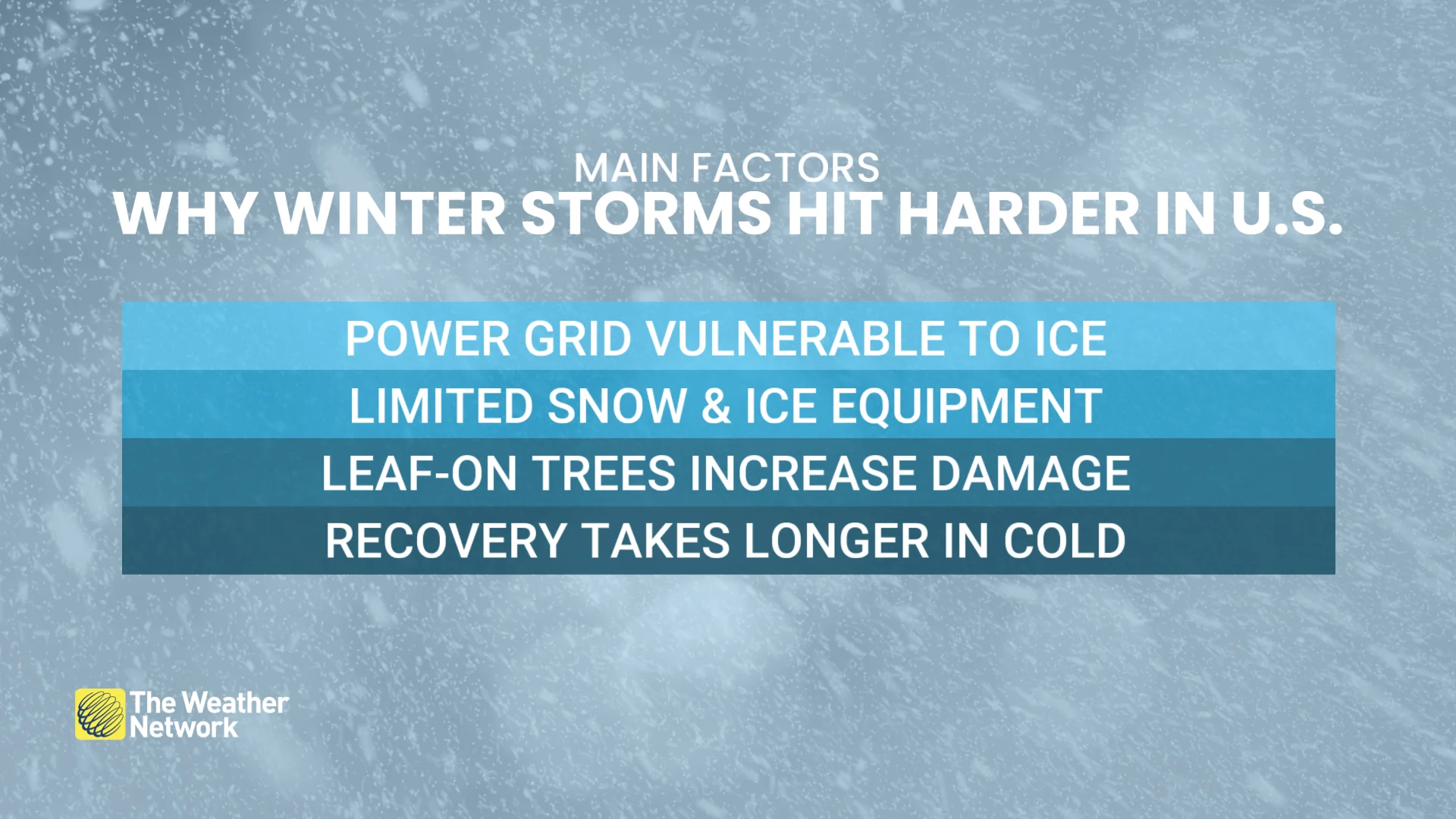
Snow plows and road treatment equipment grow scarce the farther south you travel, and vehicles aren’t equipped with winter tires. Most drivers also don’t have experience navigating icy or snowy roads.
Another problem, particularly with this upcoming storm, is that ice pellet accumulations tend to freeze into a thick sheet of ice on roads, sidewalks, and parking lots. This slab of glacier-like ice is nearly impossible to remove once it freezes into place. Frigid temperatures after the storm will help sustain impassable roads well into next week.
Header image created using graphics from Canva and NOAA.
WATCH: Know the difference between freezing rain and ice pellets