

A massive 14-foot, 1,700-pound great white shark named Contender has resurfaced off the coast of Florida after a year-long migration across the Atlantic, according to data shared by the research organization Ocearch. The shark, first tagged in January 2025, has completed one of the longest recorded journeys ever tracked for an Atlantic great white. Researchers believe Contender’s movements could help unlock critical information about great white shark behavior, particularly their mysterious reproductive patterns.
Tracking The Atlantic’s Largest Male Great White
Researchers at Ocearch, a U.S.-based marine science group dedicated to studying ocean predators, have been tracking Contender since he was tagged near the Florida-Georgia border in early 2025. Using a specialized satellite device known as a SPOT tag, scientists have followed the shark’s journey from the Gulf of St. Lawrence in Canada back to the warmer southern waters.
“The SPOT tag deployed on Contender will provide valuable, real-time data for approximately five years, helping us track his movements and understand his migration patterns,” Ocearch stated on its website. This technology has been instrumental in documenting how far great whites can travel and in revealing patterns that might correspond to mating or feeding behavior.
Contender’s route has taken him along the U.S. East Coast, with confirmed detections off New Jersey, Massachusetts, and the Outer Banks of North Carolina before his recent return to Florida. The data shows a consistent seasonal rhythm—northward in the summer for cooler waters and southward in the winter, likely for reproduction or prey availability.
Scientists Hope To Unlock Shark Mating Secrets
While great white shark migration is relatively well-documented, their reproductive behavior remains one of the biggest mysteries in marine biology. Very few mating events have ever been observed in the wild, and researchers are piecing together clues from tracking, blood sampling, and hormone analysis to understand where and when breeding occurs.
“Of the few clues we have, it seems like we need to be paying attention to the late winter and early spring area,” Chris Fischer, founder of Ocearch, told SWNS. Scientists suspect that Florida and the surrounding southeastern waters could be a potential mating zone for mature great whites.
Over the next few months, Fischer’s team will closely monitor Contender’s movements to see if he interacts with other known sharks, including Breton and Goodall, who have been previously tracked in the same region. Each data ping could provide a piece of the puzzle, helping researchers determine whether these regions serve as gathering spots for breeding adults.
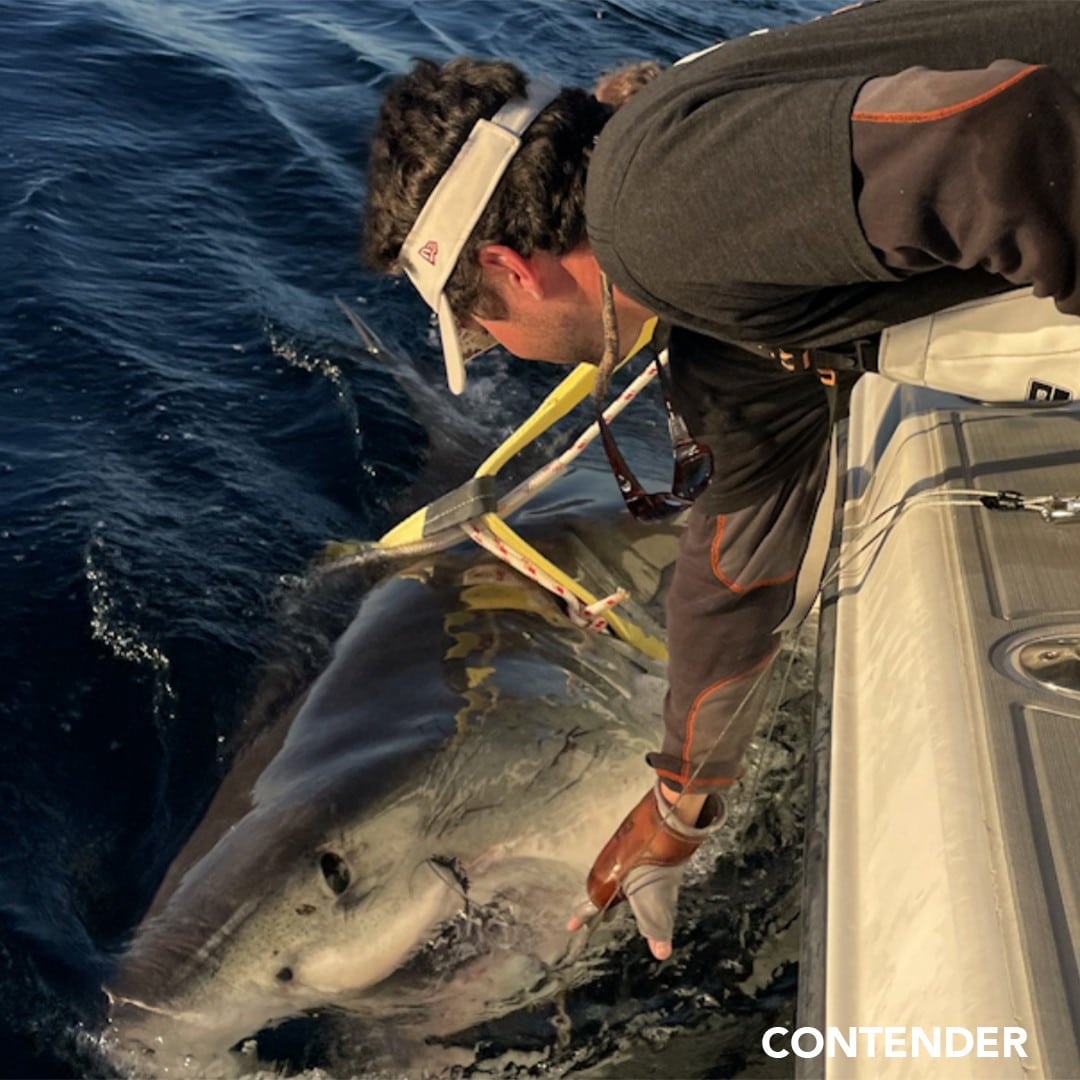 The Atlantic’s largest known male great white shark, “Contender,” has made his way back to Florida after an extensive migration that took him all the way to the Gulf of St. Lawrence in eastern Canada.
Image Credit: Ocearch
The Importance Of Collaboration And Long-Term Tracking
Great white sharks like Contender are vital indicators of ocean health. By monitoring their movement across thousands of miles and multiple ecosystems, Ocearch and its partners can gather valuable insights about how environmental changes, such as rising sea temperatures or shifts in prey migration, affect marine apex predators.
“Most importantly, will there be other mature male white sharks like Bretton and mature female white sharks like Goodall and others that are in that similar region at the same time?” Fischer said, highlighting the significance of potential shark aggregations. Such encounters could reveal whether sharks are drawn to certain coastal zones at predictable times each year.
The Ocearch team plans to analyze data from the next 60 to 90 days intensively, combining satellite tracking with biological sampling to learn whether Contender’s presence coincides with key reproductive activity. This ongoing research not only deepens scientific understanding but also supports global conservation efforts to protect one of the ocean’s most powerful, and misunderstood, predators.