
Previous Canadian attempts to commercialize recycling technology haven’t always worked out. Li-Cycle Corp., whose battery recycling facility in Kingston is pictured in 2023, was forced to seek creditor protection last year.Lars Hagberg/The Globe and Mail
Canada Growth Fund is investing US$25-million into Ontario rare-earths recycler Cyclic Materials Inc., the second early-stage, clean-technology, critical-minerals financing for CGF in just over a week.
The investment in privately held, Kingston-based Cyclic, unveiled Friday, is part of Ottawa’s push to build a stronger supply chain in critical minerals, to both wean the country off reliance on China and diversify away from the United States during the trade war.
CGF, which was set up in late 2022, is an arm’s-length government fund with $15-billion at its disposal to invest in clean Canadian technologies in the resource sector that have the potential to operate at a large scale.
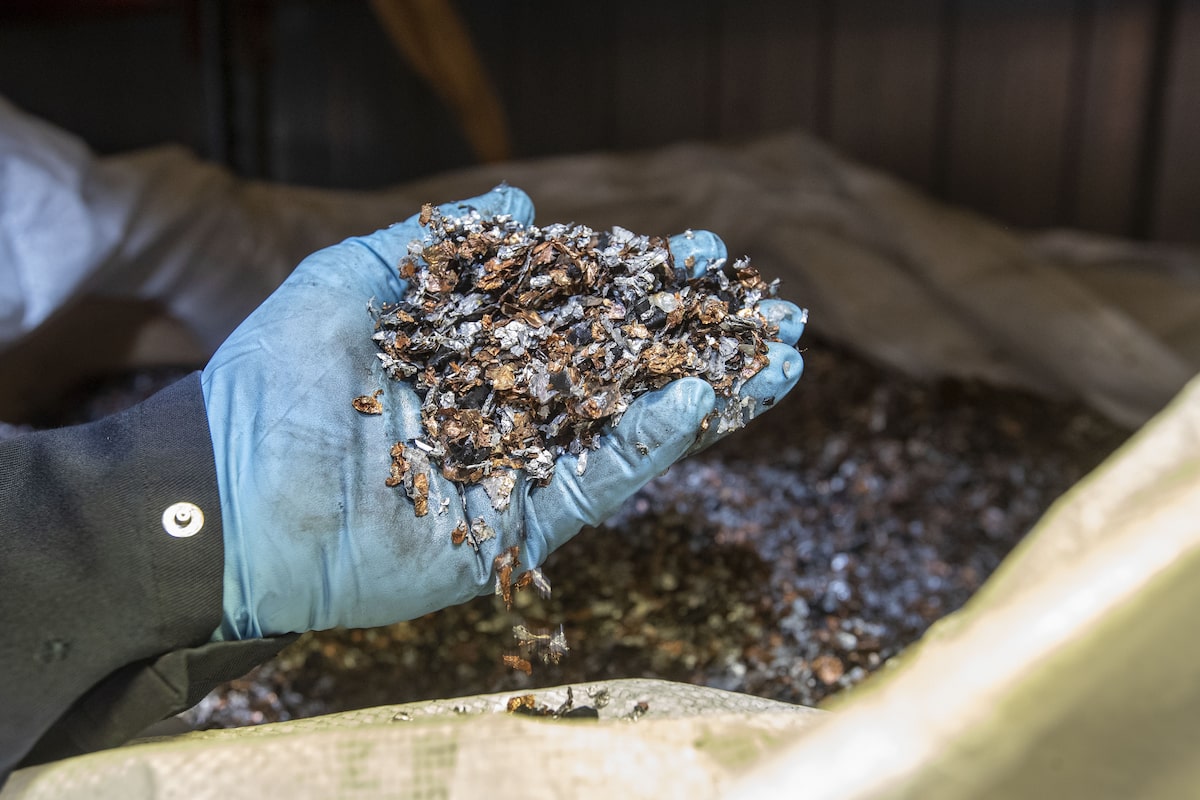
Cyclic plans to remove permanent rare-earth magnets from end-of-life products, such as used electric-vehicle motors, on a commercial scale at a “spoke” plant in Arizona, and then extract raw rare earths at a separate “hub” facility in Kingston. Both plants are currently under construction.
Opinion: Rare-earth minerals are China’s trump card in trade negotiations
If Cyclic’s technology can be successfully ramped up, it could reduce the need to mine new earth elements globally, which could also considerably lessen environmental degradation.
The money raised from CGF will be invested into its Kingston plant, and put toward research and development in this country.
“Cyclic is at a pivotal moment in its growth,” Ahmad Ghahreman, the company’s co-founder and chief executive officer said in a press release on Friday.
“CGF, with its flexible mandate, enables us to access financing that ensures our growth in Canada and globally, and allows our innovations to strengthen domestic supply chains.”
Mr. Ghahreman was educated in both Iran and Canada, and earned a PhD in materials engineering from the University of British Columbia. He subsequently worked in mining processing and metallurgy research at UBC. He also spent 11 years at Queen’s University in Kingston in the department of mining, most recently as associate professor.
Owing in large part to the technical challenges involved, the recycling of rare-earths elements is only a tiny part of the global supply chain, accounting for less than 1 per cent. China dominates the global supply chain of mined and processed rare earths, supplying about 85 per cent to 90 per cent of the market.
Past Canadian attempts to commercialize recycling technology haven’t always panned out. Toronto-based Li-Cycle Corp. once had a promising lithium ion battery recycling technology, but it was forced to seek creditor protection last year, owing in part to substantial cost overruns as it attempted to scale up its production. Many of the company’s assets were subsequently acquired by Glencore PLC. Mr. Ghahreman worked as a technical adviser for Li-Cycle from 2018 to 2022.
CGF is one of several federal funding arms, alongside Export Development Canada and the Canada Infrastructure Bank, that are ramping up investment into Canadian critical-minerals companies.
Yannick Beaudoin, CEO of Canada Growth Fund Investment Management, said in an interview that CGF typically takes more risk by buying equity in companies compared with the lower-risk loans that both EDC and CIB grant.
Opinion: Canada needs a critical minerals strategy that actually works
“We don’t have the security that they have in their loans,” he said. “And if you look at what we do in critical minerals, we invest in projects that are close to a final investment decision. They have, or are about to get permits. They need capital to build the mine, or expand a mine. And as you can appreciate, it’s at a stage where capital is more scarce in Canada, and risk is higher, but we need it.”
To date, CGF has made 16 investments totalling $4.9-billion. Last week, CGF said it was investing up to US$65-million into B.C.-based Mangrove Lithium, which is developing a proprietary low-carbon lithium processing technology.
While the risk is elevated in the case of both Cyclic and Mangrove, the dollar amount in play is much lower than some of CGF’s large-scale project investments, where the risk is also considerably lower. For example, CGF last year committed to investing up to $2-billion into the Darlington New Nuclear Project.
Since some of CGF’s investments are in early-stage, privately held companies, which do not disclose quarterly financial statements, tracking the real-time value of those investments can be tricky. Furthermore, the success or failure of many of CGF’s investments won’t be known for a long time as most are years away from making money, Mr. Beaudoin said. That said, the majority of its investments are “tracking on plan,” he added, meaning the companies are hitting their milestones.
The funding from Ottawa into Cyclic is part of a US$75-million Series C equity raise led by U.S. asset manager T. Rowe Price Associates Inc.