
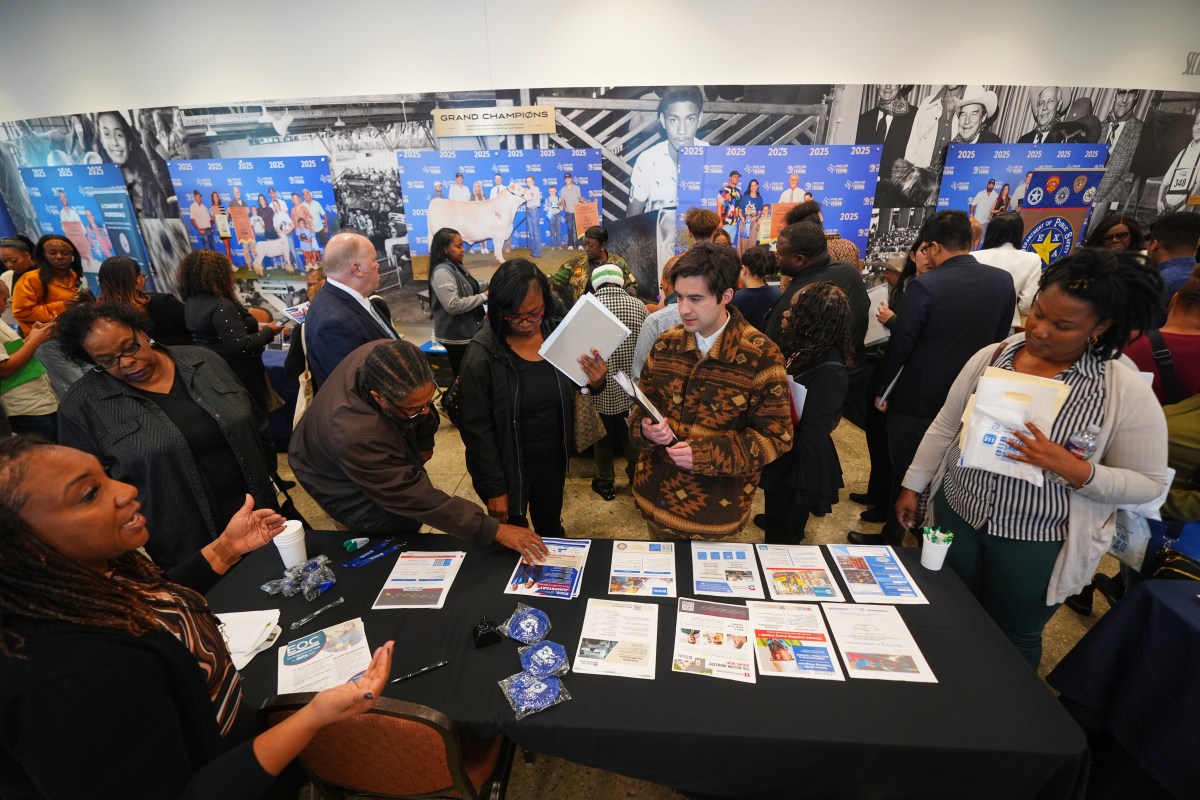
The U.S. labor market is facing another year of sluggish hiring and a further increase in the unemployment rate, a leading economist has warned.
In a recent blog post, Mark Zandi, the chief economist at Moody’s Analytics, predicted that the U.S. economy will still experience growth in 2026, but that this will be “fragile,” and that the ongoing trend of “little to no job growth” will persist throughout the year.
“Consumers and businesses will eventually lose faith in the economy and become more cautious in their spending and investment, leading to even more job losses and higher unemployment,” Zandi wrote. “Recession will ultimately ensue. This is all to say that the economy’s growth is fragile.”
Why It Matters
Months of weak hiring have fueled fears that the U.S. labor market is in a prolonged slowdown, with surveys also charting widespread unease about its underlying strength. While many are forecasting that current conditions will persist in 2026—alongside the “low hire, low fire” trend diagnosed by Federal Reserve Chair Jerome Powell last year—some say the 2025 surge in job cut announcements could upset this fragile equilibrium and push unemployment sharply higher in 2026.
What To Know
According to Zandi, the success of the broader economy in 2026 will hinge on how “aggressively” President Donald Trump’s administration carries out its marquee trade and immigration policies, as well as the levels of fiscal support provided by policymakers and how businesses navigate the increasing adoption of artificial intelligence.
But the current “fragility” of U.S. economic growth, he wrote, is “evident in the job market.” According to the latest employment report from the Department of Labor, the economy added just 50,000 jobs in December, well below historical averages and making 2025 the weakest year for job creation since the pandemic.
And while employer caution is expected to persist, Zandi said the “sanguine baseline” would be a slight improvement in hiring trends, resulting in some “modest job growth.” However, he said this assumes some of the “economic drag” from Trump’s tariffs and immigration policies will subside in the coming months.
On economic expansion, Moody’s forecasts annualized gross domestic product (GDP) growth of 2.3 percent in 2026, compared to its current estimate of 2.1 percent for 2025. This prediction is in line with the one recently provided by the International Monetary Fund (IMF), but falls far short of the optimistic outlook expressed by some of Trump’s top advisers.
Speaking at the World Economic Forum (WEF) forum in Davos, Switzerland, Treasury Secretary Scott Bessent said GDP growth could reach around five percent for 2026, while Commerce Secretary Howard Lutnick said during a panel discussion it could even exceed this level in the first quarter.

Zandi also noted some potential “surprise upsides” that could occur in the year, including another boost from AI.
“AI added an estimated half a percentage point to GDP growth during the year,” he wrote, “with about one-fourth of this coming from the ramping up of data center and electric power construction, as well as other investments, and the other three-fourths from the positive wealth effects due to the surge in the value of stockholdings in AI companies.”
While Zandi said “most of the ingredients that make up a bubble are arguably in place,” when it comes to the technology, Moody’s anticipates a similar level of AI-fueled growth in 2026.
“Even if AI adoption rates fail to meet lofty expectations, that will not significantly slow investment, at least not in the coming year,” he wrote. “It would take a lot to slow down the AI-related projects that are in train.”
Adding to this is the potential of further monetary easing from the Federal Reserve providing additional stimulus, though interest rate decisions, Zandi notes, will themselves depend on how the labor market fares in 2026.
What People Are Saying
Mark Zandi, in Thursday’s post, wrote: “The fragility of the economy’s growth is evident in the job market. There is little to no job growth, and unemployment is on the rise. Since President Trump announced hefty reciprocal tariffs on nearly all countries this past April, job growth has come to a near standstill. Trade-sensitive industries, including manufacturing, agriculture, transportation and distribution, are suffering job losses. Health care is the only major industry still adding significantly to payrolls. And the job market’s difficulties will come into even sharper relief as the jobs data are ultimately revised down.”
President Trump, in his address at Davos on Wednesday, said: “After 12 months back in the White House, our economy is booming. Growth is exploding. Productivity is surging. Investment is soaring. Incomes are rising. Inflation has been defeated. Our previously open and dangerous border is closed and virtually impenetrable, and the United States is in the midst of the fastest and most dramatic economic turnaround in our country’s history.”
What Happens Next
Other analysts have offered similar predictions to Zandi—JPMorgan researchers forecasting “uncomfortably slow” jobs growth in the first half of 2026—and believe economic uncertainties and policy changes will continue to weigh on both hiring and firing this year.