
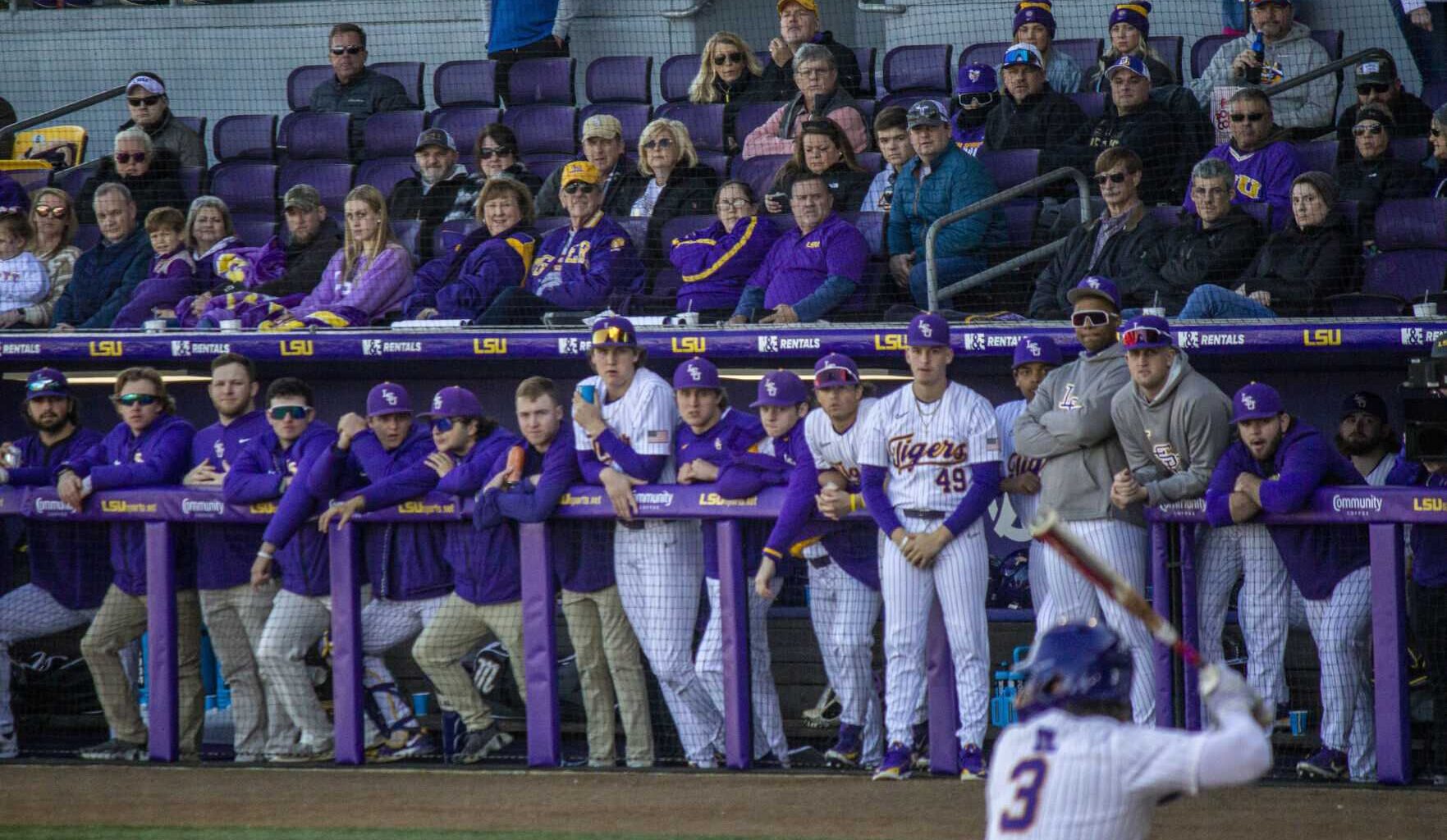
Pitchers and catchers haven’t even reported for the 2026 MLB season, and college baseball has already grown in stock for the next several years.
The Los Angeles Dodgers have changed the world of professional baseball forever by signing star players on deferred contracts. This strategy isn’t new, but it does mean the game of college baseball will grow immensely throughout the next several years.
On Wednesday, the Dodgers signed Kyle Tucker for $240 million, and his contract states he will be paid $1 million in 2026, $55 million in 2027 and an optional $60 million in 2028 and 2029. Without a salary cap in MLB, contracts will only get larger by the year.
Since the Dodgers are pouring so much money into their current top players, the minor league system will have less money to allocate to its players, leading more players to enter college out of high school.
Over the years, the debate of whether to play college baseball or go straight into the minor league farm system has grown, and now MLB commissioner Robert Manfred’s lack of priority on the salary cap could settle it once and for all.
Former LSU center fielder Dylan Crews said the best thing he ever did was bet on himself, especially because COVID-19 cut his high school career short. After he signed his MLB contract with the Nationals, he admitted he didn’t think he would’ve made it without all the resources LSU gave him.
“At that time, I felt like I wasn’t the best player leading up to the Draft,” Crews told an MLB reporter after being drafted. “I felt like there was still a lot to improve, and here at LSU, they had all the resources that I need. So I just trusted my gut.”
If that were the case almost six years ago, the Dodgers’ contracts would eventually lead to more of this decision.
While only Los Angeles is making these changes right now, other teams are taking steps in the same direction to match the talent it has been able to garner over the last two seasons.
The Dodgers’ rosters have been packed to the brim with nameable talent like Shohei Ohtani, Mookie Betts, Kiké Hernandez and many, many more. The talent gap will become too evident if other teams don’t catch up fast.
This leaves us where we are now, two weeks before pitchers and catchers report for 2026 Spring Training. Big contracts are being signed across the league just to close the gap. The days of overpaying one player might be over for good.
Former LSU shortstop Alex Bregman just signed a $175 million contract with the Chicago Cubs, and 40% of that total will be deferred throughout 2030. His deferred installments will be paid from 2034 to 2041 at $1,875,000.
Teams are abusing the ability to defer contracts, meaning their payroll is currently lower while they still gather as much talent as possible. Right now, it doesn’t pose an issue, but as this problem increases, we could see a lockout before the 2027 season.
An MLB lockout before 2027 could solidify college baseball as the place to go after high school, especially for historically dominant programs like LSU, Vanderbilt, and Texas.
If Crews decided to bet on himself because of a pandemic, several high school graduates will bet on themselves to try to jumpstart their placement in the minor leagues.
Now that NIL has been introduced in college athletics, playing baseball at the highest level might become a game for older ball players. It’s not common for the best ballplayers to finish their degrees, but we might see more redshirts and more use of eligibility rules in the near future.
If Manfred continues to allow the teams to pay out their players after their contracts end, college baseball as we know it will become the new minor league baseball, and at a lot more money than MiLB players make currently.
LSU head coach Jay Johnson said during preseason media that NIL is going to set their program apart from other schools.
“It’s important that LSU continues to make baseball a priority and continues to invest on that side of revenue sharing,” Johnson said. “It’s a little bit more like the big leagues. Do you want to be the Dodgers, or do you want to be a small-market team? Schools are going to decide the sports that they want to be good in relative to the NIL thing.”
If Johnson sees how the money game impacts college sports, imagine what could happen when MLB teams can’t afford to pay their minor league affiliates a livable wage because of how overpaid the big leaguers are.