
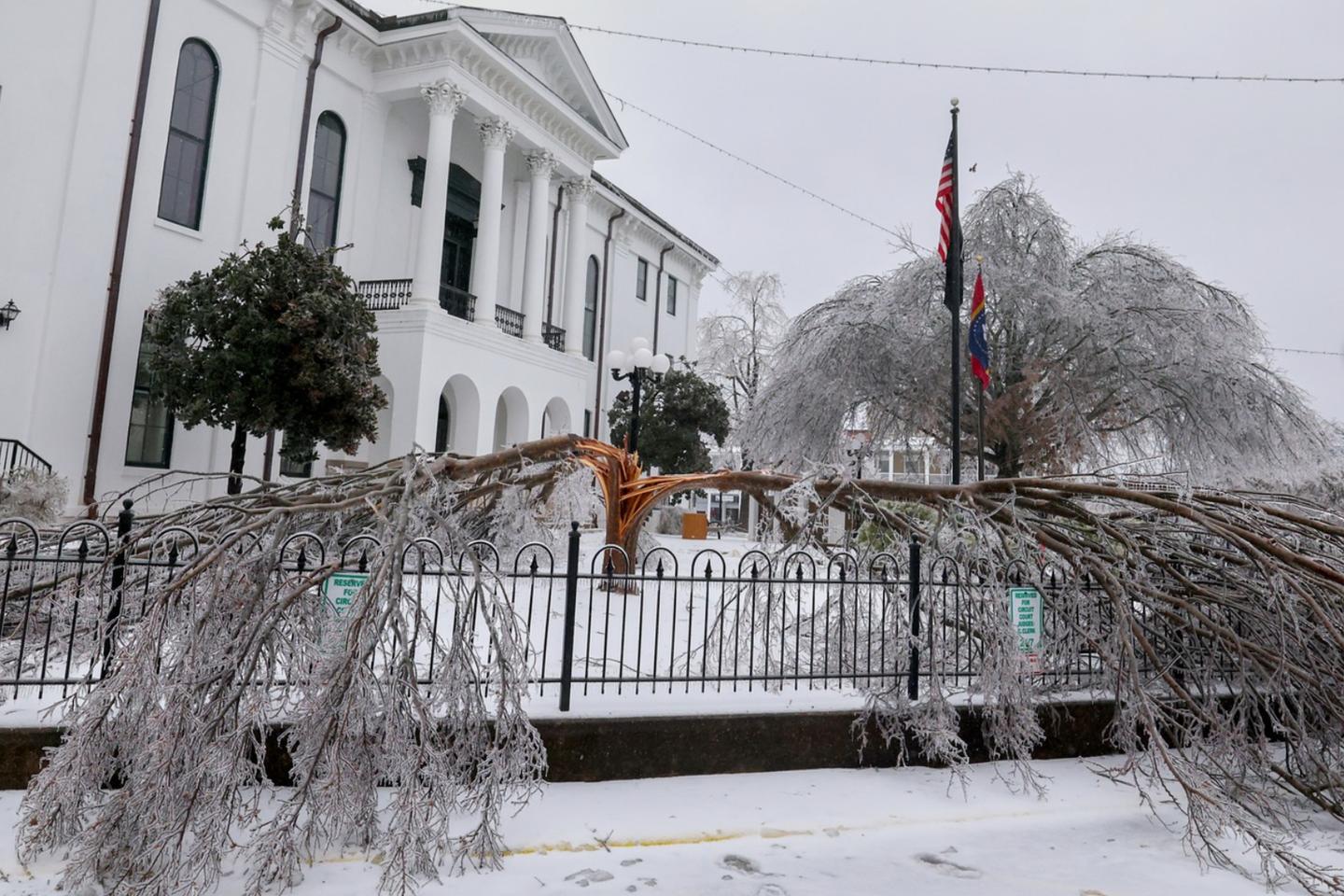
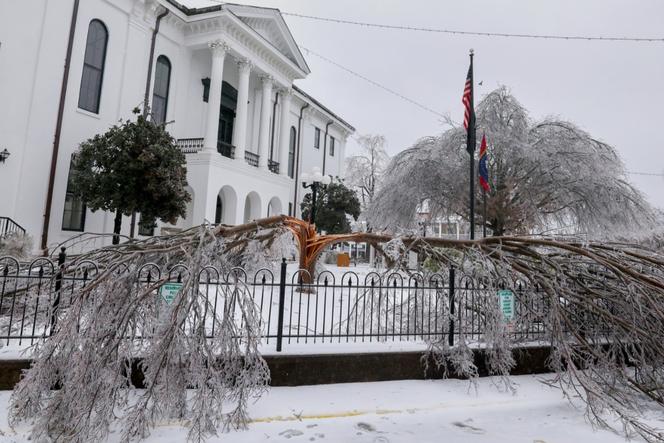
 Snow and ice fell trees as a winter storm sweeps the United States. In Oxford, Mississippi, on Sunday, January 25, 2026. JOSH MCCOY / AP
More than half a million Americans woke up without power on Tuesday, January 27, as freezing temperatures gripped swaths of the country in a monster storm that has killed at least 30 people.
A frigid, life-threatening Arctic air mass could delay recovery as municipalities from New Mexico to Maine tried to dig cars out after the storm, which dropped a vicious cocktail of heavy snow and wind, along with freezing rain and sleet. While skies began clearing in parts of the country, relentless snowfall in the northeast meant parts of Connecticut saw over 22 inches (56 cm) of snow, with more than 16 inches (40.6 cm) recorded in Boston, Massachusetts.
Read more In photos: Deadly winter storm sweeps across US, kills at least 23
Forecasters warned that much of the northern half of the country will see temperatures that are “continuously below freezing through February 1,” the National Weather Service said in a post on X. It added that “record low temperatures” hit southern states, which are unaccustomed to intense winter weather.
Deadly plane crash
The storm was linked to at least 30 deaths, according to a compilation of state government and local media reports, with causes including hypothermia as well as accidents related to traffic, sledding, ATVs and snowplows.
Seven people were killed when the small plane they were traveling in crashed while taking off in a snowstorm in Bangor, Maine, the Federal Aviation Administration said.
One man in New Jersey was found unresponsive in the snow, with a shovel in his hand.
In New York City, eight more people were found dead amid plummeting temperatures, and an investigation to determine the causes was underway. It was not known if all of these fatalities were storm-related.
Electricity issues and disrupted flights
Electricity began blinking back on across the south, but, as of Tuesday morning, more than 540,000 customers remained without it, according to the tracking site Poweroutage.com. In the south, Tennessee, Texas, Mississippi and Louisiana were especially impacted.
New
Le Monde’s app
Get the most out of your experience: download the app to enjoy Le Monde in English anywhere, anytime
Download
Nashville Mayor Freddie O’Connell told journalists that trees were continuing to fall under the weight of encrusted ice across the Tennessee capital city, sometimes knocking out power that had already been restored. Nashville and other municipalities across the country were establishing emergency warming shelters.
Polar vortex
The snowfall and biting icy pellets that pummeled cities left impassable roads along with canceled buses, trains and more than 9,000 disrupted flights – thousands of departures and arrivals were scrapped over the weekend.
The storm system was the result of a stretched polar vortex, an Arctic region of cold, low-pressure air that normally forms a relatively compact, circular system but sometimes morphs into a more oval shape, sending cold air pouring across North America.
Scientists say the increasing frequency of such disruptions may be linked to climate change, though the debate is not settled and natural variability plays a role.
Read more Subscribers only How America’s vulnerable national parks are coping with climate change