
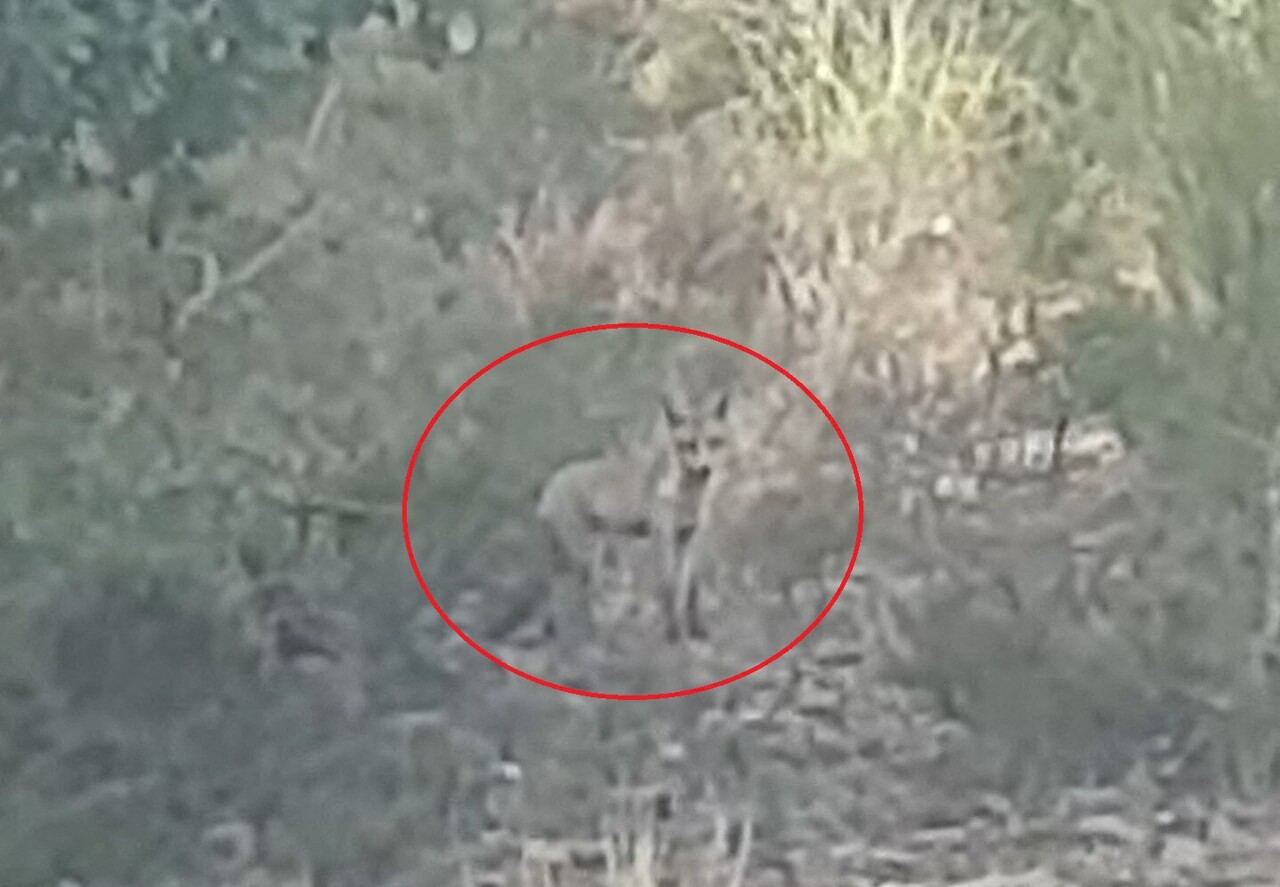
In the foothills of the Canigó massif, a quiet morning dog walk turned into an unexpected wildlife encounter. The walker, startled but composed, raised his phone and pressed record. Across the path, a lithe canid with a golden coat paused, stared, and held its ground with curious calm.
A chance encounter on a mountain path
For nearly a minute, the animal watched the man and his dog, ears alert and posture measured. It finally sat, as if weighing its options, then retreated with a cautious trot into the underbrush. The moment felt both ordinary and rare, a brief corridor between human routine and wild instinct.
“I’d never seen anything quite like it,” the walker later said. “It seemed more curious than afraid, and oddly self‑possessed for a forest visitor.”
A closer look at the footage
The video was shared with the local branch of the LPO, the Ligue pour la Protection des Oiseaux Pays Catalan. Specialists examined the animal’s silhouette—longer legs, a narrower muzzle, and a tail carried lower than a red fox—and proposed a striking possibility: a golden jackal. While smaller than a wolf, it appeared stockier and less rust‑red than a typical fox.
Cliquez ici pour visualiser le contenu
What might the animal be?
Some viewers lean toward a fox, citing familiar shapes and local presence. Others point to telltale markers, including brindled fur with a straw‑gold sheen and a more elongated profile. The LPO notes that golden jackals have been detected in France since 2017, and a previous sighting was reported in the Albères last spring.
A traveler across continents
The golden jackal (Canis aureus) ranges widely in South Asia, North Africa, and the Middle East. Historical reach into Europe spans nearly two millennia, but westward expansion has accelerated in recent decades. As landscapes shift and climates warm, adaptable carnivores often explore new corridors and settle near human‑shaped habitats.
Behavior and diet
Like the red fox, the jackal is an omnivore, drawn to rodents, berries, and easy calories. It scavenges carcasses, samples orchard windfalls, and sometimes visits bins on the fringes of rural villages. Opportunism is a defining trait, and individuals can travel for days without eating or drinking in search of the next meal.
Experts emphasize that the species poses little risk to livestock, preferring small prey and carrion over penned animals. In France, it is a non‑huntable game species: hunting and trapping are prohibited, and harassment is strongly discouraged.
How to respond if you encounter one
Keep your dog on a short lead and maintain a respectful distance.
Stay calm, avoid sudden movements, and give the animal an open escape route.
Do not offer food or attempt to approach for a closer video.
If you capture clear footage, share it with local wildlife authorities.
Identification remains open
Wildlife identification is a discipline of angles, lighting, and subtle features. Low light can flatten color, and phone cameras can distort scale across open terrain. Some specialists call for additional images before a definitive ruling, mindful that a cautious fox can mimic jackal‑like gestures when pausing to assess a situation.
A rare visitor in a changing landscape
The Pyrenees‑Orientales have recently hosted a handful of surprises—from raccoons and otters to wayward flamingos on nearby lakes. Each sighting offers a snapshot of ecological flux, where wild neighbors test the edges of familiar maps. Whether fox or golden jackal, this encounter highlights a simple truth: the margins between human paths and wild pathways are thinner than they seem.
For now, the short clip remains a compelling piece of local natural history. A walker with a leash, a dog with pricked ears, and a shy canid with a steady gaze met for less than a minute. It was a reminder that the mountains still hold mystery, and that attention—quiet, patient attention—is the surest way to see what lives just beyond our routine.