
ISLE ROYALE, MI – During deeply cold winters, wolves have been using ice bridges to make Lake Superior crossings between Michigan’s Isle Royale and the nearby mainland in Minnesota and Canada for decades, research has shown.
Some big alpha males have ventured onto the island archipelago and stayed – adding a vital infusion of new DNA when faltering wolf packs needed it the most. Others have come to sniff around, check out the canine dating and mating scene, then trot back to their mainland home.
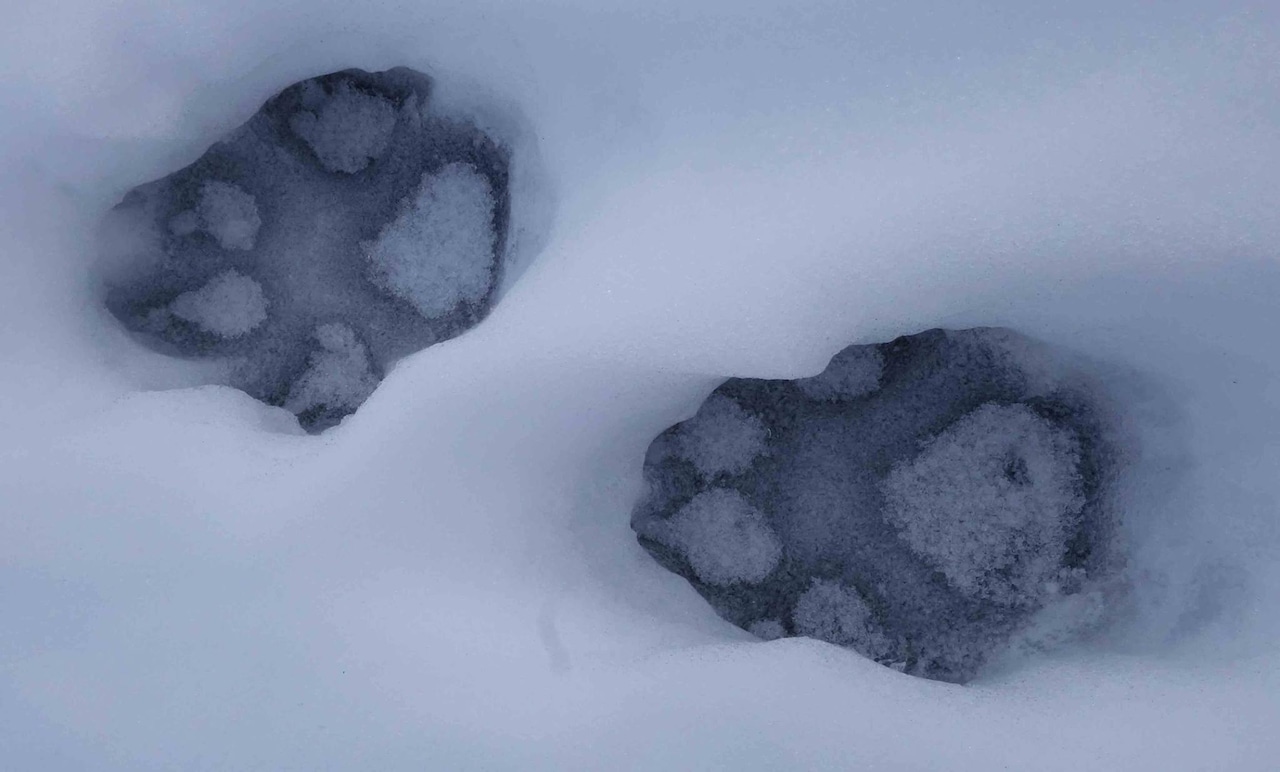
In 2019, a 4-year-old female wolf that had recently been brought over to Isle Royale as part of the National Park Service’s wolf relocation effort decided island life was not for her. She walked to the edge of Isle Royale after sunset one January night, then took a few steps onto the ice … and kept going, taking advantage of an ice bridge to the mainland that had formed during a deep-freeze event similar to the one Michigan has been experiencing for the last couple of weeks.
About 15 miles later, the 70-pound wolf with a distinctive black mantle of fur on her back stepped onto the Canadian mainland, her GPS tracking collar showed. This lone wolf turned out to be a super athlete. Researchers monitored her wide-ranging travels with amazement until her collar stopped working in 2021.
 A newly-relocated female Isle Royale wolf left the island in Lake Superior in 2019 and walked back to the mainland on an ice bridge.
Once again this winter, a research team from the long-running Wolf and Moose project sponsored by Michigan Technological University has flown to Isle Royale for their Winter Study. They’ll spend the next few weeks collecting evidence of the island’s wolf and moose populations, gathering data overhead from planes and working on the ground to follow tracks and inspect kill sites. By later this spring, they’ll release their estimates of the wolf packs and moose herds, and show us where we stand in the world’s longest predator-prey study that is entering its 68th year.
This winter, conditions are especially harsh on Isle Royale. Wind chills plunged to 50 degrees below zero after the team landed last Thursday.
 Rolf Peterson, a lead researcher in the Wolves and Moose of Isle Royale study team, breaks ice in Washington Harbor so the Winter Study team can access water.Photo courtesy of Michigan Technological University and the Wolves and Moose of Isle Royale research team
Early indications are an ice bridge between Isle Royale and the mainland is forming this year.
This weekend’s notes from the research team: “Today, we completed 5 and a half hours of aerial surveys. The weather was very cold, but mostly clear skies and low winds.
“We got several great observations of wolves, found three wolf-kills, saw two foxes, an eagle and of course lots of ravens and moose. The moose were mostly bedded down on south-facing slopes in the sunshine.
“It appeared as though there was ice extending all the way to the mainland.”
To follow along with the Winter Study research team, you can find their social media posts here.
The Longest-Running Predator-Prey Study in the World
New wolves arriving to kill the last of the island-born pack. Moose who feel safe enough in years of low wolf numbers to have twin and triplet calves. Wolves found drowned in lakes or killed in a fall down an old copper mining shaft. The life-and-death drama recorded by Isle Royale’s research teams over the years has been fascinating to read. And all of this plays out on a relatively remote island, 60 miles from the U.P. mainland. It’s open spring to fall for hikers and daytrippers. But the long winters belong to the wolves and the moose – and researchers.
This year’s Winter Study is vitally important because the team’s cold-weather research window has either been canceled or cut short for the last two years. In early 2025, the Winter Study had to be called off because the team’s plane was unexpectedly unavailable and there was not enough time to find an alternative. In 2024, unseasonably warm weather cut the Winter Study short.
That means the last good wolf/moose estimates for Isle Royale are from 2024, which showed the island had become home to at least four territorial wolf packs. One mega pack on the east side of the island had nearly half the island’s estimated 30 wolves.
Researchers in 2024 noted that the wolf population had “stabilized” in the years since 2018, when the National Park Service began its plan to bring in new wolves to help balance the fast-rising moose population. At that time, the island’s native wolf population had dwindled to just 2 inbred wolves.
As for the moose count, researchers in 2024 estimated there were 840 on Isle Royale – a nearly 60% drop compared to 2019, when the moose population hit a high of more than 2,000 and the big animals’ overbrowsing on island trees was a big concern.