
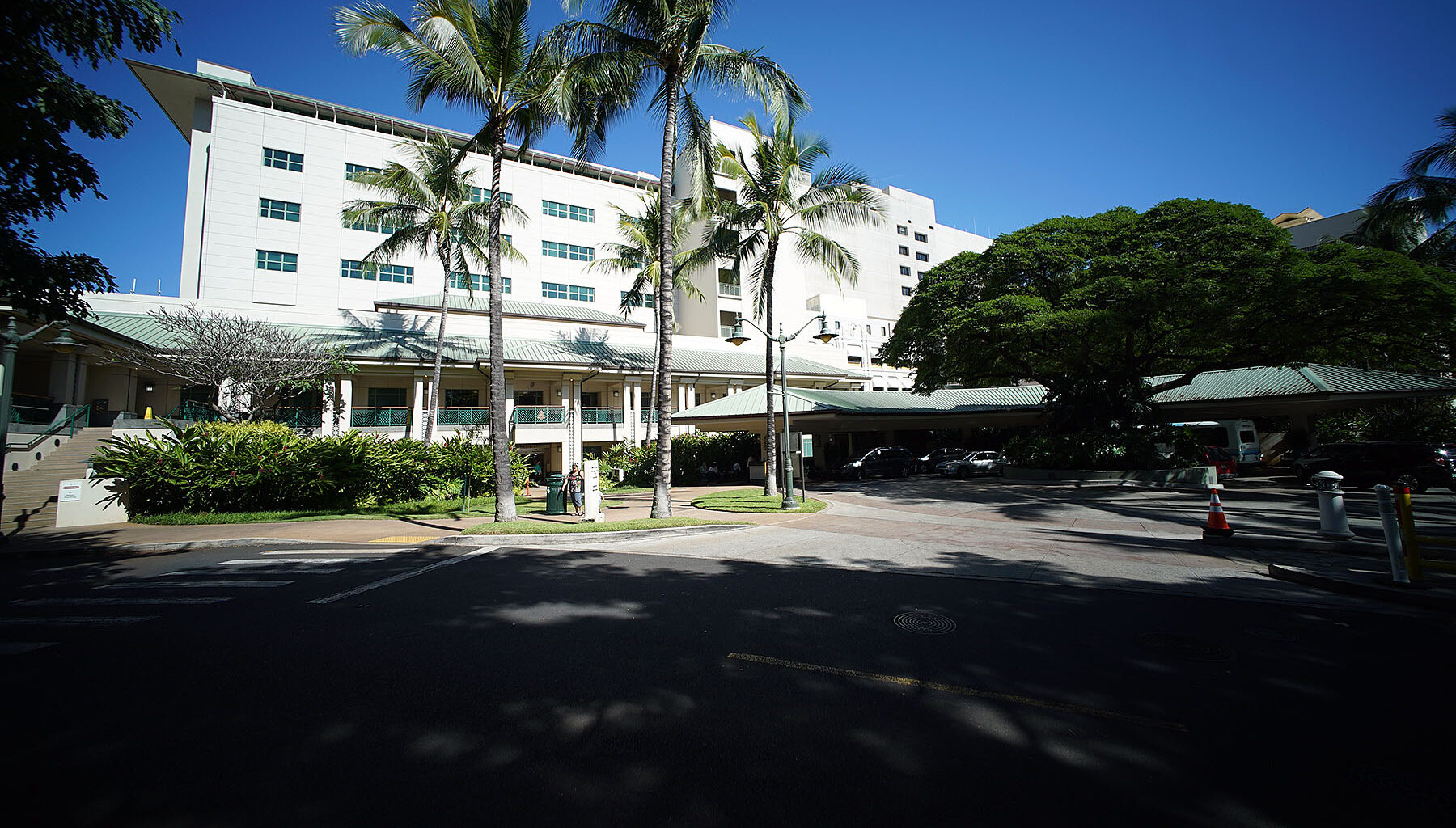
The Queen’s Health Systems has notified patients with Humana Inc. medical insurance that they soon may need to find a new doctor or get new health insurance.
Queen’s, one of Hawaiʻi’s largest health systems with six hospitals statewide, will no longer have a contract with Humana as of March 19, Queen’s wrote in a letter to patients earlier this month. That means Queen’s won’t accept Humana insurance, and patients who have it won’t be able to see Queen’s doctors or visit its hospitals “without administrative or financial impact.”
Humana, a Kentucky-based, publicly traded medical insurer, offers Medicare Advantage plans in Hawaiʻi. Such plans are funded by the federal government, which provides private insurers a fixed, monthly payment per month for enrollees. The insurers pool the money and then sell policies to elderly customers, promising to cover their medical care.
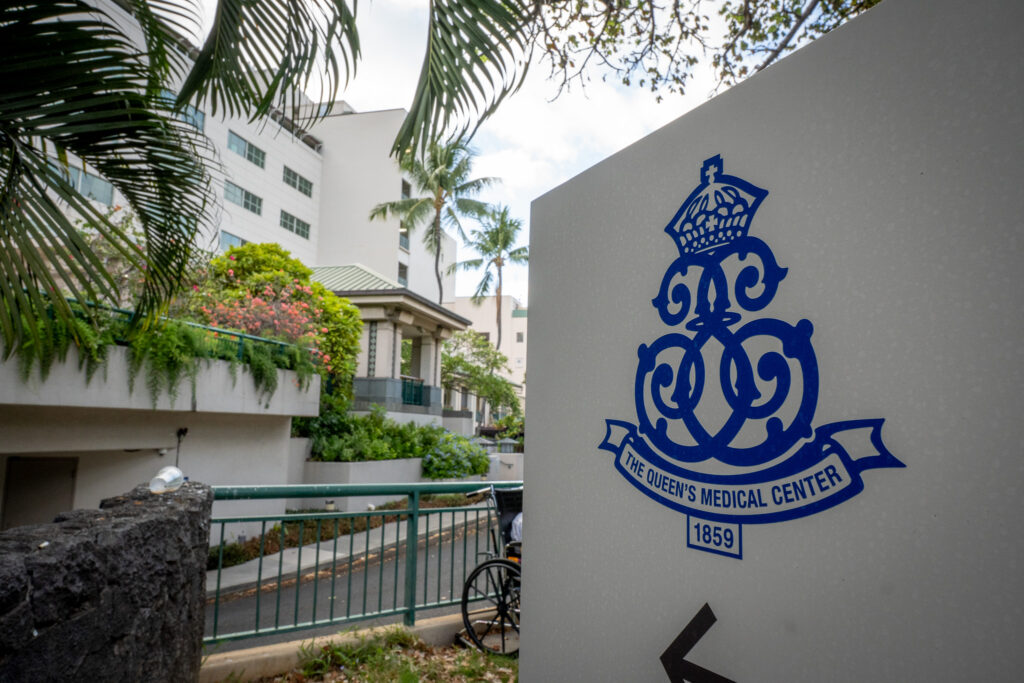 In the past three years, Queen’s has served 11,000 Medicare Advantage patients covered by Humana, with services ranging from simple X-rays to full-fledged hospital stays. (Craig Fujii/Civil Beat/2025)
Neither Queen’s nor Humana would say what has caused the rift. Humana has been accused elsewhere of wrongly refusing to pay for services needed to treat its policyholders.
A spokesperson for Humana said in a written statement that the company is communicating with Queen’s to find a solution. Queen’s executive vice president of clinical integration and chief physician executive, Dr. Whitney Limm, said Queen’s is “open to discussion to minimize disruption to patient care.”
In the past three years, Queen’s has served 11,000 patients covered by Humana, with services ranging from simple X-rays to full-fledged hospital stays, Limm said. While that represents only about 2% of the 550,000 patients Queen’s served in the period, Limm said the Humana patients, like others on Medicare, tend to have more severe health problems than the general population and thus require greater, more expensive care.
The dispute comes as Hawaiʻi’s health care system faces serious challenges: rising treatment costs and lower insurance reimbursements for doctors and hospitals, increasing insurance premiums and co-payments for employers and patients, and a shortage of doctors serving an archipelago state. That’s created a snarl of interrelated, complex issues that result in people not being able to get the care they need.
The situation has led two of the state’s largest health care companies — the nonprofit hospital and clinic giant Hawaiʻi Pacific Health and nonprofit insurer HMSA — to propose a new partnership to integrate insurance and patient care under an umbrella entity to reduce administrative costs and increase efficiency. But Queen’s has criticized the proposal, saying it would financially batter the Queen’s system, which serves as a nonprofit safety net for a large share of uninsured, Medicare, Medicaid and Native Hawaiian patients.
Meanwhile, for-profit insurers have been accused of addressing rising health care costs by denying coverage, delaying it and reducing reimbursements by reclassifying procedures, known as down-coding in medical parlance.
Lawsuit: Humana Used AI To Deny Coverage
This dark side of the for-profit health insurance business came into focus in late 2024, when former Hawaiʻi resident Luigi Magione allegedly shot and killed UnitedHealthcare CEO Brian Thompson in New York City. Awaiting trial, Mangione has become a cause celebre for social activists and people who have fought their own battles against insurance companies.
Humana faces a federal class-action lawsuit alleging it has illegally used artificial intelligence programs in place of doctors “to wrongfully deny elderly patients care owed to them under Medicare Advantage Plans.” That has allegedly left its elderly customers with the grim choice of foregoing needed care or paying for it out of their own pockets, if they can.
Limm declined to comment on the specifics of the Queen’s contract with Humana. But generally, he said, points of friction between providers like Queen’s and insurers like Humana center on two areas: claims processing, which involves the time it takes for payers to issue reimbursements to providers, and utilization management, an umbrella term for how providers and payers decide which treatments are needed and will be paid for by the insurers.
Limm said it’s Queen’s Health System’s mission to continue to provide healthcare services to the community.
“The question,” he said, “is how do we work with the payers to put us in a position to provide them.”
Civil Beat’s community health coverage is supported in part by the Atherton Family Foundation.

Sign up for our FREE morning newsletter and face each day more informed.
Sign Up
Sorry. That’s an invalid e-mail.
Thanks! We’ll send you a confirmation e-mail shortly.