
Follow The Athletic’s Australian Open coverage
Welcome to the Australian Open briefing, where The Athletic will explain the stories behind the stories on each day of the tournament.
On Day 11, straight-sets wins persisted, an American raised her game and two star doubles pairs bowed out.
How Ben Shelton raised his floor and found a hard ceiling he is sure he will break
Ben Shelton really thought Wednesday night in Melbourne might be different.
He’s been coming to the net and taking the game to his opponents through his four wins at this Australian Open. He’d started varying his patterns from the back of the court, mixing in more slices and hanging in backhand-to-backhand rallies more patiently, then unleashing more power with great control.
For the first time in his career, he felt like he could get on offense with his returns. He was ready to play first-strike tennis against Jannik Sinner, rather than simply trying to withstand one attack after another.
Give him credit. He tried all that. But when it was over, about two-and-half-hours after it started, the result wasn’t all that different from a year ago when Sinner beat Shelton in the semifinals here, or at Wimbledon in July when Sinner knocked him out in the quarterfinals.
Three Grand Slam duels. Nine sets for Sinner, none for Shelton. Shelton didn’t have a set point this time, as he did a year ago in Melbourne.
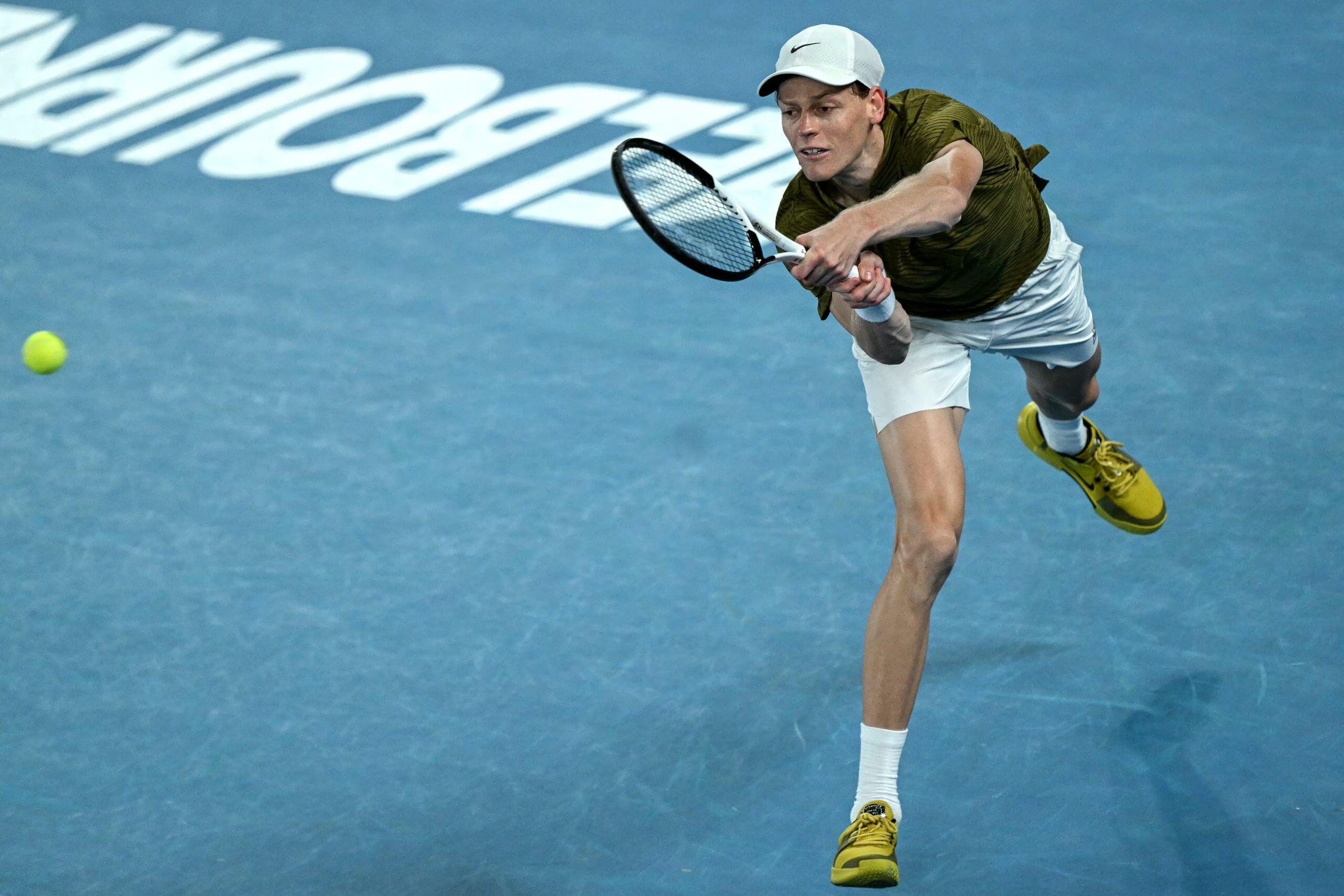
Even when stretched, Jannik Sinner was able to hold off Ben Shelton. (William West / AFP via Getty Images)
Shelton had a chance to break Sinner’s serve in his first service game, missed it, and Sinner pretty much had control of the wheel from there in a 6-3, 6-4, 6-4 win, getting the decisive break in the third set off a Shelton double-fault.
Where does that leave Shelton? About where it leaves everyone else in the chasing pack that Sinner and Carlos Alcaraz have mostly dominated at the Grand Slams the past two years and now at the start of a third?
Well, not quite. In his news conference afterward, Shelton delivered a series of long and intentional answers on the state of his game and how he is changing as a tennis player even through these meetings which, on the scoreboard, tend to stay the same.
“I think my level is better and I’m getting a lot less limited,” Shelton said. “I do think I’m close to bringing it all together, it’s just going to take doing it one time to get me over the hump,” he said.
“I want to see myself get out in front and see what I can do from there in a match rather than falling behind. I know how I feel when I get out in front at Slams. I feel like, you know, I’m untouchable. I guarantee the other guys at the top feel the exact same.”
The tennis did have some different qualities Wednesday night. Shelton was able to force Sinner into some more uncomfortable positions rather than simply relying on his serve. The rallies may be longer. But the result is largely the same.
Sinner was complimentary, as he always is.
“He’s improving so much year after year,” Sinner said.
Shelton landed nearly 70 percent of his first serves but only had eight aces. He won just 69 percent of his first serve points, which isn’t going to be enough against someone of Sinner’s quality.
Sinner will now face Novak Djokovic, the 24-time Grand Slam champion in the semifinal. Djokovic and Shelton have one thing in common as members of the chasing pack: Both of them lost three times to Sinner and Alcaraz at the Grand Slams last year.
— Matt Futterman
A strangely predictable Grand Slam stays one-sided
With six singles matches left at the 2026 Australian Open, the most dramatic, chaotic and captivating encounter of the tournament is further and further away: Elsa Jacquemot’s three-set win over No. 20 seed Marta Kostyuk in the first round of the women’s draw.
Ukraine’s Kostyuk led 7-6(4), 5-3 and served to win, but France’s Jacquemot had other plans and dragged Kostyuk into another tiebreak and then a third set.
From there followed seesawing deuces, self-flagellation in abundance, and Kostyuk tearing her ankle ligaments but managing to still hold serve and force a tiebreak.
From there? Chaos reigned. Sitters, momentum swings, errors in abundance. When Jacquemot came out on the right end of a 6-7(4), 7-6(4), 7-6(7) win, it felt like a prelude to all the drama that normally fills two weeks of tennis.
Instead, it remains the standard. Since then, the odd injury retirement and a few near upsets have not stalled a tournament that has otherwise been something close to a procession for the top players, with seeds holding their places and immensely strong lineups in the second week.
Usually, that brings incredible, tight and tense matches in the fourth round, quarterfinals and semifinals, but that just hasn’t happened.
All four women’s semifinalists haven’t dropped a set, and the last five-set match on Rod Laver Arena, the main showcourt, was on the third day — of the 2025 tournament. The last time all four women’s semifinalists didn’t drop a set at a major? The 1995 French Open, nearly 31 years ago. The top four men’s seeds are all in the semifinals here for the first time since 2013.
The men’s quarterfinals too largely failed to deliver jeopardy. Learner Tien’s four-set loss to Alexander Zverev was at times captivating, but mostly a staccato, serve-dominant affair. Carlos Alcaraz kept Alex de Minaur at arm’s length in a straight-sets win. Sinner handled Shelton in straight sets without really facing any danger. And when Lorenzo Musetti was two sets up on Djokovic, seemingly about to deliver a stunning result, injury intervened.
The four semifinals and two finals have very empty shoes to fill in the last four days.
— Charlie Eccleshare
How has Jessica Pegula raised her game?
There’s a decent chance that however Amanda Anisimova reacted to having a bad day on the court, Jessica Pegula would have won their quarterfinal Wednesday.
Pegula beat Anisimova 6-2, 7-6(1). The No. 6 seed came out clean and clinical; the No. 4 seed struggled to put the ball over the net and into the court. And that was about the story of the match, even as Anisimova put herself into position to even the match at a set apiece, breaking Pegula to go up 5-3 in the second set.
Pegula broke right back, to get back on serve. Anisimova briefly recovered to get to a tiebreak, but Pegula ran away with it from there. Anisimova had 44 unforced errors. Pegula had just 21.
But were they really unforced? Pegula’s run to the semifinals has been almost impossibly serene, and built on the familiar — her redirection of pace and relentless depth — and the new — a more potent, precise serve. She is on the front foot more often and more aggressively, but her risk-reward has barely changed. Anisimova couldn’t hold up against the pressure.
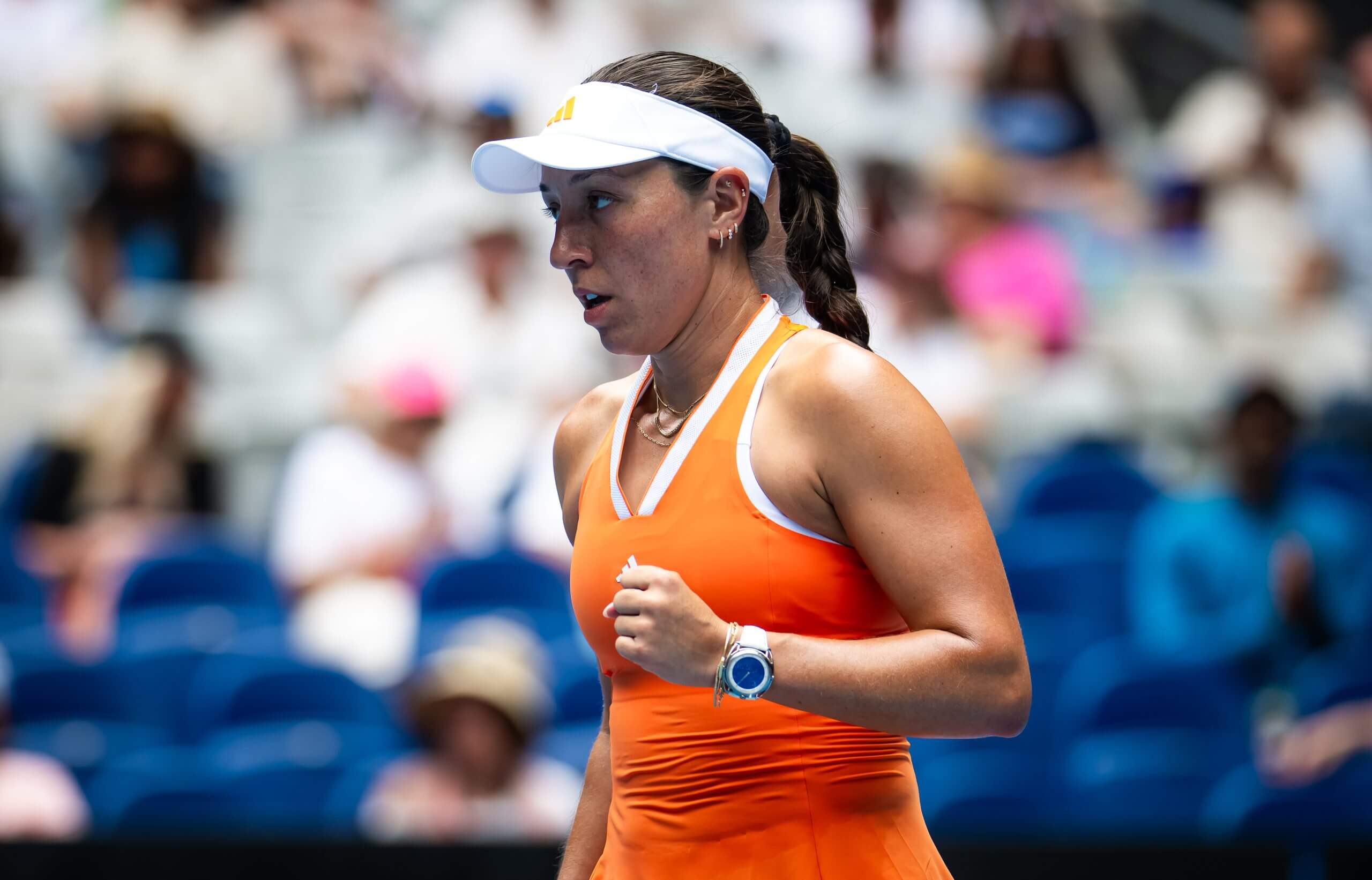
Jessica Pegula’s path to the Australian Open semifinals has been essentially free of drama. (Robert Prange / Getty Images)
“I was trying my best to just put the ball in the court and play higher percentage, but I literally missed every ball in the net or served into the stands,” Anisimova said.
So much of Anisimova’s appeal rests with her authenticity, her willingness to show her emotions on the court and after the match is over, and there were plenty of emotions on display Wednesday afternoon.
“I’m going to completely lose all sense of rationality for, like, 48 hours, and that’s just kind of what goes into working so hard for something and then you have matches and days like this,” she said.
Pegula has had her share of frustration, too. For years she could not get past the quarterfinals at Grand Slams. But one of her great strengths is the stability of her game and her brain, at least outwardly.
“I’ve always been someone that doesn’t really panic,” she said. “I don’t really get too emotional. I don’t really get too upset about things, so I think that’s just kind of where the stability comes from.”
It’s not just a tennis thing.
“I move on from things very quickly,” she said. “Like, things might get me really upset, but then I’m usually over it within a day, and I’m able to, I don’t know, think very clearly.”
— Matt Futterman
How did top doubles seeds buck a singles trend?
In the singles draws, seeds have been putting down chalk since the opening round. At this year’s Australian Open, the top six seeds in both the men’s and women’s singles draws made the quarterfinals at a major for the first time in tennis’ Open Era — that’s 58 years, for those counting.
In the women’s doubles draw Wednesday, two of the best pairs in the world suffered shock defeats.
Kateřina Siniaková wins doubles titles with basically everyone. She is the best in the world, and when she plays with Taylor Townsend, they tend to win too. They arrived in Melbourne as defending champions and No. 1 seeds, but they left it Wednesday after a 6-2, 3-6, 6-0 reverse to Serbia’s Aleksandra Krunić and Anna Danilina of Kazakhstan, the No. 7 seeds.
One of Siniaková and Townsend’s would-be rivals for the title endured a similar fate. No. 3 seeds Jelena Ostapenko and Hsieh Su-wei fell to Gaby Dabrowski and Luisa Stefani, the No. 5 seeds, 6-1, 7-6(5). This was much less of an upset. All four players were at the WTA Tour Finals, Hsieh playing with Ostapenko, Dabrowski with Erin Routliffe and Stefani with Timea Babos.
— James Hansen
Shot of the day
Jannik Sinner doesn’t need to hit absurd shots to win tennis matches, but when he does, he really does:
 Drop Shots
🎥 Iga Świątek echoed Coco Gauff‘s criticism of the amount of cameras at the Australian Open. Gauff had called for “conversations” after a racket smash she thought was private ended up on broadcast.
🇦🇺 After his defeat to Carlos Alcaraz, home hope Alex de Minaur expanded on the Sisyphean psychology of constantly hitting the same tennis ceiling.
🧠 Tennis players want advice; encouragement; anger and fight from their coaches. Here’s how they try to read their minds.
🏫 Ben Shelton was a lonely college tennis alum at majors for a long time. At this Australian Open, he had plenty of company.
Up next: Semifinals
🎾 Women’s singles: Aryna Sabalenka (1) vs. Elina Svitolina (12)
3 a.m. ET on ESPN Unlimited
Two players yet to lose a match in 2026 meet in impossible force / immovable object fashion. Sabalenka’s form has only grown more ominous as she has moved through the draw, while Svitolina has been irrepressible from the start. As the No. 12 seed showed in beating Coco Gauff in the quarterfinals, she can both absorb attack and flip it to her advantage — but Sabalenka’s weight of shot can be so overwhelming that it will be a tough ask.
🎾 Women’s singles: Jessica Pegula (6) vs. Elena Rybakina (5)
Not before 4:30 a.m. ET on ESPN Unlimited
On the face of it, Pegula’s absorbency and consistency meet Rybakina’s easy power, but the American has quietly upgraded her serve and baseline game to be more imposing and powerful without really taking any more risks than she did in 2025. Rybakina’s serving can take away an opponent’s hope with ease, and she thrives on fast hard courts, but the nighttime conditions may play into Pegula’s hands.
Australian Open men’s draw 2026Australian Open women’s draw 2026
Tell us what you noticed on the 11th day…