
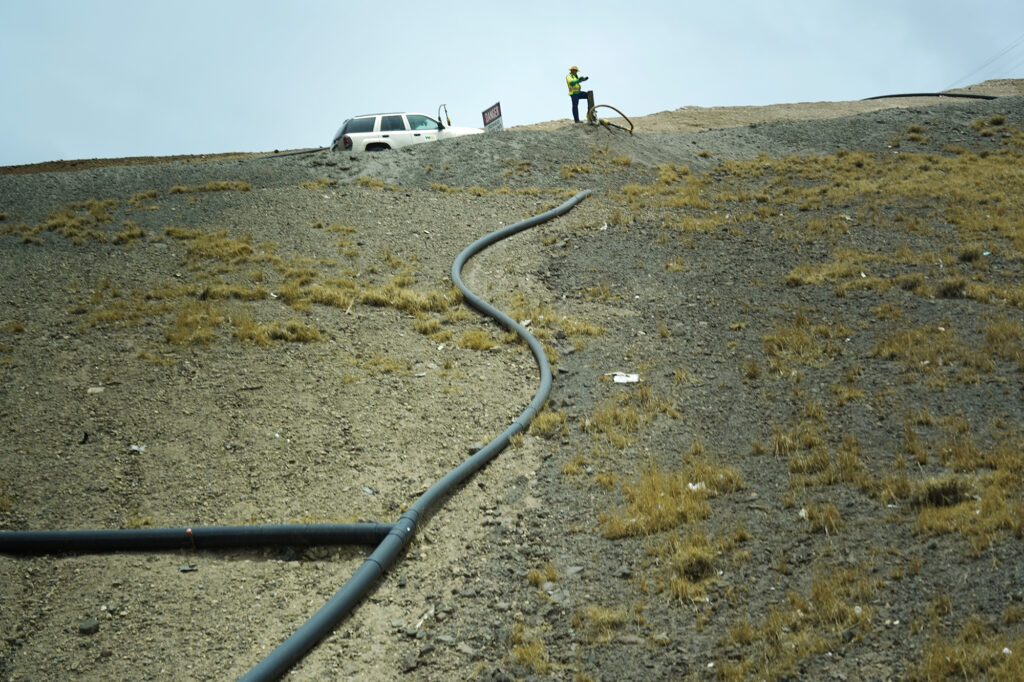
Figuring out what to do with garbage on a small island is a conundrum that has inspired two recent proposals by local and state lawmakers to lessen the addiction to stowing it in a hole in the ground.
One is audacious: Just say no to landfills, a notion sparked during a recent overseas trip. The other is more circumspect, calling for reducing waste while leaning into new technologies.
Both could run headlong into the significant roadblock of a Senate bill reintroduced this legislative session that would add restrictions to repurposing the ash waste created by incinerating trash. Oahu’s municipal generator alone produces 150,000 tons of ash waste every year, which under current laws cannot be disposed of anywhere other than the Waimānalo Gulch Sanitary Landfill in West Oʻahu.
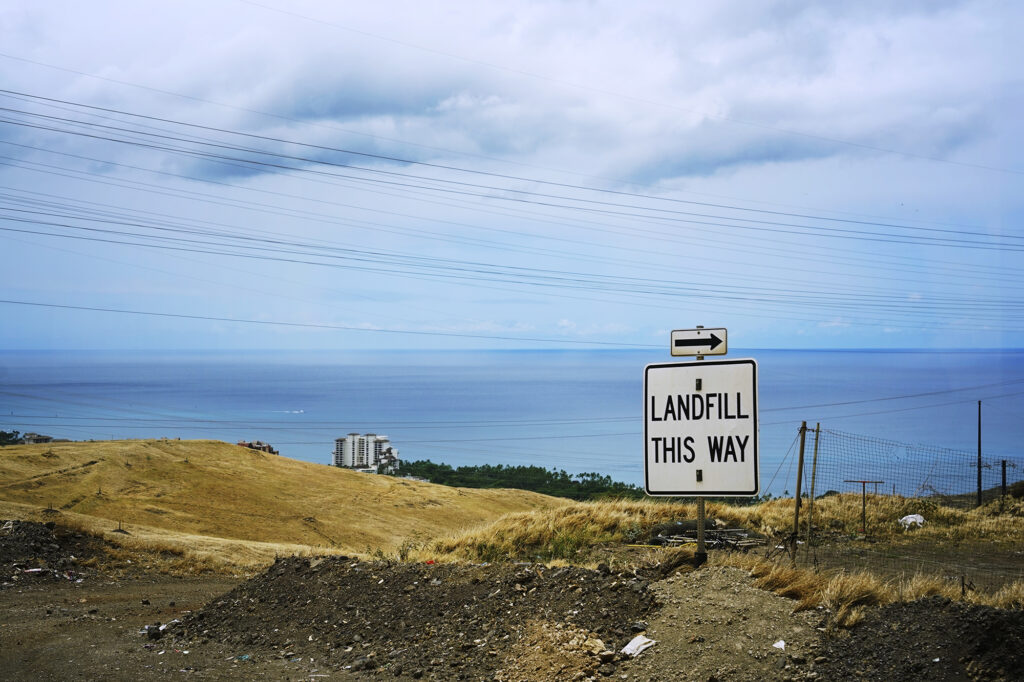 The City and County of Honolulu is discussing acquiring additional land to extend the life of the current municipal landfill, city spokesman Scott Humber said. The facility was due to close in 2028 but remains the only viable option after 11 other sites were rejected. (Kevin Fujii/Civil Beat/2024)
Despite recycling and other reduction efforts, around 1.2 million tons of solid waste were generated on Oʻahu in the 2025 fiscal year, according to the latest data available from the city’s Department of Environmental Services. Every year a quarter of that –– 280,000 tons of construction and development waste and ash from H-Power –– ends up being buried at Waimānalo Gulch.
Waimānalo Gulch was scheduled to close in 2028, but after a fruitless search for an alternative location, the City and County of Honolulu is now discussing extending the working life of the landfill. City spokesman Scott Humber said that 3.7 acres of land is available to extend the landfill’s capacity for the near future, while other options are explored.
“Other than the expansion of Waimānalo Gulch … there is no other place,” Honolulu Mayor Rick Blangiardi told the Senate Ways and Means Committee earlier this week.
Council member Andria Tupola, who represents District 1 where the current landfill is located, is not on board with that approach. Instead of spending money to expand the landfill where it is or relocate it, she says it is time to invest in closing it.
“We are now at a point where so many sites have been excluded that it is impossible for us to re-site the landfill,” she told Civil Beat. “So knowing that it’s impossible, ending it is the only path forward.”
Tupola wants to establish a council working group to investigate closure options, motivated by a recent city funded overseas trip during which she inspected waste disposal technology in China, Denmark and Spain. All three countries are less dependent on landfills, in large part because of more sophisticated incinerators.
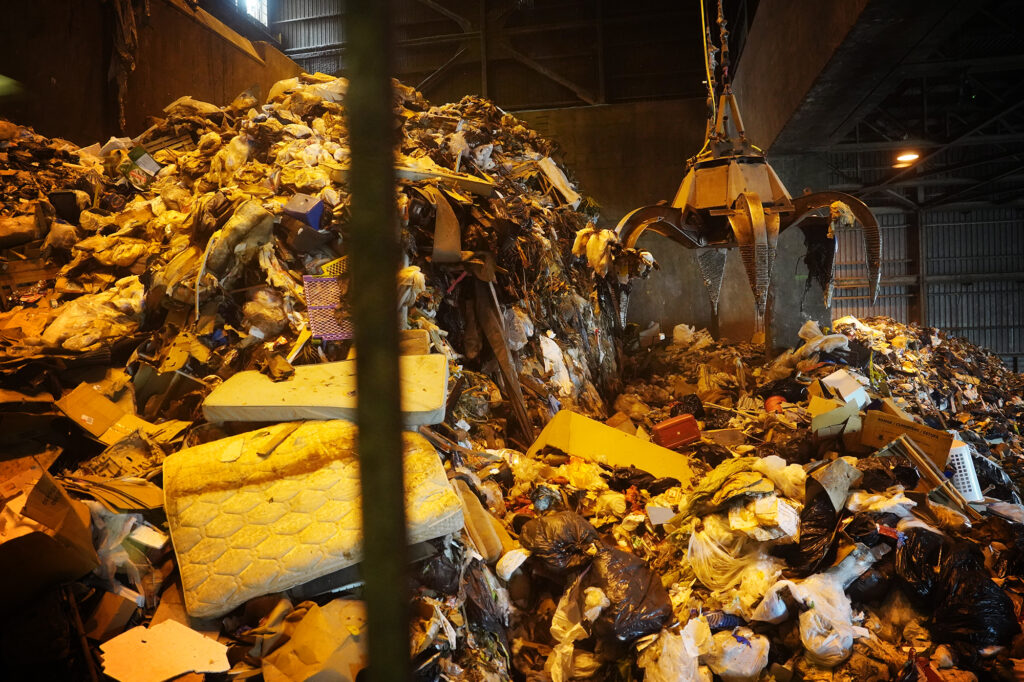 Over 2,000 tons of municipal solid waste are processed every day at the H-Power plant run by Reworld Honolulu LLC for the city and county. Reducing the waste deposited in Oʻahu’s landfill will depend on improving the incineration technology since the landfill is the only legal repository for the ash waste from H-Power. (Kevin Fujii/Civil Beat/2024)
Landfill Integral To County Waste Plans
The Westside landfill has been a political hot potato for decades, and “every mayor since 1990 has said they will move the landfill, but they didn’t say they’d end it,” Tupola said.
As she envisions it, the working group would include representatives of the city’s environmental services department and the state health department, as well as the recycling industry, the city’s H-Power waste incinerator, unions and others.
 Municipal Waste Streams (MWS) on Oʻahu for 2019-2025, according to the Department of Environmental Services. The two shaded segments at the bottom of each column represent the 25% of solid waste that continues to end up in the Waimānalo Gulch landfill. (Screenshot: Department of Environmental Services.)
The members would consider the available technologies for recycling, diverting and converting solid waste, and “evaluate the feasibility and practical realities of ending landfill dependency,” according to the resolution she introduced in the Honolulu City Council Jan. 12.
A council vote is likely in the next week and the group could be up and running not long after, Tupola said Tuesday. It would report back within a year.
However, meeting any goals it set — including further reducing and repurposing the thousands of tons of waste that end up in the landfill every year — would take far longer.
“Experts I’m talking to say even with a very, very ambitious plan we would still need eight years … and that’s if nothing goes wrong,” Tupola said.
Until then, “landfills remain a necessary component in Hawaiʻi’s solid waste system, particularly for emergency situations and for materials that can’t be reduced, reused or recycled,” according to Roger Babcock, the director of the Department of Environmental Services.
State Group Proposed
Senate Bill 2485, introduced by Sen. Mike Gabbard, would establish a similar working group within the governor’s office to identify policies to further reduce solid waste statewide, not just on Oʻahu.
Both groups would weigh current solid waste regulations, analyze the costs and environmental impacts of alternative technologies for processing waste, and assess what markets are available for new products from repurposed solid waste.
Gabbard said he introduced the bill after learning about Tupola’s council resolution for a municipal working group.
“We’re both from the Westside,” he said, “and it makes sense because we’ll end up with the best results for the community.”
Tupola also welcomed the potential for collaboration between the two working groups, which she said could head off potential conflicts.
In April, the state Legislature passed House Bill 969, which prevented landfills on the state’s most productive agricultural land. That blocked a Honolulu plan to relocate the city landfill to Wahiawā and over Oʻahu’s main aquifer.
“I think that we need to be realistic that any proposal that we move forward has to be in unison with what the state and the Legislature want,” Tupola said, “because otherwise we’re going to have exactly what just happened with the Wahiawā proposal.”
Underinvestment In H-Power
Tupola said that her recent study trip convinced her that technology had evolved enough that it was time to discuss further reducing Hawaiʻi’s reliance on landfills for solid waste disposal.
Denmark landfilled less than 1% of its solid waste in 2022, and the European Union has set a target for countries to send less than 10% of their waste to landfills by 2035.
So far, no U.S. state has been able to get close to the Danish level of diversion. Connecticut has made the most progress, but reporting shows it has achieved that primarily by trucking the waste to landfills in Ohio and Pennsylvania.
Honolulu diverted two-thirds of its waste from landfills in the 2024 financial year, the highest in the state and around twice the national rate, according to a 2025 legislative report from the state Department of Health’s Office of Solid Waste Management.
 The state’s diversion rates have plateaued over the past four years, and are heavily reliant on incineration, according to the state Department of Health. (Screenshot: Hawaiʻi Department of Health/2025)
But the DOH report makes clear that diversion in Hawaiʻi, and other states, has largely plateaued, and remains highly dependent on incineration.
In addition to improving green waste recycling, improvements in the amount of waste diverted from the Waimānalo Gulch landfill “will be achieved by way of increased throughput at the city’s H-Power waste-to-energy operations,” according to the Department of Environmental Services website.
Waimānalo Gulch also remains the only permitted repository for the ash produced by H-Power.
Tupola said the technology at the plant had not kept pace with developments in mass incineration, and new investment is long overdue because “the way H-Power is running right now, it cannot do what it’s supposed to do.”
Limitations with pre-sorting materials that end up being incinerated at the H-Power facility lead to breakdowns, she said. She is talking with H-Power’s operator about expanding the facility to nearby properties to facilitate more recycling or reuse.
The company that runs the facility, Reworld Honolulu LLC, did not respond to a request for comment.
Exploring Other Technologies
Technologies that the working groups could consider based on alternatives used in Canada, Japan and China for two decades include Plasma Arc Gasification, a process that burns waste at between 12,000 and 15,000 degrees Fahrenheit — six times higher than the temperatures used at H-Power. The byproduct is a non-toxic aggregate that can be incorporated into construction materials such as masonry and paving.
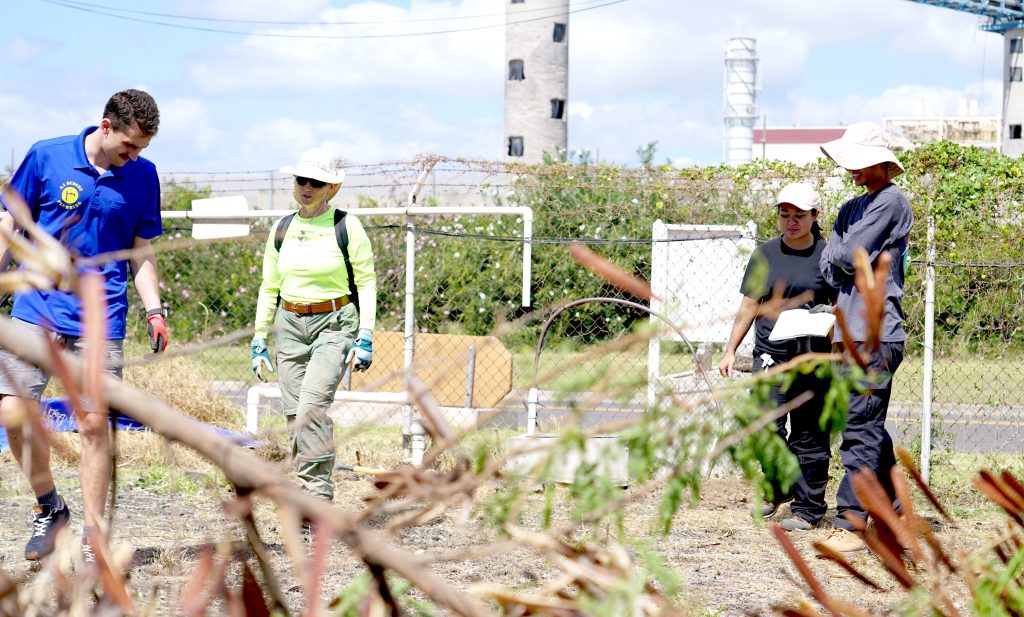 Joelle Simonpietri and staff at the site of the Aloha Sustainable Materials Recycling and Fertilizer Facility. The Kailua startup is testing a range of technologies to convert solid waste to keep it out of landfills. (Thomas Heaton/Civil Beat/2024)
Honolulu looked at Plasma Arc Gasification several decades ago when the technology was still in early stages. Since then it has become more established, is less reliant on landfills and also produces less pollution.
A small private startup based in Kailua, Aloha Carbon, is testing alternative technologies that could convert solid waste, including construction debris, into fertilizers, recycled building materials and carbon credits.
Tupola said that in China, she saw building materials such as bricks that included recycled ash produced by incineration.
But a version of Senate Bill 528, which died last session, is being reintroduced by Gabbard on behalf of the Democratic Party’s Environmental Caucus. It adds restrictions on ash reuse based on health concerns about exposure to toxic heavy metals, including cadmium and lead.
The bill would amend the state’s prohibitions on open dumping to specify that any ash from a “municipal waste combustor … shall be disposed of only in a lined municipal solid waste or hazardous waste landfill and shall not be utilized as alternative daily cover material on a landfill, roadbuilding, or other construction material.”
That would preclude the kinds of reuses of the ash that Tupola saw in other countries, at least while H-Power is operating in its current configuration.
Gabbard said that once the bill is formally introduced, any findings of the two working groups could become part of the Legislature’s deliberations.
Civil Beat’s coverage of climate change and the environment is supported by The Healy Foundation, the Marisla Fund of the Hawaiʻi Community Foundation and the Frost Family Foundation.

Sign up for our FREE morning newsletter and face each day more informed.
Sign Up
Sorry. That’s an invalid e-mail.
Thanks! We’ll send you a confirmation e-mail shortly.