
In 2014, Donald Trump tweeted: “Just out—the POLAR ICE CAPS are at an all time high, the POLAR BEAR population has never been stronger.”
That claim was disputed by climate specialists, and indeed the first part is not true. Strangely, however, it seems the second part is, at least in one place.
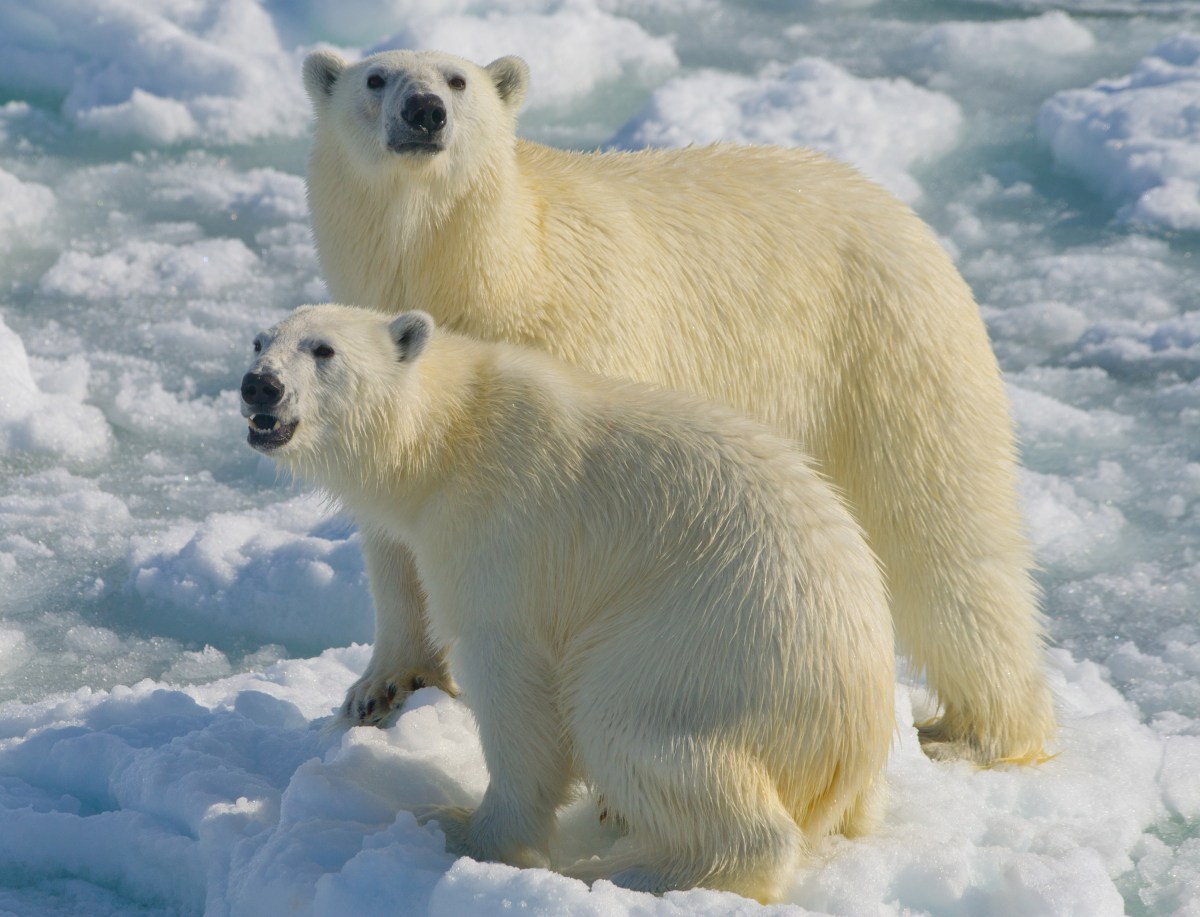
In Svalbard, the Norwegian archipelago in the Barents Sea, scientists have been weighing polar bears for three decades. This week their long-running study, published in Scientific Reports, delivered an awkward fact: despite roughly 100 more ice-free days than the early 1990s, the bears are, on average, fatter and healthier than they were a generation ago. Some bears have switched to opportunism—scavenging walrus carcasses, nabbing reindeer, raiding bird colonies—while ringed seals may be easier to catch when ice is patchier.
Scientists warn this resilience may be temporary. Yet it does, in some ways, support the Trump view of climate policy. The bears have adapted. Bill Gates, in a widely discussed memo last year, also called for adaptation and a focus on reducing human suffering as opposed to blanket temperature targets. The point isn’t about zoology, but politics. The Svalbard bears are an inconvenient truth and Exhibit A for the adaptation-first view of the world.
Common Knowledge
The American left’s narrative is cautious on the bears and on the politics more generally. Vox’s report on the Svalbard study stresses that “the loss of sea ice from warming is indeed linked to ailing polar bear populations” elsewhere and that the new findings are “a wrinkle of hope,” not a reversal of the broader threat. As study lead author Jon Aars put it: “I was surprised… We see the opposite” of the expected weight loss—but “we do think there’s a threshold.”
Campaign for Nature’s Brian O’Donnell called Gates’s climate memo “wrongheaded” for urging a pivot from temperature targets toward reducing human suffering through adaptation, arguing the framing risks a false trade-off that could weaken emissions cuts. Environmentalist Bill McKibben said that Gates was downplaying tipping points and timing his argument as disasters mount. “Maybe we don’t need billionaire opinions on everything,” he said.
The right, by contrast, hears vindication. National Review praised Gates for making it “more ‘respectable’ to discuss adaptation.” A Wall Street Journal op-ed counseled realism—”We can’t stop climate change, so we need to prepare for it.” Business-friendly outlets cheered Gates’s rejection of “doomsday” rhetoric and his focus on prosperity as resilience.
Trump slots neatly into this stance. The president has scoffed at apocalyptic talk—an attitude that resonates with today’s adaptation chorus. More intriguingly, his administration later backed an Arctic aid plan that earmarked $50 million for polar bear conservation in Greenland, a real-world nod to climate impacts even as he derided climate alarmism.
Here is what the Svalbard research clarifies. Polar bears are not a single story, but 20 distinct subpopulations facing different combinations of sea-ice loss, prey shifts, and human pressure. The Svalbard bears live in one of the fastest-warming Arctic basins, yet between 1992 and 2019 their average body condition rose even as ice-free days increased. Western Hudson Bay tells the opposite tale: long ice-free seasons starve bears into an “energy deficit,” depressing survival and numbers. Both can be true at once.
Gates’s intervention matters because it reframes how Americans weigh such contradictions. In his memo, he argued that there’s a “doomsday view” of the climate problem that is “wrong,” urging a pivot toward the “metric that should count even more… improving lives.” He contends that, in the near term, the world will miss the Paris 1.5 C goal and that human welfare—agriculture, health, income—should be the North Star.
The surprising thing about Svalbard is not merely that polar bears got fatter. It’s why. After the 1973 Agreement on the Conservation of Polar Bears curbed hunting across the Arctic, Svalbard’s bears benefited from legal protections and, over time, recovering prey. With fewer competitors on land and some years when seals concentrate along broken ice, the bears have been able to put on weight quickly. That’s adaptation, but it’s adaptation made possible by law, conservation, and Western wealth for research and enforcement.
This is where Trump, Gates and bears intersect, oddly enough. Trump’s position—skeptical of catastrophic narratives, insistent that “life goes on”—translates into a bias for coping over curbing. Gates arrives at a similar emphasis from the opposite direction: accept the science, but spend scarce dollars where they reduce human suffering fastest. If they want a mascot for that idea, they could do worse than a fat polar bear.
If you’re enjoying Uncommon Knowledge, please share. If you have suggestions for future editions or feedback, email subscriber.feedback@newsweek.com. We want to hear your voice.