
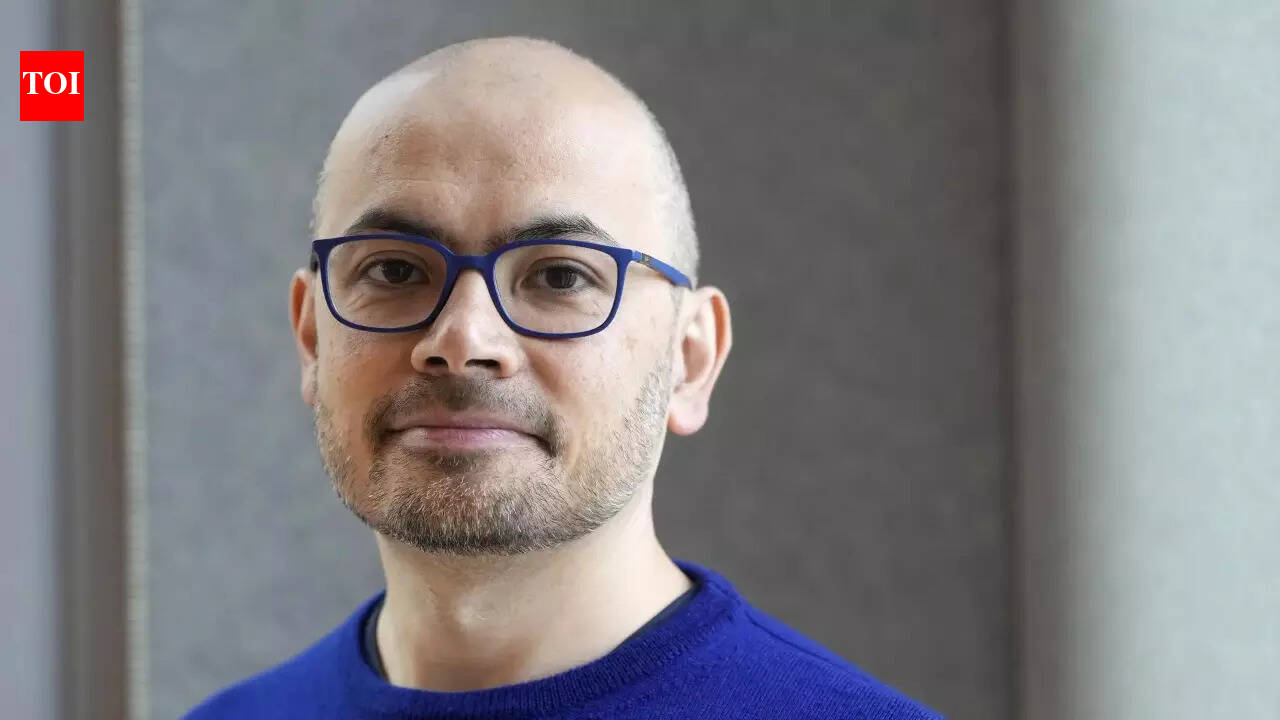
 Google DeepMind’s CEO Demis Hassabis admits the company was slow to commercialise its foundational AI technology, allowing rivals like OpenAI to scale chatbots effectively. He emphasised a shift towards a scrappier, faster approach, with DeepMind now serving as the ‘engine room’ for Google’s AI product launches amidst intense competition. Google DeepMind founder and CEO Demis Hassabis has credited ChatGPT maker OpenAI and other AI startups with scaling a technology initially developed by Google. In a recent podcast, Hassabis acknowledged that, although Google researchers developed transformer technology in 2017, which forms the base of almost all large language models (LLMs), the company was slow to commercialise and scale the innovation. He credited Sam Altman-led OpenAI and other competitors for using Google’s technology to scale their AI chatbots.In a recent episode of CNBC’s The Tech Download podcast, Hassabis said Google’s challenge wasn’t invention but execution. Referring to the technology’s commercialisation, he said, “That’s what OpenAI and others did very well.” The company “maybe” was “a little bit slow to commercialise it and scale it,” Hassabis added.Google merged its Brain research division with DeepMind in 2023 and appointed executive Josh Woodward to lead its Gemini AI assistant, enabling the company to catch up after OpenAI’s release of ChatGPT in November 2022. Product failures with Google’s AI products in 2024 further fuelled the impression that the company was struggling to compete.“The last two, three years, I think we’ve had to come back to almost our startup or entrepreneurial roots and be scrappier, be faster, ship things really quickly and sort of make really rapid progress,” Hassabis noted.
Demis Hassabis on how DeepMind helped Google to compete with OpenAI and others
At the start of 2025, investors questioned whether Google could keep pace with OpenAI in AI. By year-end, Alphabet’s stock delivered its best performance since 2009. Google regained its strength in AI. Much of that came from DeepMind, the UK-based company Google bought in 2014 for around £400 million (almost $550 million).Hassabis called it “the engine room” of Google’s AI work, saying that changes had been made to help the tech company quickly launch AI products in a “ferocious competitive environment.”He noted that he talks to Google CEO Sundar Pichai “every day,” showing how closely the two leaders are working to move fast on innovation.”All the AI technologies is done by this group … and then it’s diffused across all of these incredible products right across Google,” Hassabis said in the podcast.“And the last couple of years, we’ve been building that backbone, so not just the models, but also … architecting the entire infrastructure of Google so that … these things can ship incredibly quickly,” he continued. This could be important for Google as it faces another year of competition from OpenAI and many other companies, including Amazon, Perplexity, and Anthropic.“It’s a ferocious competitive environment at the moment,” Hassabis noted. He added that “many” long-time tech workers who’ve been in the industry for “20, 30 years,” had told him this was “the most intense environment they’ve ever seen, perhaps ever in the technology industry.”