
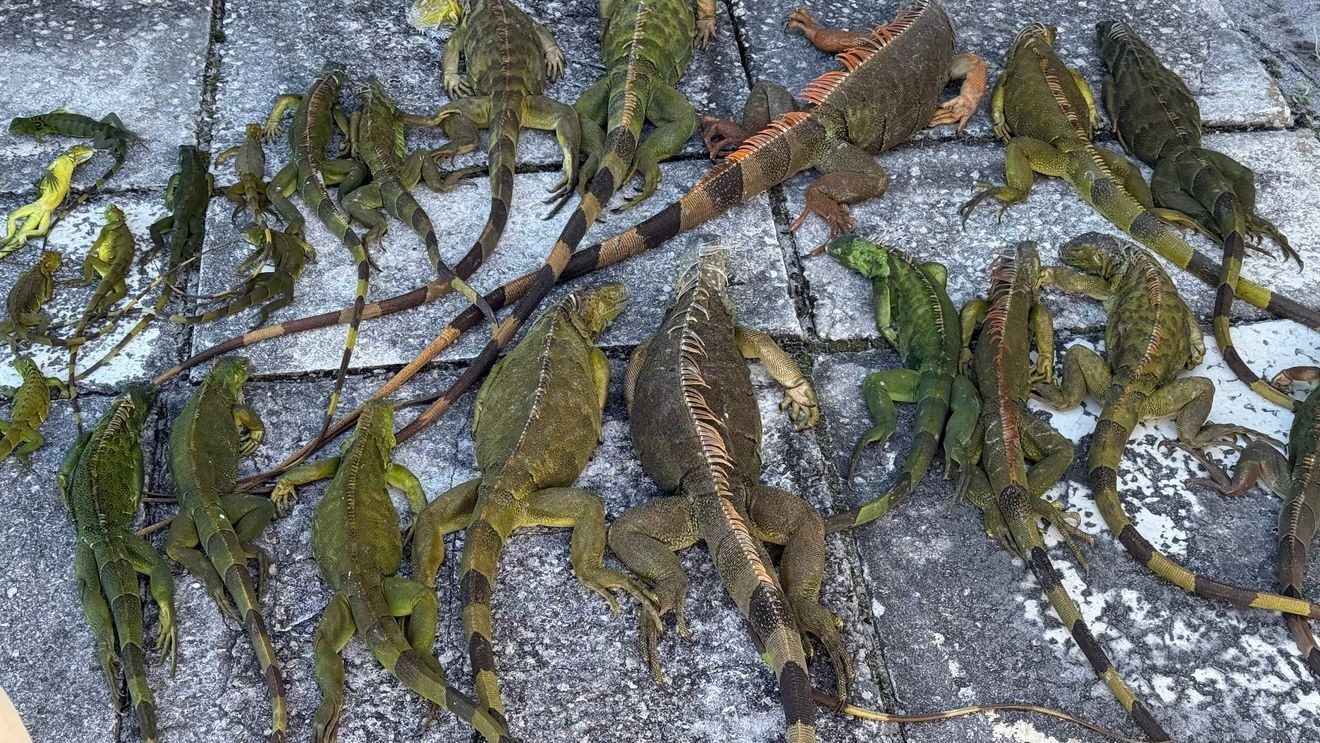
TEQUESTA, Fla. (CBS12) — Florida’s rare cold snap has triggered an unusual, and very Florida, response: hundreds of invasive green iguanas being dropped off at a Florida Fish and Wildlife Conservation Commission (FWC) facility in Tequesta.
FWC says about 600 iguanas were dropped off on Sunday, and the numbers continued to climb Monday. By 1 p.m., more than 350 additional iguanas had been turned in — including 140 collected by Palm Beach County’s Parks and Recreation team.
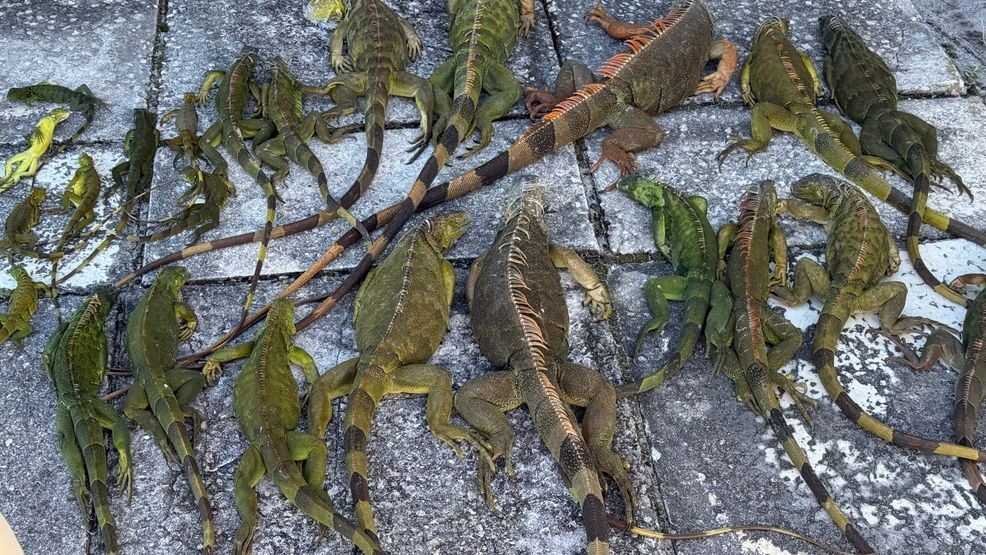
FWC says about 600 iguanas were dropped off Sunday, and the numbers continued climbing Monday. By 1 p.m., more than 350 additional iguanas had already been turned in — including 140 collected by Palm Beach County Parks and Recreation team. (WPEC)
Green iguanas are an invasive species in Florida, and when temperatures drop near freezing, the reptiles can become cold-stunned, entering a state known as torpor. In that condition, iguanas temporarily lose muscle control, appear frozen — and can even fall from trees.
GALLERY: Cold-stunned iguanas fall from South Florida trees
Because of the sustained cold weather, FWC issued Executive Order 26-03, temporarily allowing members of the public to collect live, cold-stunned green iguanas without a permit and bring them directly to designated FWC drop-off locations.
One of those locations is the FWC Tequesta Field Lab, the only drop-off site in Palm Beach County and one of just five statewide.
For some residents, the scale of the situation has been eye-opening.
“They’re invasive,” said Lisa Bennett of Hobe Sound, who helped collect iguanas with her husband. “Very important because they’re invasive.”
“But I’m sure we’re just scratching the surface,” added Phil Bennett.
Phil Bennett described one especially large iguana they collected.
“I used kitchen mitts to pick it up and put it in a plastic box,” he said. “We measured him. Nose to end of the tail was about fou-and-a-half feet. So he was a pretty good size one. He fell a big distance from a tree.”
See also: Residents urged to cut electricity use during cold snap as outages hit our area
People from across Palm Beach County and the Treasure Coast said iguanas were suddenly everywhere — lying still in neighborhoods, near beaches, and in trees.
“They were just all over the place,” said Tony Moré of Lake Worth Beach. “You walked out anywhere near the beach or in some neighborhoods and they were just laying on the ground — big ones.”
Moré said the cold snap created a rare opportunity.
“You find them basically laying down like they’re sleeping and you go up and pick them up and they don’t move,” he said. “If you see them at any other time, you can’t really get close to them without them taking off, so this was a fantastic opportunity to grab as many as you could.”
Learning about iguanas’ impact on the ecosystem motivated Moré to get involved.
“We have a lot of native species of birds here,” he said. “These things will go and eat the eggs because they can get up in the trees and they have no natural predators.”
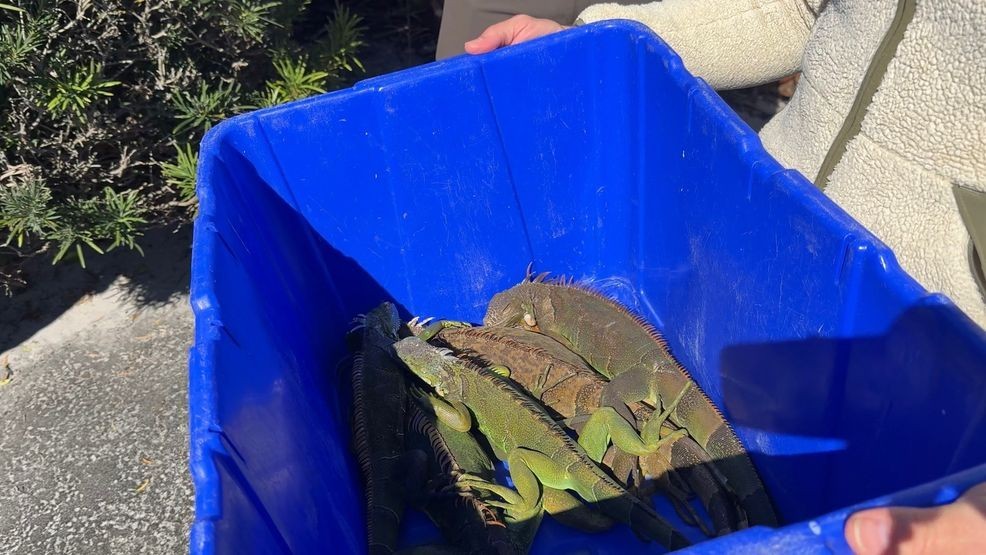
FWC says about 600 iguanas were dropped off Sunday, and the numbers continued climbing Monday. By 1 p.m., more than 350 additional iguanas had already been turned in — including 140 collected by Palm Beach County Parks and Recreation team. (WPEC)
For one Palm Beach County family, the experience even turned into a learning moment.
“It was really fun,” said Tim Arsenault, who collected iguanas alongside his 5-year-old daughter, Rory. “We found some right outside our garage in the morning and then one out front. So we brought a wagon around and found several more.”
Rory helped count the iguanas as they collected them.
“I didn’t get to feel one,” she said.
FWC officials stress that while iguanas may appear frozen, they can recover quickly if temperatures rise — which is why proper handling is critical.
“There’s several reasons why invasive species are not good ecologically,” said Officer Tyson Matthews with FWC. “They can cause damage to the landscape. It’s a human health and safety concern. So we want to rid these animals from our ecosystem.”
“We want them out of Florida,” Matthews added. “So we’re getting them out of the state.”
FWC advises anyone collecting cold-stunned iguanas to wear gloves, place the animals in a secure, escape-proof cloth bag or container, and never bring them inside to warm up.
“When they wake up, they have claws, teeth, tails — they can defend themselves,” Matthews said.
See also: Residents urged to cut electricity use during cold snap as outages hit our area
FWC staff are accepting drop-offs at the Tequesta location Monday, February 2, until 4 p.m. The agency says people without permits may only possess live iguanas for the purpose of immediate transport to an FWC drop-off site under the executive order. Outside of the temporary allowance under EO 26-03, green iguanas are a Prohibited species in Florida and cannot be possessed without a permit.
FWC says invasive species management remains a priority statewide. More than 600 nonnative fish and wildlife species have been reported in Florida, with 139 species established and reproducing in the wild.