
NEED TO KNOW
The sun unleashed multiple powerful X-class solar flares, including an X8.3 class flare, which is the strongest of 2026 thus farEarly models suggest that at least one flare-related coronal mass ejection could interact with Earth on ThursdayIf conditions align, the surge in solar activity could spark northern lights, with location and visibility still uncertain
The sky is sizzling with cosmic potential!
Over the past 24 hours, the sun has been especially active, unleashing a rapid-fire series of powerful solar flares, including an X8.3-class eruption, which is the strongest solar flare observed so far in this year.
The solar blast came from a fast-growing sunspot, Active Region 4366, which has evolved into one of the sun’s most intense flare producers in a matter of days.
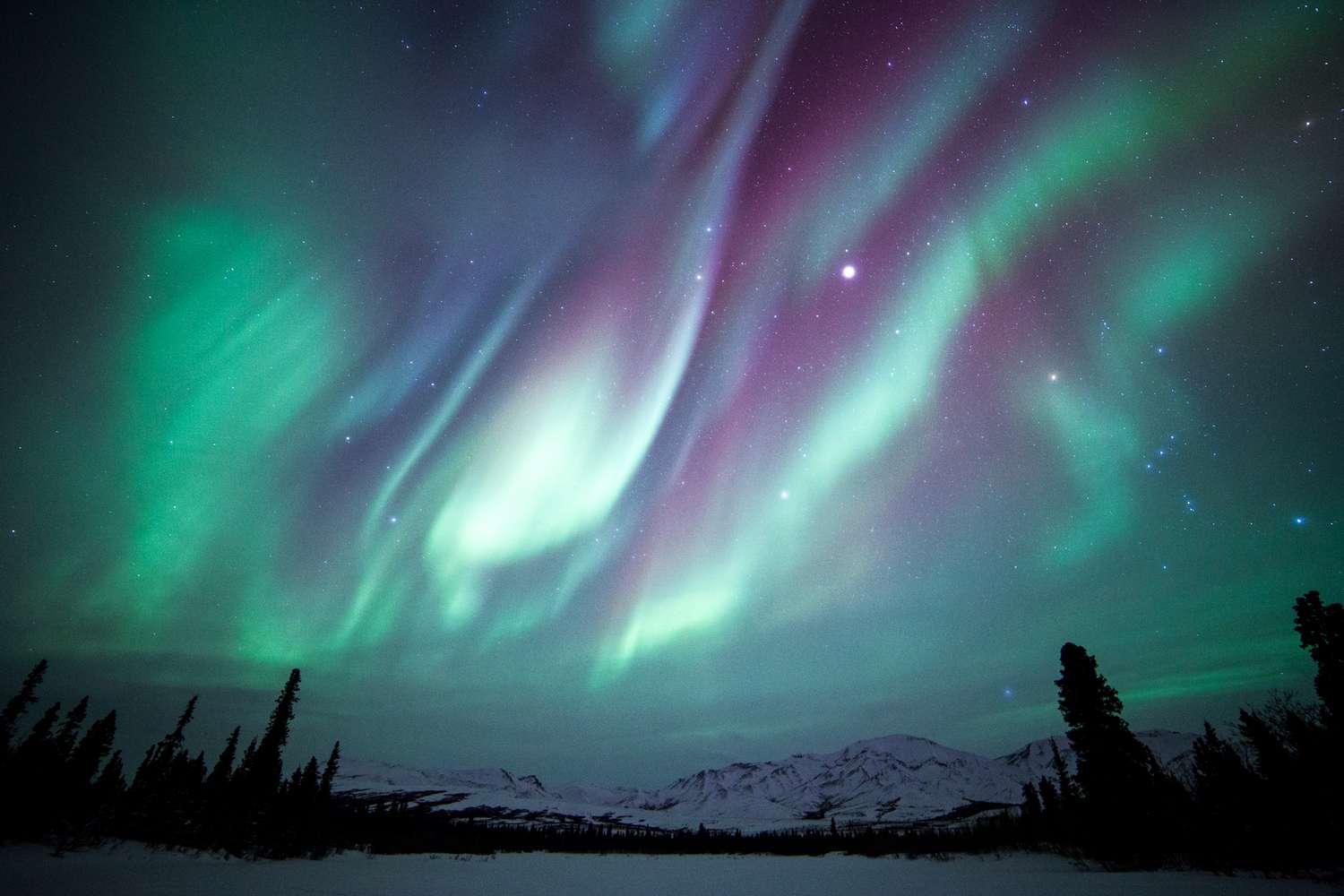
Translation? Scientists believe this powerful surge in solar activity could set the stage for the northern lights to appear as early as Thursday, Feb. 5.
The aurora borealis (northern lights) is a result of geomagnetic storms, which occur when charged particles from the sun collide with gases in the Earth’s atmosphere, creating brilliant waves of light in the sky. Still, their visibility depends on several factors, including intensity and location.
According to the NOAA Space Weather Prediction Center, the X8.3 flare peaked at 6:57 p.m. EST on Feb. 1, sending a burst of extreme ultraviolet and X-ray radiation toward Earth and disturbing the planet’s upper atmosphere.
This cosmic event followed an X1.0 flare earlier that day and was quickly followed by additional X-class flares on Feb. 2, which highlights just how volatile the region has become.
“A complex eruption resulting in possibly three CMEs was associated with the X8.1 and X2.8 event,” said NOAA.
These high-energy eruptions can also launch coronal mass ejections, which are massive clouds of charged particles capable of interacting with Earth’s magnetic field.
Here’s everything you need to know about the stellar event.
When will the northern lights be visible?
northern lights.
JONATHAN NACKSTRAND/AFP via Getty
If northern lights do appear, the most likely window would be Thursday, Feb. 5, when models suggest at least one coronal mass ejection associated with the recent X-class solar flares could pass close enough to Earth to interact with its magnetic field.
Timing remains uncertain, as additional M- and X-class flares are still possible and space-weather conditions can change quickly.
Where will the northern lights be visible?
The Aurora Borealis.
Steven Garcia/NurPhoto/Shutterstock
It’s still too early to determine exactly where the northern lights could be visible.
Aurora forecasts depend on how strongly any Earth-directed CME interacts with the planet’s magnetic field, which won’t be clear until later this week. If geomagnetic activity intensifies, visibility could range from high-latitude regions to farther south, but precise locations are not yet known.
How to photograph the northern lights?
The best part about the northern lights is that you can also make fun memories in the process. Your smartphone is more than enough, too!
All you have to do is go to settings, turn on Night Mode and point your camera lens towards the sky.
If you’re a more seasoned skywatcher and happen to have a DSLR or mirrorless camera, grab a tripod and set your camera to manual mode. Don’t forget to stay warm!