
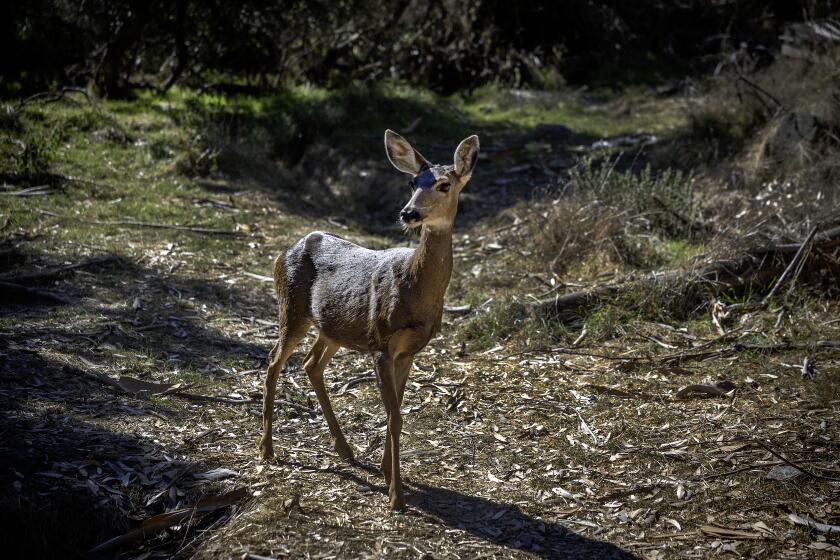
California wildlife officials have approved a plan to eradicate Catalina’s entire deer population as part of a broader effort to restore the island ecosystem, sparking fierce opposition from an unusual coalition of hunters and animal welfare advocates.
Per the plan conceived by the Catalina Island Conservancy, professional hunters will shoot the island’s non-native mule deer on the ground over four to five years.
The conservancy, which owns and manages 88% of the island, says getting rid of the deer is necessary to bring back the island’s unique plants — including the Catalina Island mountain mahogany, which may be the rarest tree in North America. That in turn would reduce wildfire risk, restore groundwater and allow other animals to thrive, according to the nonprofit.
“Nobody wants to kill animals. Obviously, that’s not why we get into conservation work,” said Lauren Dennhardt, the conservancy’s senior director of conservation. “But we know what’s at stake here, and it’s important for us to essentially do the right thing to make sure that this island stays and gets even better for the future.”
In 1930, 10 deer were brought to the island located about 22 miles off the Southern California coast as a game species — a figure that has ballooned to over 2,000 today, she said. Hunters have been allowed take the deer, but this fall will mark the last opportunity (and it will be open only to locals).
Starting as soon as this September, a squad of 10 to 12 trained professionals bound by state regulations will descend on the island to hunt the deer with rifles.
Some of the deer meat will go to feed endangered California condors on the mainland, while some carcasses will be left on the land — potential meals for bald eagles and foxes.
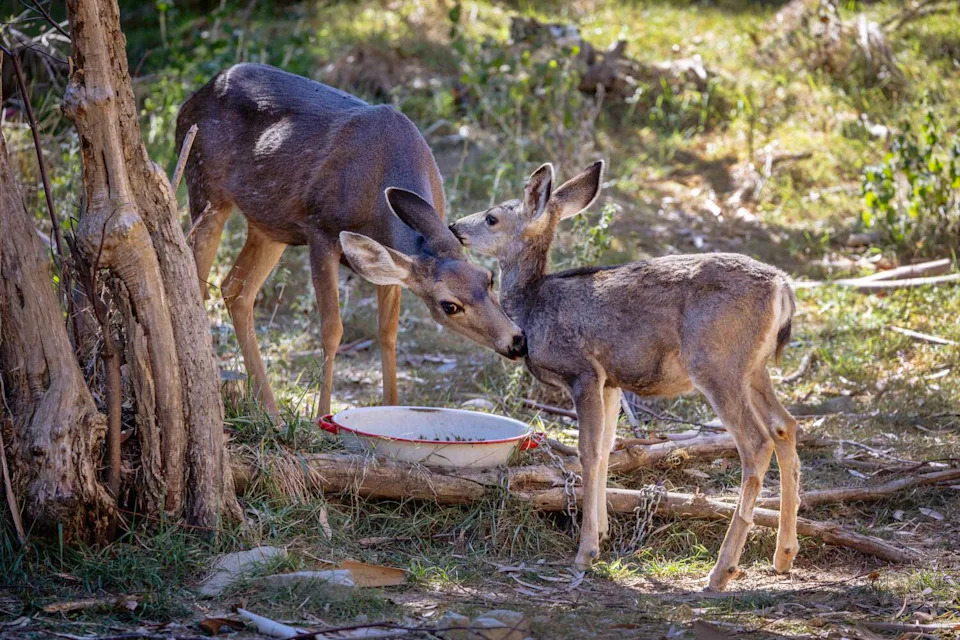
A mule deer doe licks its fawn at a feral cat feeding station behind the Descanso Beach Club in Catalina Island’s Avalon in 2023. (Allen J. Schaben / Los Angeles Times)
A handful of deer in Avalon, Catalina’s only city, will be sterilized and allowed to live out their days on the island.
A previous strategy, scrapped due to pushback, would have entailed the animals being shot from helicopters.
Despite the shift away from hunting from the air, many still don’t want to see the deer culled. Last week, L.A. County Supervisor Janice Hahn, who represents much of the island, urged the California Fish and Wildlife Department to deny the permit needed to carry it out.
“This plan disregards the deeply held values of many Catalina residents and visitors,” Hahn said in a Jan. 26 letter. She called it “a drastic and inhumane approach” and said many who live on the island “cherish these deer.”
She also highlighted a concern by L.A. County Fire Chief Anthony Marrone that killing off the deer — which reduce flammable material through grazing — could increase wildfire risk.
Read more: New conservation plan seeks to shoot Catalina’s deer on the ground instead of from helicopters
“If we could direct the deer to just eat invasives, we would love to do that but, obviously, deer eat all vegetation,” said Pepe Barton, communications director for the conservancy.
According to Barton, when deer munch on native plants, the plants are replaced by invasive grasses that dry out quickly and burn easily. Then, when a wildfire comes through and natives begin to regrow, they’re chomped back down, creating a vicious cycle.
Hunting groups like Safari Club International and the California Rifle and Pistol Assn., as well as animal rights groups In Defense of Animals and the Humane Society, also oppose the cull.
The deer have “provided a really great hunting opportunity in an area of Southern California where there’s not a lot of big game hunting opportunities,” said Regina Lennox, senior litigation counsel for Safari Club. “So this is really important to us.”
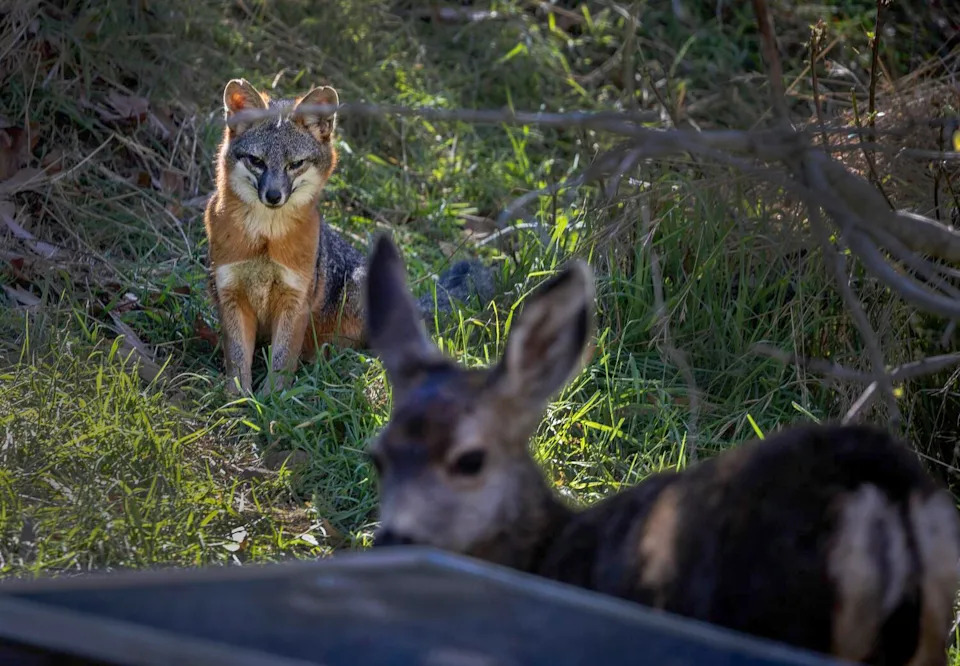
A Catalina Island fox stares at a mule deer fawn. (Allen J. Schaben / Los Angeles Times)
She said there’s probably “middle ground” where the deer are perhaps reduced but not eliminated, so people can hunt and enjoy them. The group is exploring its legal options.
On Friday, a few days after Supervisor Hahn’s request, the state wildlife department granted the conservancy’s permit.
In a statement, Jen Benedet, the department’s acting deputy director of public affairs, said the decision was “based on a scientific and legal review of the application.” The work is “intended to support the recovery and long-term health of native and endemic California species.”
Catalina is part of the Channel Islands archipelago, sometimes called the Galapagos of North America. Removing invasive species, including deer, has led to recovery on other islands, according to the conservancy’s Dennhardt.
Unlike the other islands, owned by the federal government, Catalina is all state land. That means the state wildlife department is responsible for managing the deer. But it won’t carry out the hunt.
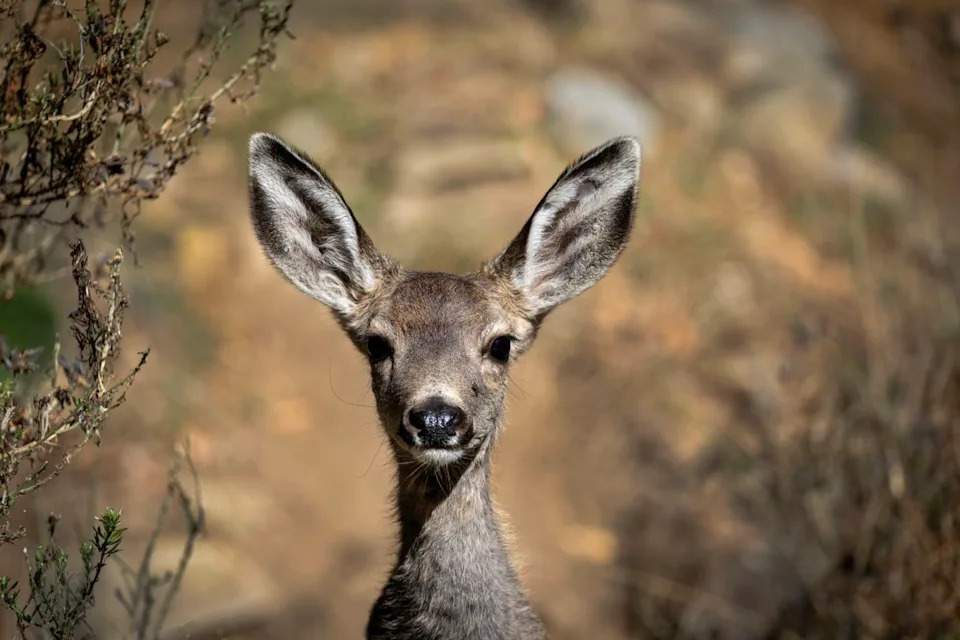
This mule deer fawn is all ears. (Allen J. Schaben / Los Angeles Times)
Dennhardt said restoring the island will also involve ripping out invasive plants, cloning rare plant species and seeding the landscape with natives.
“The thing that we have to do before any of this is feasible at scale is to remove the mule deer,” she said.
This story originally appeared in Los Angeles Times.