
The Minnesota Twins’ top 20 list reads like a hospital intake sheet, with guys underperforming or just not playing because of injuries throughout their list, including their top two prospects. The system is more hitter-heavy, with some young pitchers who seem like they could make the leap this year, and in general, the system tails off quickly in the early teens.
(Notes: Ages are listed as of July 1, 2026. Scouting grades are on the traditional 20-80 scouting scale. EV = exit velocity. rpm = rotations per minute.)
Height: 6-3 | Weight: 210 | Bats: L | Throws: R | Age: 21
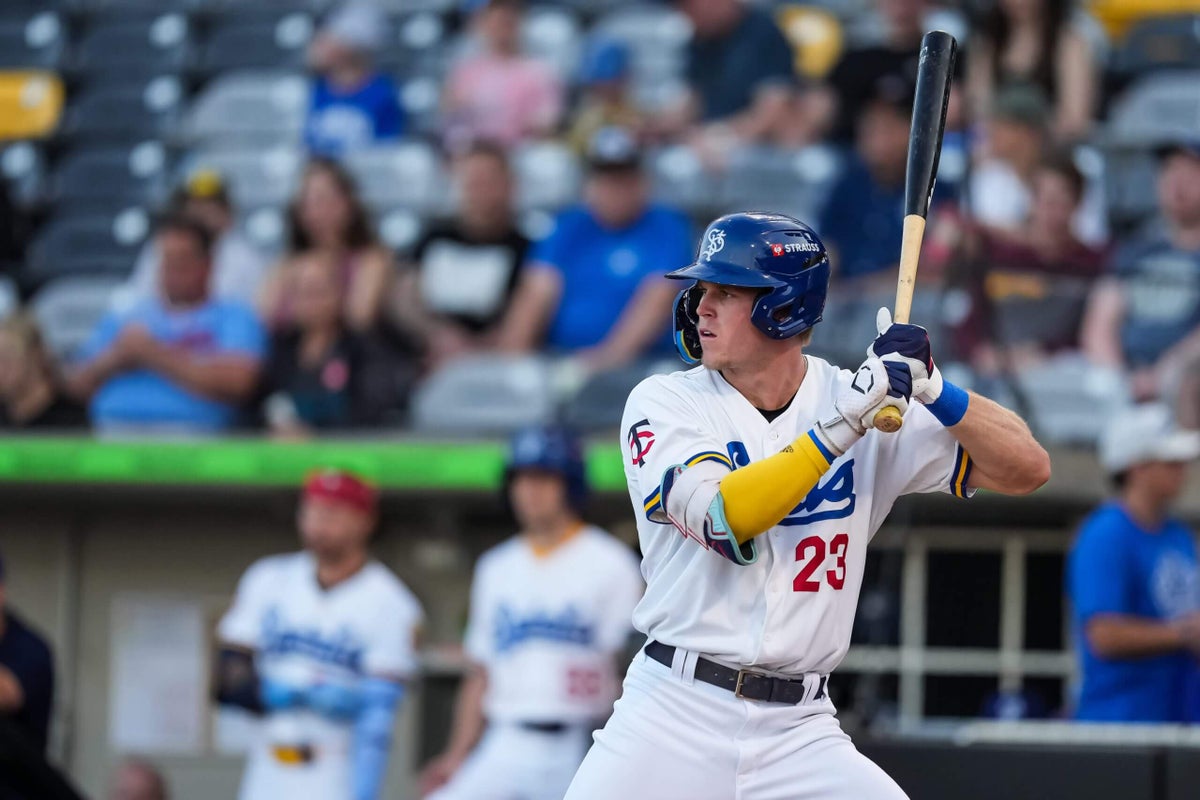
Jenkins played 84 games last year, up two from 2024, so he still hasn’t played a full season since the Twins took him with the No. 5 pick in 2023. He did finish the year in Triple A after hitting .309/.426/.487 in 52 games in Double A, showing a glimpse again of what he’s capable of doing when he’s on the field. After starting the year on the IL with a recurring ankle sprain he first suffered in spring training, Jenkins showed continued improvement at the plate even as he was young for Double A, with small increases in his exit velocities and his bat speed, and the Twins’ player development staff worked with him on getting the bat head out more so he could get his raw power to play more in games. He showed an advanced approach at the plate all the way until his brief stint in Triple A, where he expanded the zone at an unprecedented rate — he chased pitches well out of the zone 12 percent of the time in Double A, then 30 percent in Triple A — that at least should encourage the Twins to give him a long runway at that level before promoting him to the majors. He’s an above-average runner who has mostly played center in the minors, but given his injury history and the physical projection he still has, he’s probably going to end up in right field. I’m worried about his trouble staying healthy but not worried about the offensive profile, even with the hiccup in St. Paul to end the year. He’s got a fantastic swing that will allow him to barrel the ball consistently, and there’s 25-plus homer power in there as he refines his approach.
Height: 5-11 | Weight: 210 | Bats: L | Throws: L | Age: 23
Another year, another strong performance from Rodriguez and another injury. Rodriguez hit .258/.429/.423 in St. Paul in 52 games around three separate injuries, and so far in his five years in pro ball, he’s missed time with injuries to his thumb (requiring surgery), knee, abdomen/oblique and hip. His 65 games played and 267 PA in 2025 were the second-highest figures of his pro career. When he plays, he shows extreme patience to the point of passivity, not only chasing pitches out of the zone just 16 percent of the time in Triple A but also taking strikes 39 percent of the time, and he hits the ball hard enough to project plus power if he ever plays regularly, maxing out at 113.6 mph last year. He’s a plus athlete who could probably play center if he could hold up, but at this point, I’m questioning whether sitting on the bench between innings is too risky for him — maybe the Twins should set up a hyperbaric chamber for him in the clubhouse. At some point, he will have a full, healthy season when he hits 25 homers and draws 80 walks. I just don’t know if he can do that often enough, between the injuries and the overly selective approach, to justify having him up in the top 50 as I did the past two years.
Height: 6-0 | Weight: 185 | Bats: R | Throws: R | Age: 23
The Twins’ 2024 first-round pick, Culpepper hit well at two stops last year, finishing with a .285/.367/.460 line in Double A that included an 18.5 percent strikeout rate, while playing above-average defense at shortstop. Culpepper has a beautiful right-handed swing that has produced solid line-drive rates for most of his career, although he can get uphill and end up putting the ball on the ground too often, which did happen last year at High A and Double A. Despite his strong walk and strikeout rates, he doesn’t have that great of an approach, chasing pitches out of the zone 30 percent of the time, rising to 46 percent when there are two strikes on him, and it’s all much worse on non-fastballs. The moment he falls behind, he swings more often, which hasn’t mattered so far but is likely to slow his progress in Triple A or, at the very least, in the majors. He’s both strong and twitchy, getting to 55 defense on physical ability while still needing to work on his instincts at the position. He has tools, and he’s produced; it’s the skills that typically bridge those two things that he needs to improve, from better swing decisions to better reads on balls hit in his direction, to become an above-average everyday shortstop.
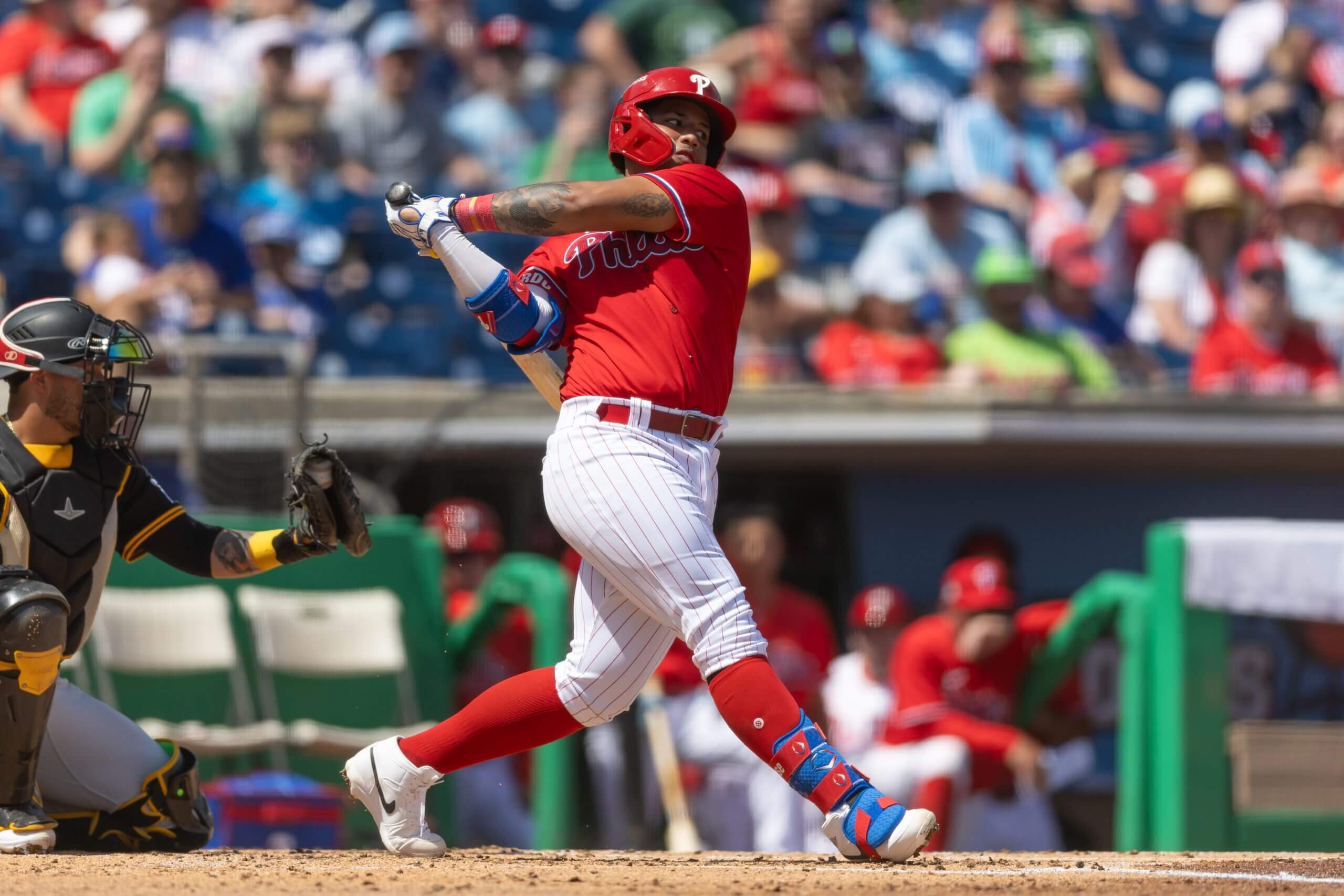
Eduardo Tait came to the Twins from the Phillies in the Jhoan Duran trade. (Mike Carlson / MLB Photos via Getty Images)
Height: 6-0 | Weight: 175 | Bats: L | Throws: R | Age: 19
Tait turned only 19 in August, a few weeks after the Philadelphia Phillies traded him and Mick Abel to the Twins for Jhoan Duran. He’s a high-risk, high-reward prospect who shows enormous power for his age and a cannon of an arm but is a below-average receiver and blocker who swings at everything right now. He hit 14 homers and 32 doubles last season in 486 PA, the majority of them in the pitcher-friendly Florida State League, and topped out at 113.8 mph in that league with an EV90 of 105.9 mph. He doesn’t strike out much, but he has a well below-average sense of the strike zone, chasing pitches out of the zone 41 percent of the time and pitches well out of the zone 32 percent of the time, leading to a .286 OBP in his time in High A with a 3.9 percent walk rate. Behind the plate, he is very much a work in progress beyond his arm strength, needing help in all other aspects of his game; he’s athletic enough to do it, and still young, but it’s probably grade 40 defense all around, and he’ll have to put a significant amount of work in to do it. He threw out 32 percent of runners who tried to steal off him in Low A, then for some reason couldn’t throw anyone out in 20 games in High A, with an 8.3 percent caught-stealing rate. He was still 1.8 seconds to second base but less accurate, and had some pitchers who weren’t holding runners well to exacerbate the issue. I understand why the Phillies traded him, and why the Twins wanted him: If he stays at catcher and makes even a little progress on the swing decisions, he’s a 20-homer regular at the hardest position to fill. And if he doesn’t stay at catcher, he still has a path to be an above-average regular if he improves his plate discipline further.
5. Dasan Hill, LHPHeight: 6-5 | Weight: 165 | Bats: R | Throws: L | Age: 20
Hill is a projectable lefty who’s already sitting 95 on the four- and two-seamer, along with a plus slider and two more promising pitches. The Twins’ second-round pick in 2024 out of a Texas high school, Hill is 6 feet 5 and still very lean, with some effort to the delivery that shouldn’t be necessary given the quality of the secondary stuff — he doesn’t need to be throwing 95 right now, especially since he looks like he’ll get there naturally in time. The result of that effort is a high walk rate at 15 percent, as he’s in the zone less than 40 percent of the time. His sinker also isn’t generating a lot of groundballs, with too much hard contact on the pitch, probably more of a short-term concern as his stuff is already improving so quickly, he might end up using the pitch less in the future. He projects as a No. 2 starter with the typical risk of teenage arms, and that might even be light if he’s going to be sitting 97-98 in a year or two.
6. Marek Houston, SSHeight: 6-3 | Weight: 205 | Bats: R | Throws: R | Age: 22
The Twins’ first-round pick last year out of Wake Forest, Houston is a plus defender at shortstop with a compact swing that produces high contact rates, especially on pitches in the zone. He gained some strength going into his draft year and tweaked his swing path enough to get his ground-ball rate down to an acceptable level, although he’s not likely to be more than a 10-12 homer guy at his peak. He’s a safe bet to play in the big leagues and at least be a second-division regular, most likely someone who’d start at shortstop for 20 teams thanks to his glove and contact skills. I can’t hear his name without thinking of “The Watcher in the Woods.”
7. Gabriel Gonzalez, OFHeight: 5-11 | Weight: 165 | Bats: R | Throws: R | Age: 22
Gonzalez came over from the Seattle Mariners two years ago in the Jorge Polanco trade, but he wasn’t in ideal shape when he reported to spring training in 2024 and struggled to a .255/.327/.379 line in High A while missing about half the season because of injuries. He worked on his conditioning before the 2025 season, and his bat speed improved, resulting in a .329/.395/.513 line across three levels, with a final month-plus in Triple A. There’s still a lot of inconsistency in his game, and he needs to cut down on his chase rate further, even after some improvements last year. He’s started crushing fastballs again now that he’s able to rotate better and get the bat head out on time. If he pulls the ball in the air a little more, he’s got 20-25 homer power, with a peak EV in Triple A last year of 110.1 mph. It’s fringy defense in a corner, and he’s never going to walk much, but now that he’s making much more contact and harder contact at the top end again, he has a clear path to becoming an everyday player.
8. Connor Prielipp, LHPHeight: 6-2 | Weight: 210 | Bats: L | Throws: L | Age: 25
Prielipp had a brief surge in the middle of the 2025 season when he looked like he was trending back toward a rotation role, but then he tapered off later in the year and is maybe 60/40 to end up in relief. He still has a plus slider that averaged nearly 3,000 rpm last year in Triple A and misses plenty of bats, and he sits 94-96 on the four-seamer and will throw a sinker and occasional changeup. He allowed a .475 BABIP to lefties last year, somehow; that’s obviously got some bad luck baked in, but he did miss up with quite a few sliders to left-handed batters, enough to take a high BABIP and send it to the moon. The changeup is probably an average pitch on its own merits, but he doesn’t or can’t throw it on the inner half to righties, which major-league hitters will probably recognize. There are still mid-rotation ingredients here, and the guy just hasn’t pitched much at all for a 25-year-old because of two elbow surgeries; he threw 82 innings last year, not just a career high but also more innings than he threw at all stops from 2020 through 2024 combined. I’m not putting him in the bullpen until there’s no other choice.
9. Riley Quick, RHPHeight: 6-6 | Weight: 255 | Bats: R | Throws: R | Age: 22
The Twins’ second pick (Competitive Balance Round A) last year was more of an upside play, as Quick had one of the hardest fastballs in the 2025 draft class, coming back from Tommy John surgery to sit 95-99 in short outings as a starter for Alabama. He has an above-average changeup and gets high spin rates on his slider, dropping his arm enough on the pitch that hitters seemed to pick it up. I’m in the minority here in that I think he can start if he gets some delivery help, such as a consistent slot and release point on all pitches, landing more online to the plate, maybe even dialing back a little on the velocity to try to find the sweet spot of power and command. Otherwise, you have a power reliever with three pitches who should be (don’t say it) Quick to the majors. (Sorry.)
10. Khadim Diaw, CHeight: 6-1 | Weight: 215 | Bats: R | Throws: R | Age: 22
Diaw had a rough year in 2025 on the injury front, missing time with a broken thumb and a strained hamstring, playing in just 39 games in High A. He hit .294/.446/.420 in that span, showing more propensity to drive the ball, and his catching is trending up to the point he has a real chance to be an everyday guy with further improvements. He played more outfield than catcher at Loyola Marymount, although he had caught a little as an amateur, and the Twins had him play mostly catcher last year with a handful of games in center field, since he’s a 55 runner. I’m excited to see what he can do with a full, healthy year in Double A, with the help of the Twins’ player development crew, to continue to work on his defense.
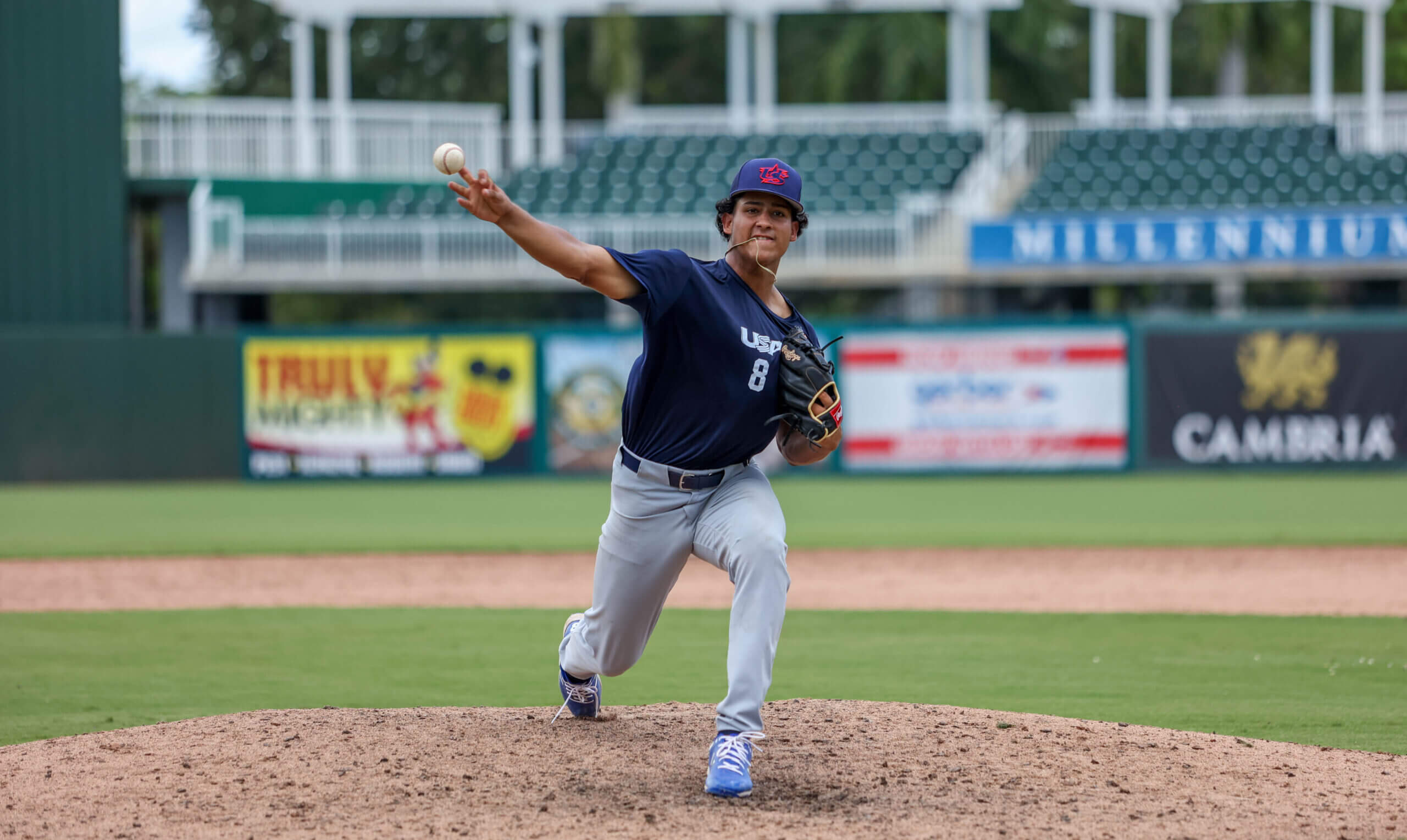
Injuries kept Charlee Soto from taking a big step forward in his second full pro season last year. (Courtesy of Team USA Baseball)
11. Charlee Soto, RHPHeight: 6-3 | Weight: 210 | Bats: B | Throws: R | Age: 20
Soto was my sleeper pick for the Twins last year, but he ended up throwing just 13 innings in April before elbow pain shut him down, requiring surgery in August to remove a bone spur. Before 2025, he was all stuff without much performance, sitting 94-97 with a plus changeup and at least an average slider, but didn’t miss nearly as many bats in Low A as he should have between below-average command and a lack of experience to guide him in using his stuff to set up hitters and put them away. He’s a strong athlete and his delivery works, giving him every chance to end up a mid-rotation starter or better — maybe much better. He should be back to 100 percent this spring.
12. Quentin Young, 3BHeight: 6-6 | Weight: 225 | Bats: R | Throws: R | Age: 19
As safe as the Marek Houston pick might have been, the Twins shot for the moon in the second round last year on Young, a 6-6 toolshed who has as much pure ability as anyone in the system. He was awful in 2024 at showcases and reworked his swing and approach that winter, coming back last spring with better balance at the plate and improved swing decisions. He has a 70 arm and good hands to stick at third base or, at worst, in right field, as he’s obviously a giant for anywhere on the dirt other than first. He has plus power already, and there’s likely more in the tank. He’s the kind of prospect who needs the defunct short-season leagues, and I hope the Twins play it slowly with him, as his hit tool is still below average and he might need extra time in the Florida Complex League before he’s ready to face full-season pitching. It is truly All-Star upside given the body, athleticism and potential for 30 homers. He is the nephew of former big leaguers Dmitri and Delmon Young.
13. Andrew Morris, RHPHeight: 6-0 | Weight: 195 | Bats: R | Throws: R | Age: 24
Morris is a strike-throwing righty who sits 94-96 and goes right after hitters with a six-pitch mix, lacking anything plus to generate whiffs and carrying some risk he’ll be homer-prone if he’s in the zone too much. He was more of a sinker guy in the lower minors, but he throws his four-seamer more often now, so maybe there’s another path for him if he switches back to the two-seamer more. He missed about six weeks last year with a forearm strain, returning in early August to finish the season healthy. He doesn’t offer much ceiling, with the biggest value in his readiness right now and history of low walk rates.
14. Kendry Rojas, LHPHeight: 6-2 | Weight: 190 | Bats: L | Throws: L | Age: 23
Rojas came over from the Toronto Blue Jays in July in the Louis Varland trade, then was awful in eight starts for Triple-A St. Paul, posting a 6.59 ERA while walking nearly a batter an inning. He’s 93-96, with the fastball flattening out after the trade, and his slider went from above average earlier in the year to average at best afterward. He was either in the middle of the zone or way out of it with St. Paul, at least more so than he’d been before the deal, with no indication that anything was wrong with him physically. He does have a history of injuries, missing the first two months of the 2025 season with an oblique strain and part of the 2024 season with shoulder soreness. He has never thrown 85 innings in any season and came in under 70 in each of the last two years. In theory, he could be a fourth starter; his August-September swoon and lack of durability make me more inclined to call him a swingman or bulk reliever.
15. Marco Raya, RHPHeight: 6-1 | Weight: 170 | Bats: R | Throws: R | Age: 23
Raya was lousy in Triple A last year, walking way too many but also getting hit fairly hard despite a six-pitch arsenal with multiple 55s. His stuff does grade out better on the computer than it does on the field, but he’s been up to 97 and gets good spin and angle to his breaking stuff, so if he can get in the zone more, he still has a chance to start. The ABS in Triple A might have messed him up, as his walk rate of 12.5 percent was a career worst, and he might have too many arrows in the quiver and would benefit from simplifying down to three or four pitches, at least for now. He should go back to Triple A to start one more year, with the bullpen always there as an easy backup plan, as he could easily go fastball-cutter or fastball-slider there and probably dominate.
16. Kyle DeBarge, 2BHeight: 5-9 | Weight: 175 | Bats: R | Throws: R | Age: 22
DeBarge ranked third in the Twins’ entire system with 70 walks last season but otherwise didn’t produce, with a .232/.347/.362 line highlighted only by the walks and his 66 steals in 74 attempts. He started the year well, hitting .282/.416/.472 with more walks than strikeouts through May 8, when he was hit on the wrist by a pitch and missed a week. He came back, hit well for a few more weeks and then stopped hitting or showing any power. The timing doesn’t totally line up with the injury, but maybe he aggravated it later, or it’s just a coincidence. He’s more of a hitter for average and contact than power anyway, and his defense at second is playable. If he gets back to his April-May self, he could still be a future regular.
17. C.J. Culpepper, RHPHeight: 6-3 | Weight: 193 | Bats: R | Throws: R | Age: 24
Culpepper had a pinched nerve that bothered him for much of last year, bringing his velocity down 2-3 mph and driving an uncharacteristically high walk rate. He has an above-average slider and an average changeup when healthy and has been 95-plus in the past, although his 2024 season was also marred by injuries, and he hasn’t shown that kind of plus velocity in two years. He’s down the list because of all of the lost time and the question of how good his stuff will be when he returns. There’s still a slight chance he can become a back-end starter once he’s completely healthy again.
18. Brandon Winokur, SSHeight: 6-6 | Weight: 210 | Bats: R | Throws: R | Age: 21
Winokur made more contact than I would have expected last year, with a 24.8 percent strikeout rate in High A, but still hit just .226/.304/.388 with too much soft or poorly hit contact for a guy his size and strength. He’s at least his listed 6-6, strong, athletic and quick enough to steal some bags, but the swing does get long, and he hasn’t really made enough adjustments to pro pitching so he can square the ball up more often. He’s played short, third and center, with the last spot the most likely and shortstop out of the question given his size. He has at least 20/20 upside if he hits enough for it, with fairly low probability at this point, since he’s already 21 and hasn’t produced at all yet.
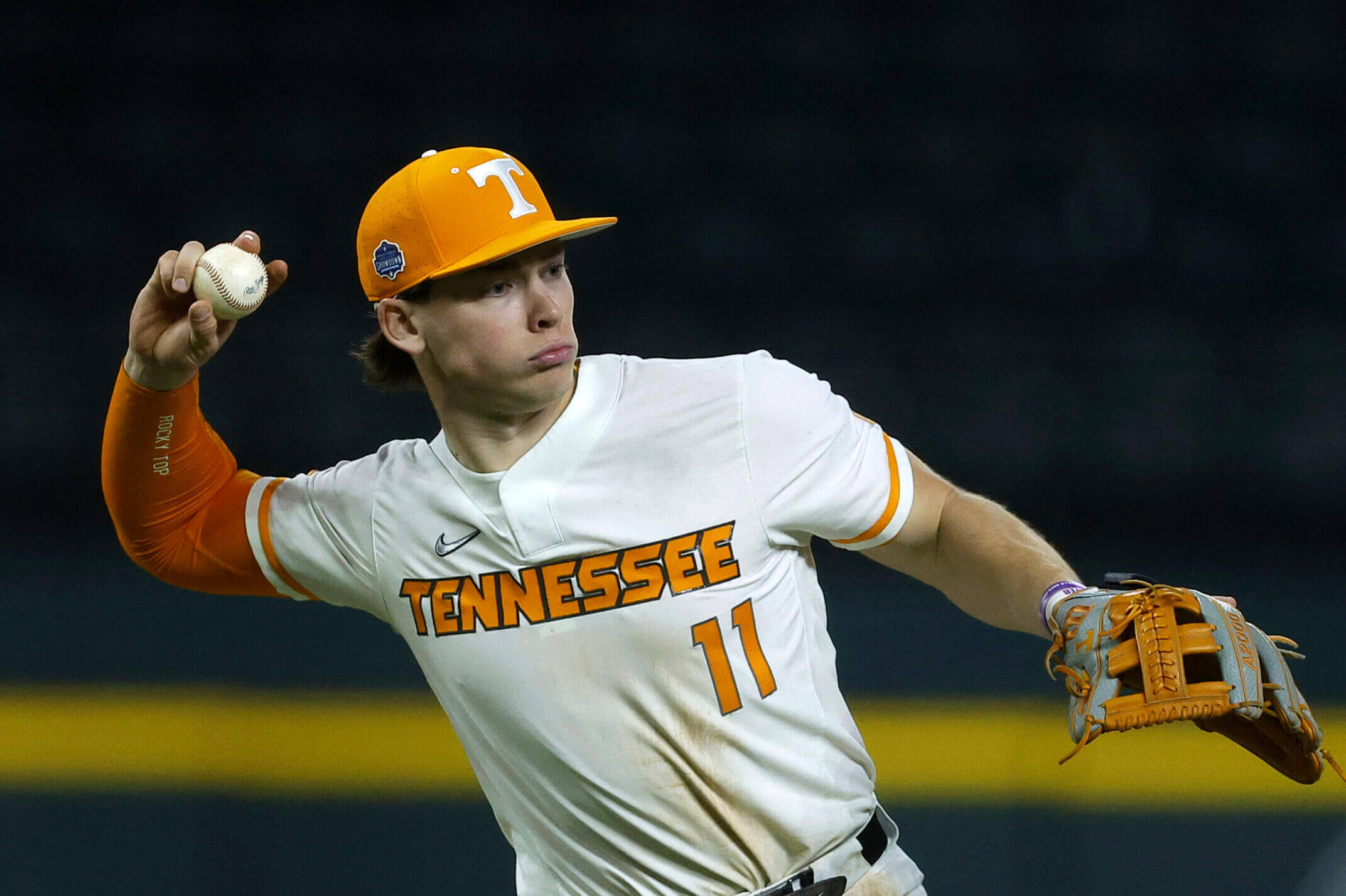
Billy Amick starred collegiately for Tennessee. (Brandon Wade / Associated Press)
19. Billy Amick, 3BHeight: 6-1 | Weight: 220 | Bats: R | Throws: R | Age: 23
Minnesota took Amick in the second round in 2024 out of Tennessee, and his first full year in the system was ruined by a shoulder subluxation and an oblique strain. He hit .310/.418/.455 in 54 games in High A, albeit with a 25.8 percent strikeout rate, and was awful in the Arizona Fall League — no, like, really awful, going 1-for-30 with 20 strikeouts in 41 PA. He was the worst hitter out there, even behind some hitters younger than he is who also struggled. He’s a third baseman now, and there is a decent chance he has to move to first, so there is real pressure on the bat, and he will need to show more in-game power this year, having demonstrated that in college with the metal bats but not so far in pro ball.
20. Hendry Mendez, OFHeight: 6-3 | Weight: 175 | Bats: L | Throws: L | Age: 22
Mendez went from the Phillies to the Twins in the Harrison Bader trade and took off in a month in the Twins system, hitting .324/.461/.450 and walking 19 percent of the time, all way above anything he’d done before. He does put the ball in play a lot, usually on the ground, with a 54 percent ground-ball rate in 2025 that went up to 58 percent when he joined the Twins organization; he’s also never struck out even 16 percent of the time at any stop in his pro career, no matter how brief. He’s a poor defender anywhere in the outfield, too. I have seen him a bunch and find him frustrating, because he could — or should — be a more productive hitter than this.
2026 impact
Jenkins will make his MLB debut this year if he’s healthy, and I wouldn’t be shocked at all to see him go off for 50 games in Triple A and come up in June. He’s never not hit when he’s played.
The fallen
The Twins gave Danny De Andrade $2.2 million in 2021 as an international free agent, and he appeared a few times on their top-20 lists. He has never actually hit, with a .229/.317/.387 line in High A last year as a 21-year-old, never even slugging .400 at any stop or hitting even .250 outside of the Dominican Summer League.
Sleeper
You could argue for Hill as a top 100 guy right now, although I have him on the outside because of some command questions and the fact his stuff misses fewer bats than you’d expect. He’s so young and projectable, however, he will be a top 100 guy at some point, maybe as soon as next year.