
EDITOR’S NOTE: Call to Earth is a CNN editorial series committed to reporting on the environmental challenges facing our planet, together with the solutions. Rolex’s Perpetual Planet Initiative has partnered with CNN to drive awareness and education around key sustainability issues and to inspire positive action.
A trippy image of a coral, a swarm of mayflies and a very hungry spider were among the winners of the Close-up Photographer of the Year award.
The award, in its seventh edition, received more than 12,000 entries from 63 countries, which were assessed by photographers, naturalists and editors, according to a press release.
Entries fell into 11 categories, including animals, insects, butterflies and dragonflies, arachnids, invertebrate portrait, underwater, plants, fungi and slime molds.
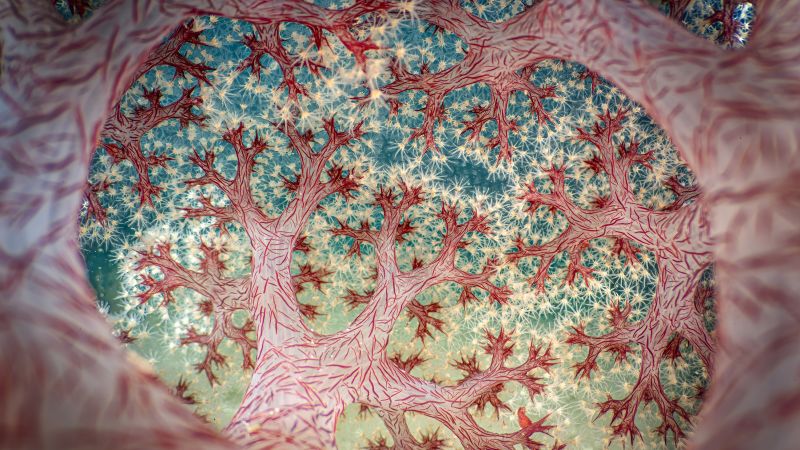
The overall winner, “Fractal Forest,” an underwater image of a cauliflower soft coral by Ross Gudgeon in the Lembeh Strait, Indonesia, won the Australian photographer the top prize of £2,500 ($3,420).
Gudgeon said the coral was named for its “numerous small, rounded, bump-like polyps that give it a puffy texture.” He said he threaded an extended macro wide lens carefully through the branches of the coral, photographing the species from the inside out.
The Strait is a diving and biodiversity hotspot separating the small island of Lembeh and the province of North Sulawesi. A favorite location among underwater macro photographers looking for weird and wonderful creatures, it nevertheless lies close to a large modern port.
Some photographs threw into contrast the natural world and humanity’s impact.
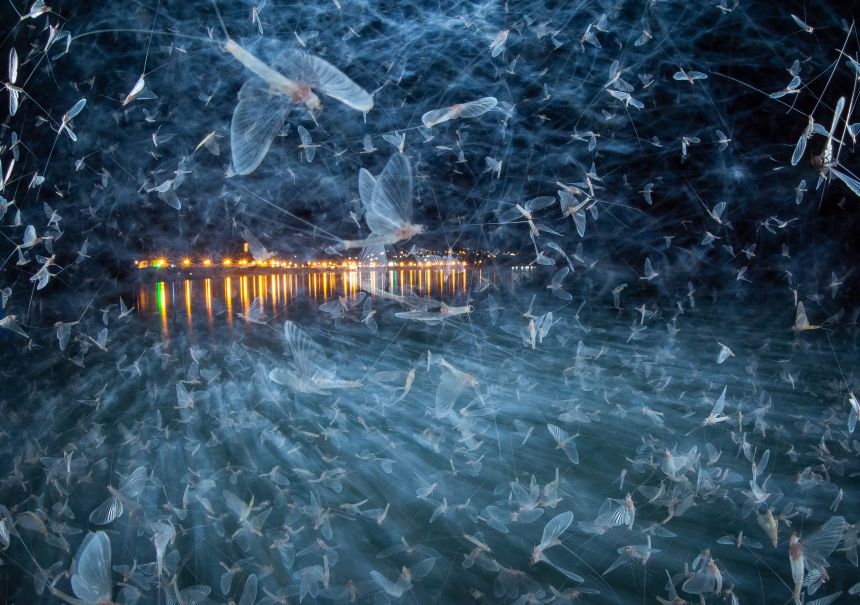
The winning photograph in the insects category, titled “Blue Army,” captured a complicated environmental scene in the town of Szentendre, Hungary.
“After a few decades, the spectacular endangered Danube mayfly has returned to the river Danube, probably due to increasing water quality, after disappearing from the rivers of Middle Europe owing to water pollution,” said photographer Imre Potyó in a caption attached to his entry.
It was shot in the summer of 2024 from inside the river, and Potyó said people alongside the river were “overwhelmed” by “millions” of mayflies during a period of hot, dry weather.
“The lights lure the mayflies out,” Potyó explained. “During the late August festival, dense clouds of mayflies engulfed the restaurants, vendors, wine bars, and concerts, becoming an unmissable and alarming spectacle.
“The mayflies circled around the lights for a long time, unable to break free, and sadly perished on the asphalt.
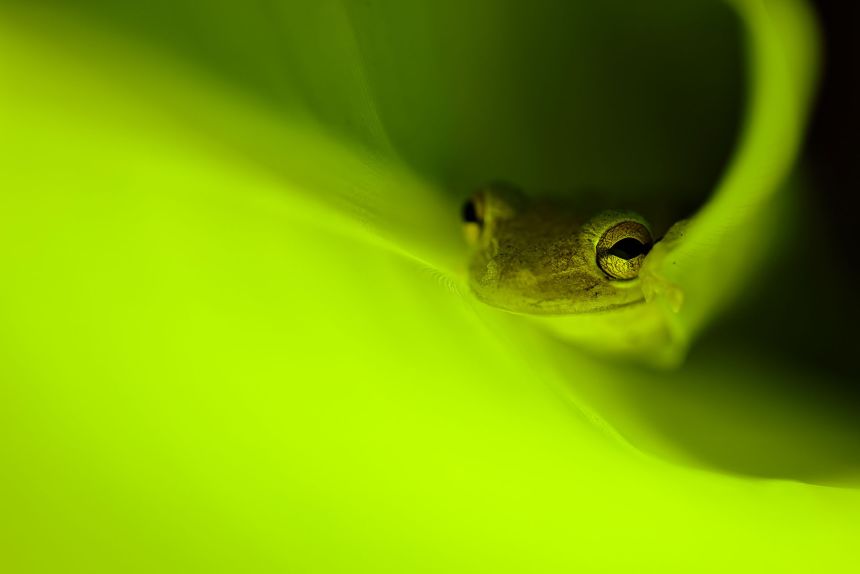
Elsewhere, Pedro Luna captured a box tree moth, native to Asia but an invasive species in Catalonia, Spain, where he photographed it. A Cuban tree frog, photographed by Young Photographer finalist Jameson Hawkins-Kimmel in his Florida backyard, is also considered invasive in the state.
But most photographers pulled tight focus on their subjects, little and large.
“This was the toughest competition yet,” said Tracy Calder, co-founder of the competition, in a press release.
Of Gudgeon’s winning image, she said it “embodies everything close-up photography can achieve — it shows us a perspective we’ve never seen before and reveals hidden beauty in a familiar subject. The judges were captivated.”