
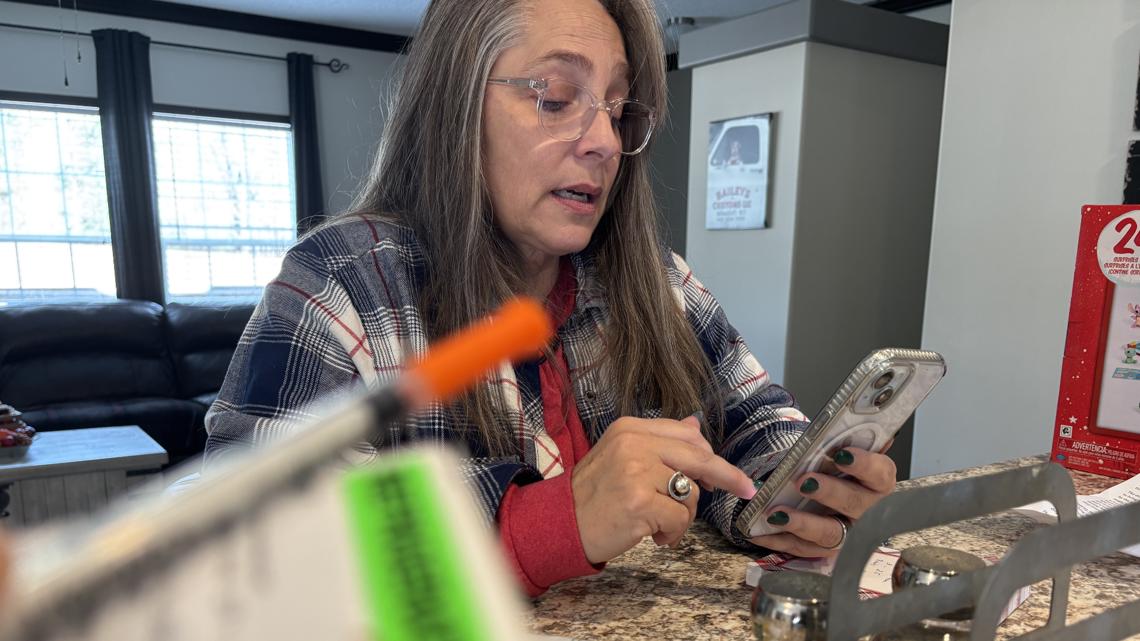
Leslie Gammons had used a GLP-1 before, but this time things went wrong. Her online doctor increased the dosage and Gammons ended up in the ER after an overdose.
NORTH CAROLINA, USA — They’re easy to access, widely promoted online, and backed by doctors. GLP-1 weight-loss injections are proven to help people shed significant weight.
But as demand explodes, so do the risks — especially when the medications are used without proper medical supervision.
New data shows a dramatic rise in GLP-1–related overdoses and adverse reactions, and one North Carolina woman says she nearly paid with her life.
“I’m not dumb — but I felt dumb”
“I’m not dumb,” said Leslie Gammon, a retired teacher from Wendell. “But I felt dumb that I took that much.”
Gammon is now speaking out after a severe overdose landed her in the hospital for days. She says she wants others to understand the dangers of so-called “do-it-yourself” injectable weight-loss drugs.
“I don’t want this to happen to anybody else,” she said.
A surge in overdoses nationwide
According to the National Poison Data System, run by America’s Poison Centers, calls related to GLP-1 overdoses or serious side effects have skyrocketed nearly 1,500% since 2019.
Between 2019 and 2025, poison centers nationwide recorded nearly 23,000 cases involving GLP-1 medications.
While many cases involve manageable side effects, some patients — like Gammon — end up hospitalized.
A prescription — without a doctor visit
Gammon began taking an injectable GLP-1 weight-loss drug in 2025 through a virtual healthcare company called Amble. She says she never met a doctor in person — not even through a live video visit.
“All I had was a phone call, but it was a recording telling me to go online and ‘do this and this and this,’” Gammon said.
Amble connected her with a physician who prescribed weekly semaglutide injections, starting at a low dose. After two injections, Gammon said she woke up ravenous — craving pizza — and felt the medication wasn’t working.
That’s when, she says, her dose was dramatically increased.
Gammon said a doctor associated with Amble instructed her to double the dose —
and to fill her syringe with five times more of a stronger formulation.
Concerned, she emailed the company for clarification.
“They were like, ‘Just follow the doctor’s orders,’” she said. “‘This is the max dose that you can take.’”
Uncomfortable, Gammon says she stopped short of taking the full amount. She believes that decision saved her life.
“Every 30 minutes I was throwing up”
What followed was three days of relentless suffering.
“It was like every 30 minutes I was throwing up,” Gammon said. “I was weak, dehydrated.”
She rushed to the emergency room, where doctors worried about kidney and liver damage. For 72 hours, Gammon says she was in constant pain as doctors pumped her full of IV fluids and anti-nausea medications.
“I would not put that on my worst enemy,” she said.
“I remember asking the doctor, ‘Just put me in a coma. I can’t do this.’”
She remained hospitalized for several days.
Doctors later gave her a clear diagnosis.
“They said, ‘Yeah — you overdosed,’” Gammon recalled. “If I had taken the full dose, they don’t know where I would have been.”
Still recovering months later
Three months later, Gammon says she’s still recovering.
“My ribs, my back hurt — like I was being punched,” she said.
Effective — but not without real risks
The National Poison Data System lists the most common GLP-1 side effects as nausea, vomiting, diarrhea, constipation and abdominal pain.
In overdose cases, those symptoms can become prolonged and severe.
“Overdose signs and symptoms are similar to side effects; however, the duration may last longer,” the organization warns.
“In severe cases, dehydration or hypoglycemia can occur — especially when used with certain medications.”
“A powerful tool — but still a tool”
Novant Health bariatric surgeon Dr. David Voellinger says GLP-1 medications can be extremely effective when used correctly.
“They’re a great tool,” Voellinger said. “But they need to be used as a tool.”
Because of their potency, he says improper dosing can quickly become dangerous.
“They sometimes work too well,” he explained. “And the side effects can turn into severe complications.”
While deaths are “extremely rare,” Voellinger stresses the medications should only be used under close, ongoing medical supervision.
“Obesity is a chronic, relapsing disease,” he said.
“You need a chronic relationship with your physician — just like with high blood pressure or diabetes.”
He emphasizes that patients should use FDA-approved, pre-filled GLP-1 pens, not compounded vials, and should always speak directly with a doctor who knows their medical history.
“I don’t want to scare people away,” Voellinger added.
“These medications are excellent. But educate yourself — and don’t do this over email with someone who doesn’t have your chart in front of them.”
A $10,000 bill — and no apology
Gammon says the experience has changed her perspective entirely.
“I blame myself for not being more educated,” she said. “If I ever did this again, it would be face-to-face with a doctor.”
The ordeal also left her with more than $10,000 in hospital bills.
She has filed complaints with Amble and Beluga Health, the medical provider group used by Amble, asking for explanations and requesting help covering the costs.
Emails show the companies have not ruled that out, but Gammon says she has received little clarity.
Gammon says neither company has apologized.
“Nothing like, ‘We made a mistake — and we’re sorry,’” she said.
“I was furious. This should not have happened.”
Gammon hopes her story serves as a warning.
“These drugs can help people,” she said.
“But they can also hurt you if you’re not careful.”
America’s Poison Centers reminds anyone experiencing concerning side effects or possible overdose to call the Poison Help Line at
(800) 222-1222 — available 24/7.