
Colorado’s mountain snowpack remains deeply behind as winter enters its final stretch. Snowpack supplies water long after winter ends, making its seasonal health critical well beyond ski season.
Right now, the state needs an estimated 5 to 8 feet of high country snow just to break even. This is not snow in Denver or along the Front Range, but mountain snow at higher elevations, the kind that feeds reservoirs and rivers during spring runoff and sustains water supplies into early summer.
Depending on snow density, reaching that threshold would require five to eight average mountain storms, in addition to the storms already expected in the near-term forecast. Even then, breaking even would only move Colorado out of historically low territory.

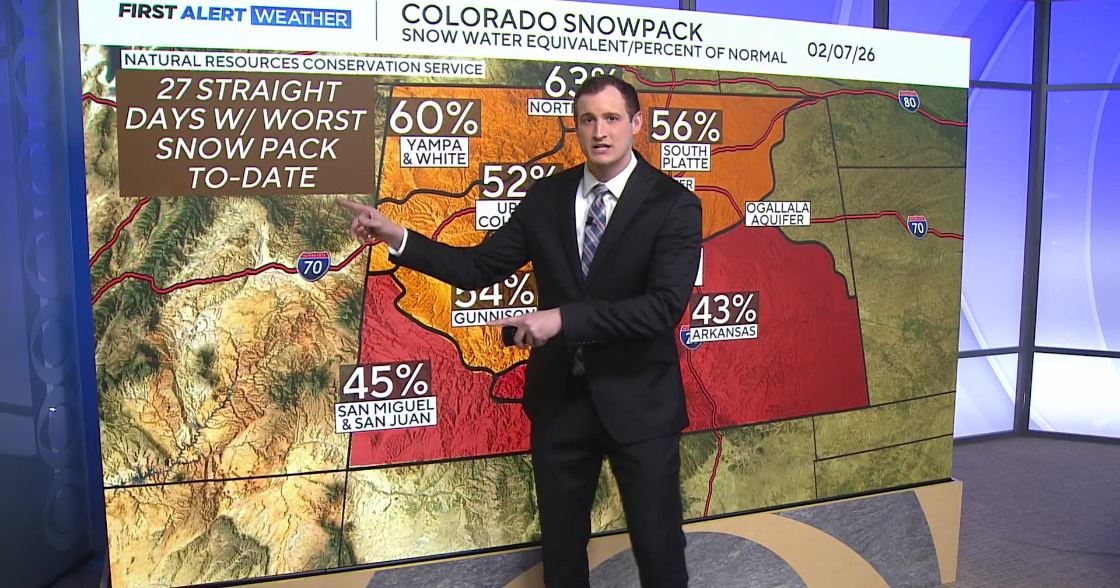
The latest statewide snowpack map shows Colorado near half of where it typically should be.
CBS
The goal for the remainder of the water year is increasingly about avoiding a historically bad finish, if not the worst on record, based on available SNOTEL data dating back to 1987. Conditions are most concerning across parts of southern and southwestern Colorado, where snowpack deficits are greatest. Northern and central basins have fared somewhat better but still remain below normal for this point in the season.
The biggest differentiator this winter has been persistent warmth, which has limited snow accumulation even when storms do move through. Warmer temperatures have resulted in sections of the state that sit at lower elevations not getting as much snow as they normally would. They’ve also increased melt between systems, and reduced snow-to-liquid ratios, limiting gains from storms that might have produced meaningful snowpack growth in colder winters.
More from CBS News