

Across the United States, housing affordability has reached crisis levels. In many cities, home prices and rents have far outpaced wages, while housing supply has failed to keep up with demand. In the Greater Boston area alone, 36 municipalities now have a median home price above $1 million. Yet other cities offer a counterpoint: Minneapolis and Austin, for example, have permitted substantially more housing construction in recent years, and rents have fallen relative to inflation. But if building more housing stabilizes prices, why don’t more cities do it?
That question took center stage at a recent presentation in the American Politics Speaker Series, hosted jointly by the Ash Center for Democratic Governance and Innovation and the Center for American Political Studies. On November 21, 2025, Katherine Levine Einstein, associate professor of political science at Boston University, presented research examining mayors’ views on the roots of America’s housing crisis, and what solutions they believe will be most effective.
Dana Guterman is a copy editor and writer with the Ash Center for Democratic Government and Innovation.
The views expressed in this article are those of the authors alone and do not necessarily represent the positions of the Ash Center or its affiliates.
How Do Legislators Think Democracy Should Work? Evidence from the United States and Germany

Feature
How Do Legislators Think Democracy Should Work? Evidence from the United States and Germany
What kind of democracy do legislators want? This question was at the center of a recent discussion with Melody Crowder-Meyer, associate professor of political science at Davidson College, as part of the American Politics Speaker Series.
May 1, 2025
Does Ranked Choice Voting Create Barriers for Minority Voters?
Commentary
Does Ranked Choice Voting Create Barriers for Minority Voters?
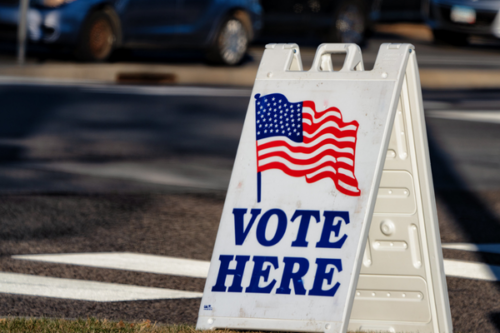
Ranked choice voting (RCV) aims to expand voter choice and improve representation, but Nolan McCarty’s research warns it could have unintended negative effects on minority communities’ representation and influence.
Feb 17, 2025

Podcast
Inside Trump’s White House
White House reporter Annie Linskey offers a closer look at how the Trump White House makes decisions and what recent actions reveal about its strategy.
Feb 10, 2026
Allen Lab Fellow Spotlight: The Case for Building an AmeriCorps Alumni Leadership Network

Additional Resource
Allen Lab Fellow Spotlight: The Case for Building an AmeriCorps Alumni Leadership Network
In a new essay, The Case for Building an AmeriCorps Alumni Leadership Network, Allen Lab Policy Fellow Sonali Nijhawan argues that the 1.4 million Americans who have completed national service represent an underleveraged civic asset. Drawing on her experience as former Director of AmeriCorps, Nijhawan outlines a roadmap for transforming dispersed alumni into a connected leadership network capable of reinvigorating public service, rebuilding trust in government, and strengthening civic participation.
Feb 10, 2026
Podcast
So, Is It Fascism?
Jonathan Rauch joins the podcast to discuss why he now believes “fascism” accurately describes Trump’s governing style.
Feb 3, 2026